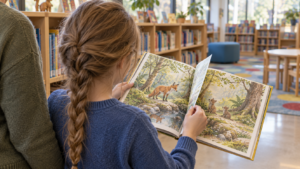



The first book used by foreigners to learn spoken Russian was printed in Oxford in 1696. A German named Heinrich Wilhelm Ludolf, who lived in Russia in the early 1690s, wrote it in Latin and was the first to honestly document what still causes stumbling blocks. Russians, he observed, speak one language but write in another entirely, as Church Slavonic was the written language at the time. His thinking was that one should not learn from what is printed in sacred texts, but from what is heard on the street and at the table.
Over three hundred years have passed since then. Thousands of textbooks have been published, any of them can be ordered in three clicks, and this is precisely the problem now. The parent of a bilingual child and an adult who started Russian from scratch, ...open the same search engine, type in "best books to learn Russian," and drown in lists where everyone recommends their own. It was easier for Ludolph; he had no choice at all.
The main question hasn't changed in three centuries. Not «which book is the best,» because there isn't one, but «which book will teach a person the Russian they need, exactly at this time.» A toddler who doesn't know their letters needs one book. A teenager who speaks but doesn't read needs another. An adult learning the language from scratch with a textbook needs a third. Next, we'll break it down by levels and goals: what to choose, and most importantly, for whom.
Where should beginners start?

«From scratch» means three very different zeros, and there's a book for each of them.
Five-year-old Vanya from Nashville was ordered an adult self-study book with grammar tables by his parents because it was the top search result for «Russian language learning books.» Vanya flipped through it, didn't find a single picture, and lost interest within a minute. He didn't need a declension table, but a primer, large letters, single syllables, and a drawing on each page. A classic Zhukova primer or any bright alphabet book where «ma» and "pa" combine to form the first word read in life is a hundred times more valuable for a five-year-old than the most praised adult textbook.
Voices
The zero point looks completely different for an adult who has seriously taken up Russian. David from Atlanta married a Russian-speaking girl and wanted to understand what his mother-in-law and father-in-law were laughing about at the table. He didn't need a primer, but a full course with explanations in English, with audio, dialogues, and clear logic lesson by lesson. People like him usually come to «Golos», an American university course for beginners. It's a thick, systematic textbook with audio recordings and exercises, used to teach Russian in hundreds of US colleges. It was perfect for David, who loves order and isn't lazy about doing homework.
But it is «Voices» that most often turns out to be the very mistake that starts everything. It is given to a seven-year-old bilingual, and the child gets bogged down in grammar designed for an adult student who has never heard Russian speech. A good book doesn't mean a suitable one. «Voices» is wonderful for David and almost useless for a child who already speaks.
Russian Without Borders for Bilinguals
The same speaking child needs a separate breed of textbooks, written not for a foreigner, but for one's own, who hears Russian from birth, but cannot read and write. Nine-year-old Gleb from Ottawa chats freely with his grandmother via video, jokes, retells cartoons, and before Cyrillic gets stuck because Russian is, for him, just a sound in his head. A textbook for foreigners will explain what he already knows and remain silent about what is truly difficult for him. The «Russian Without Borders» series is designed precisely for such children. It doesn't teach them to speak anew, but rather adds reading, writing, and literacy to their spoken Russian, building upon what the child already knows. Gleb is finally finding it interesting with this series, as the book speaks to him as someone knowledgeable, not as an empty beginner.
Key textbooks and for whom they are intended
| Textbook | Who Is It For? | What's inside |
|---|---|---|
| Zhukova's Alphabet Book | Preschoolers from scratch | Letters, syllables, and first reading, large font, and a picture on each page |
| Voices | Adults and seniors who are learning seriously | Systematic course with audio, dialogues, and exercises, explanations in English |
| Russian Without Borders | Bilingual children speak but don't read | Builds reading and writing on top of already familiar spoken language. |
| Khvronina, Russian Language in Exercises | Those who need grammar training | Not lectures, but exercises and tables for practicing rules |
What to read when you already have the basics down
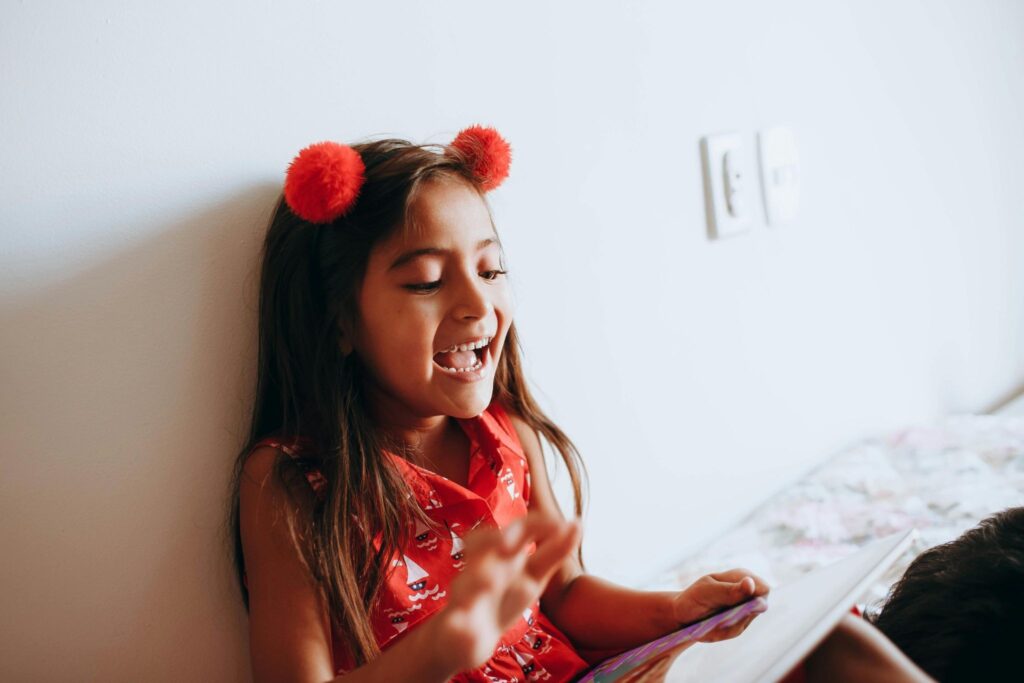
The most joyful and yet most underrated moment comes when letters are mastered, and the child no longer wants exercises but real reading. Here, many parents make an understandable mistake: they shove a thick Russian «Harry Potter» at the child because the child loves it in English, and the child chokes on the very first page. Between the primer and the novel lies a huge and necessary level: graded readers.
Ten-year-old Lisa from Boston switched to them right after the primer and thrived. An adapted book is a regular story retold in simple words and short phrases, with stress marks above the letters and a glossary in the margins. Lisa read a shortened version of «Chuk and Gek,» adapted folk tales, and simple children's detective stories, and each completed book worked better than any praise. The power here is not in the plot, but in the feeling of «I read a whole book in Russian myself.».
What to bring for level B1 and above
When adaptations become boring, it's time for the first non-adapted text, and it needs to be chosen wisely. Thirteen-year-old Timur from Vancouver, on someone's advice from the internet, made a headlong dive into Dostoevsky and predictably failed. But Chekhov's short stories, Nosov's novellas about Dunno, and Dragunsky's stories about Deniska were a breeze for him because the language there is lively, the sentences are short, and the stories are funny. At the B1 level, it's not the author's greatness that's important, but the sentence length and the proportion of familiar words. It's better to finish a short Nosov book than to abandon a great novel on the twentieth page.
What to read at each level
| Level | What to read | Examples |
|---|---|---|
| Beginner, from scratch | Primer, first syllables, and short words | Zhukova's Primer, a colorful alphabet with pictures |
| Intermediate | Adapted books, chosen just below the target level | Abridged «Chuk and Gek,» adapted folk tales, simple children's detective stories |
| B1 and above | First unadapted texts, lively and short | Chekhov's short stories, Nosov's novellas about Dunno, Dragunsky's stories about Deniska |
Grammar textbooks that won't discourage you
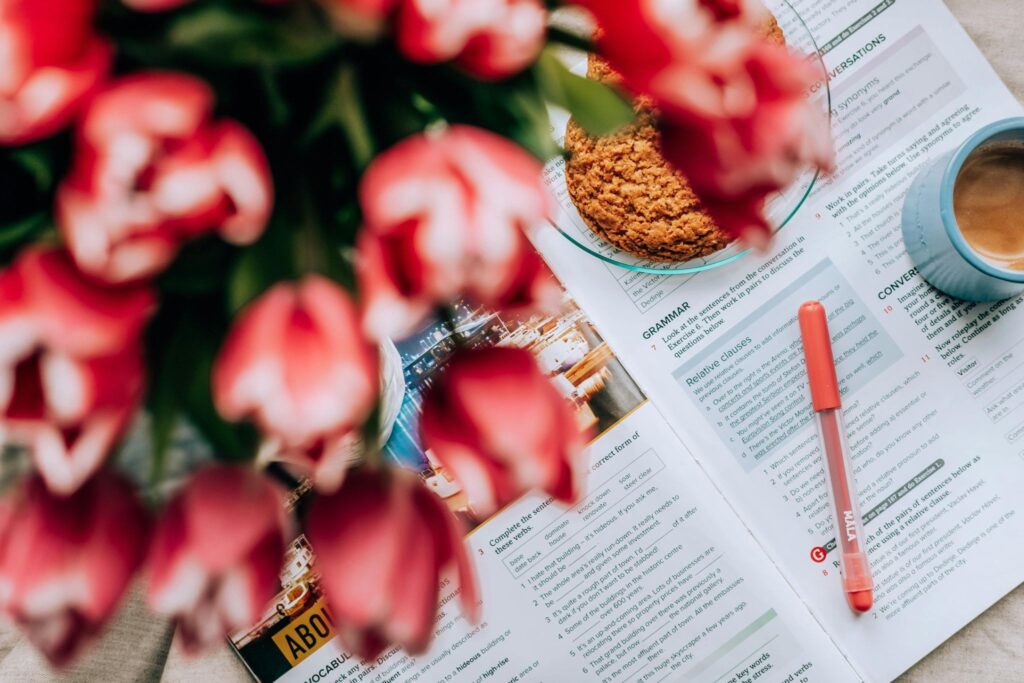
Grammar presents a paradox. It's almost impossible to «finish» a thick Russian grammar handbook; you can only keep it at hand. Marina from San Antonio, a mother of two bilingual children, honestly bought a huge academic grammar book, sat down to study it herself so she could later work with the children, and crawled to genitive case and gave up. You can't learn grammar all at once, like a novel.
Therefore, a grammar textbook should not be chosen by its thickness, but by two things. First, it should have tables that are convenient to refer back to, and second, it should have exercises that reinforce the rules not in theory, but in practice. Havronina's classic collection «Russian Language in Exercises» has been a staple for decades among teachers of Russian as a foreign language for precisely this reason; it's not about lectures, but about practice. A child or teenager needs a grammar reference not as a course, but as a first-aid kit: open it, find the necessary ending, close it. Spoken language is acquired through reading, communication, and play, not by memorizing tables.
Dictionaries and why they are needed at all
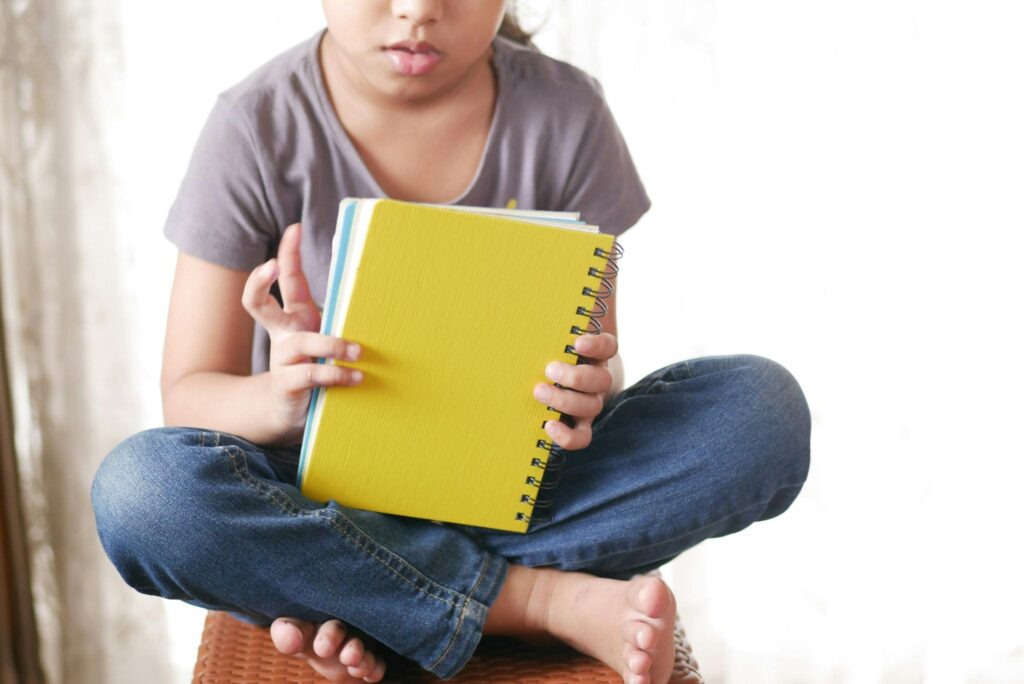
«Why have a dictionary when your phone has a translator?» almost every parent asks, rightly so. For an adult who urgently needs to understand a single word, a phone is indeed faster. But for a child, a paper dictionary offers something a screen will never provide.
Seven-year-old Anya from Minneapolis received a large picture dictionary. One spread depicts a kitchen with every item labeled, and another shows a zoo with all the animals. Anya flips through it like a picture book, without any specific task, and the words settle in on their own, in clusters, entire themes. A translator on her phone gives one word and immediately forgets it, while the picture dictionary provides a small world and connections between words right away. For older children, a regular dictionary, where a word isn't translated but explained in Russian, would be useful. This is the next important step, where a child begins to think in the language, rather than translating in their head.
How do we select books for a child at Palme School

From all of this, it's clear how much effort a parent expends just to choose a book, get the level right, and avoid discouraging their child. This is precisely the work that Palme School takes on.
In Palme, children aged four to seventeen are taught, and there are separate classes for Groups for bilinguals And for those for whom Russian is essentially a foreign language. Before starting, a methodologist listens to the child, determines their current level, and selects materials tailored to them, rather than randomly from someone else's ranking. The program is cyclical, with reading texts progressively increasing, from syllables to adapted stories and then to real ones, so the child never encounters anything too difficult or too childish. Classes are held online, in small groups, for forty minutes, according to your time zone.
You can find out if this is right for your child for free. The school offers two trial lessons. The first is an introduction with a methodologist, who will determine the level and suggest what to read at home right now. The second is a real lesson in a group, with a teacher and other children. This way, you can immediately see if your child can handle the format and what books will be suitable for them, without a single wasted purchase.
What is worth remembering

Three hundred years ago, Ludolf was looking not for the perfect book, but for one that would teach living Russian, not bookish. Since then, the choice has expanded to thousands of publications, but the task has remained the same. Don't chase someone else's rating, but honestly answer who is in front of us and why they need Russian. A primer for a toddler, a guide for a speaking bilingual, a systematic course for a serious beginner, books for a reader to handle, not by the loudness of the author's name. Choose a book for the person, not the person for the book, and almost any of them will turn out to be the best.