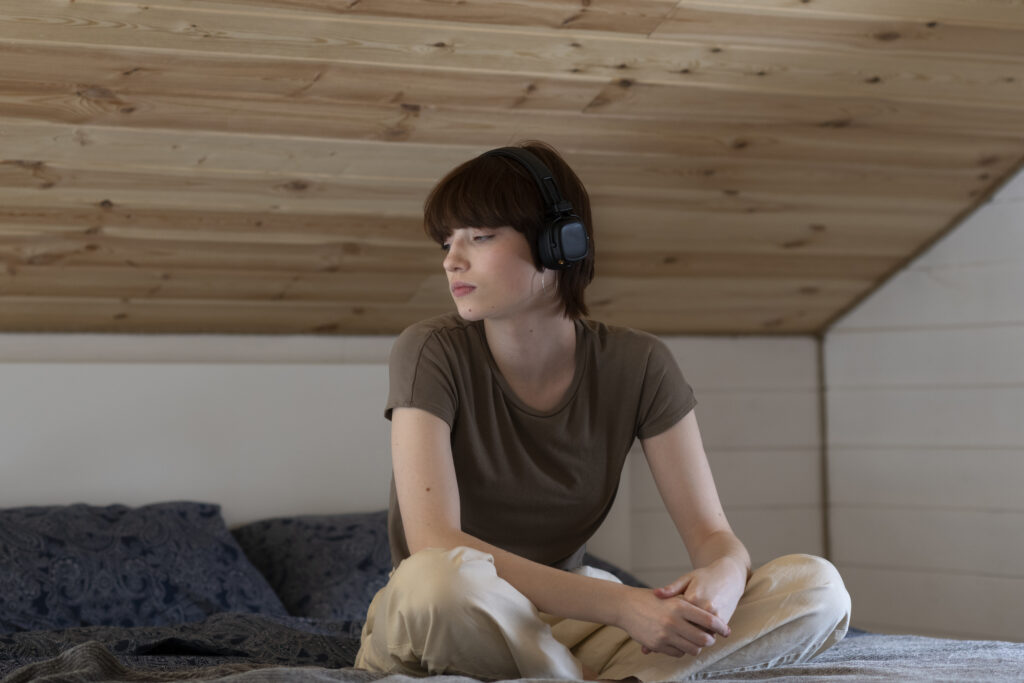

A 13-year-old teenager in Seattle watches streams in English. His friends communicate in English. English is taught at school. His mom asks, «Tell grandma how things are going.» He grumbles, «Why? She won't understand anyway.» His parents push, «You're Russian, learn the language!» He slams the door.
Emigrants with teenagers aged 12–15 often face this. The child grew up abroad. Russian is associated with the past, parents, duty. English provides status, friends, success. Pressure only intensifies the rebellion. I will show conversation scenarios that work.
Why is a teenager refusing Russian?

Between the ages of 12 and 15, a child is actively forming their identity. The child asks, «Who am I?». In a new country, English opens doors. Russian seems useless. Psychologists call this a language shift. Most bilingual emigrants prefer the dominant language. Many regain interest in their native language by age 18, if not pressured.
Real situation. Oleg (14 years old, Vancouver) is playing Roblox with friends. His grandmother calls: «How's school?» He replies: «Fine.» He stays silent in Russian. Why? He's embarrassed about his accent. He's afraid of seeming «different.» His friends might hear and make fun of him.
Second. Daniil (13 years old, Miami) knows Russian passively. He understands his mother but replies in English. «It's easier.» His brain saves energy. English is used for communicating with friends, games, and school. Russian is reserved only for everyday requests like «give me food» or «I want to sleep.».
It's not laziness. The teenager is testing boundaries. English = independence. Russian = parents. The parents' task is to find the value of the language through connection, identity, and utility.
Connection with grandparents

Kolya (13, Miami) calls his grandma once a month. «Okay. Bye.» Grandma sighs. Mom gets angry: «Talk to her properly!»
Dinner conversation:
- Mom: «Grandma was asking about your new game yesterday. Will you tell her yourself?»
- Kolya: «Why? She won't understand Minecraft.».
- Mom: «She'll understand the main thing. That you remember her. Try one sentence.».
Result. Kolya: «Grandma, I got 10 kills yesterday.» Grandma: «My hero! I'm proud!» Kolya smiles for the first time in a year.
What's next. 10-minute calls once a week. Topics from the child: games, school, sports, new sneakers. Grandma listens, rejoices. The language comes alive through Grandma's emotions. A month later, Kolya calls himself: «Grandma, look at my new skin.».
Why it works. Emotions are stronger than grammar. A teenager sees the reaction. Language = connection with family, not a lesson.
Russian as a superpower of bilingualism

Masha (15, Boston): «I'm American. Russian isn't mine.».
Evening conversation:
- Dad: «You're bilingual. That's an advantage. Two languages, two cultures.».
- Masha: «So what?»
- Dad: «On TikTok, Russian comments under your favorite tracks. Do you want to be just American or special?»
Result. Masha is looking for Russian K-pop memes. She finds bloggers. «Cool, they're fans too.» A week later, a post in Russian: «BLACKPINK's new album is fire.» 10 likes from Russian speakers.
What's next. 15 minutes a day of Russian-language content on hobbies: games (Fortnite streams), music (Russian rap), sports (NBA analytics). The teenager sees: the language is alive, modern, his people.
Why it works. Teenagers live on social media. Russian content shows: the language is current. Not «grandma's,» but their own.
Russian for the future and money.

Dima (14, Chicago): «English is enough for everything.».
Breakfast conversation:
- Dad: «English is basic. Russian is a plus. Bilinguals get more jobs.».
- Dima: «Which ones?»
- Dad: «Your peers are freelancing on Upwork for Russian speakers. Game reviews, video editing. They pay $10-20 an hour.».
Result. Dima records a Minecraft review in Russian. Posts it on Telegram. 5 likes from Russian-speaking gamers. «Cool, writing from Moscow.».
What's next. Mini-project: a Telegram post or TikTok in Russian about a hobby (gaming, sports, food). A teenager sees demand. After a month, tries Upwork: «Russian-English editor, 14 years old.» First order.
It works. Money motivates more than lectures. The teenager sees: language equals an opportunity to earn money.
Common parenting mistakes

- Pressure. «You must know the language of your ancestors!» The teenager hears: «You are a bad son.» Rebels.
- Comparison. «Look, my friend's kids speak fluently.» The teenager thinks, «I'm a loser.» Stays silent even more.
- Tell a teenager about great Russian culture, and they'll remember school lessons about Pushkin. But they're more interested in Fortnite.
- Parents threaten to take away the phone if the child doesn't study Russian. The child chooses the phone.
How to start a conversation today

Choose one scenario. Sit down for dinner. No phone. Ask a question:
- «What do you like about Russian culture? Music, games, food?»
- «Do you know any bilingual friends? How do they manage?»
- «Imagine yourself in 5 years. Will you need Russian or not?»
The main thing: listen. Don't argue. Don't correct. Let them express themselves. The teenager will find the value themselves.
Example dialogue:
- Mom: «What do you think about Russian?»
- Sasha: «It's useless. No one is talking.».
- Mom: «And Grandma is talking. Tell her about school?»
- Sasha: «Okay, I'll try.».
Result in a month

Teenagers after conversations like that:
- Call relatives 2-3 times a week
- Watching Russian content: streams, memes, bloggers
- «Found a cool meme»
- Losing the fear of «being different»
- Russians are starting to ask for game and video versions in Russian.
Discuss one scenario with the child today. See what changes in a week. Write down the result in your notes.