



Names and identifying details of every student below have been changed.
My child has no friends. I get that sentence two or three times a semester, and it is almost never true as written. Whatever is actually happening tends to be narrower, and more fixable for being narrow. There are children to sit near at lunch. No invitations since September. One friend who moved away in June and no second one. Play with whoever is nearest, and never once a choice.
What parents actually say when they write to me

Standing at the edge is not the failure
Here is the finding that changed how I watch children in a group, and it’s forty-five years old. When researchers watched children join a game in progress, the ones who succeeded did not walk up and announce themselves. They hovered. They stood at the edge, watched, figured out what the game was, and only then said something, and what they said was usually about the game and not about themselves. Putallaz and Gottman described the sequence in 1981, and a National Academies review of the field described the same one. Successful entry runs from low-risk tactics to higher-risk ones. Waiting and watching first, statements and requests after. The children who failed did the opposite of all of it. They arrived loudly, changed the subject to themselves, asked questions that stopped play, or appealed to an adult.The hovering was the correct move, performed correctly.
Hovering for a minute is step one. Hovering for most of an hour is being stuck on it. I’ve watched a parent walk across a playground and tell a hovering child to go and play, which is roughly like telling somebody reading a menu to hurry up and eat. The child was not stuck. They were on step one.Where it actually breaks
Nobody teaches step two.
Step two is small. You have watched for a minute. You know they are building something, or arguing about rules, or on the second round of a game with four rounds. Now you have to say one thing that fits what is already happening. That’s a real skill, and most children are never taught it. What they are taught, when anybody bothers, is the opening line. Can I play? And can I play? is a bad move, because it interrupts, it asks for a decision, and it can be answered no. Compare it to the four moves below, none of which asks for permission.| Instead of | Try |
|---|---|
| Can I play? | Are you two on the same team? |
| I’m good at this | Which one is winning? |
| My turn next | Do you need a fourth? |
| Look what I can do | That’s the hard level, isn’t it? |
The scripts I actually give children
Parents ask for words, so here are the words. None of them is magic, and children should change them until they sound like themselves and not like a script somebody handed them. To join, watch for a minute, then say something about the game and not about yourself. That’s the one with the traps, right? If nobody answers, wait and try once more. Two failures in a row mean finding a different group, not a different personality. Keeping it going takes one question back. Any question at all. A child who answers and stops is a child conversations end with, and most of them have no idea that this is why. For recovery there is one sentence, and it is the sentence nobody bothers to teach. Sorry, that was mine, I didn’t mean it like that. It saves more friendships than any opening line ever has. Then there is leaving, which nobody thinks of as a skill until they watch a child fail at it. Walk off mid-game without a word and the other children invent an explanation. Rudeness is the one they tend to land on. One sentence prevents all of it. I have to go, see you tomorrow. Four situations, and none of the sentences is longer than ten words. I’ve taught this to eight-year-olds in twenty minutes and watched it make a difference by the following week, and I’ve also taught it to children who needed a year.The part nobody covers
Almost all friendship advice is about starting, and almost every friendship that fails in my experience fails somewhere else. Maria, whose name and details I have changed as I do everywhere, was nine, lived in the Denver suburbs, and had one best friend for two years, the kind of friendship where the two of them had a private vocabulary and a standing arrangement about who sat where. Then in March the friend sat with somebody else at lunch, twice, and Maria stopped speaking to her entirely and told her mother she had no friends. What she had was one friend and one unresolved afternoon, and nobody had ever told her that the second thing could be undone.
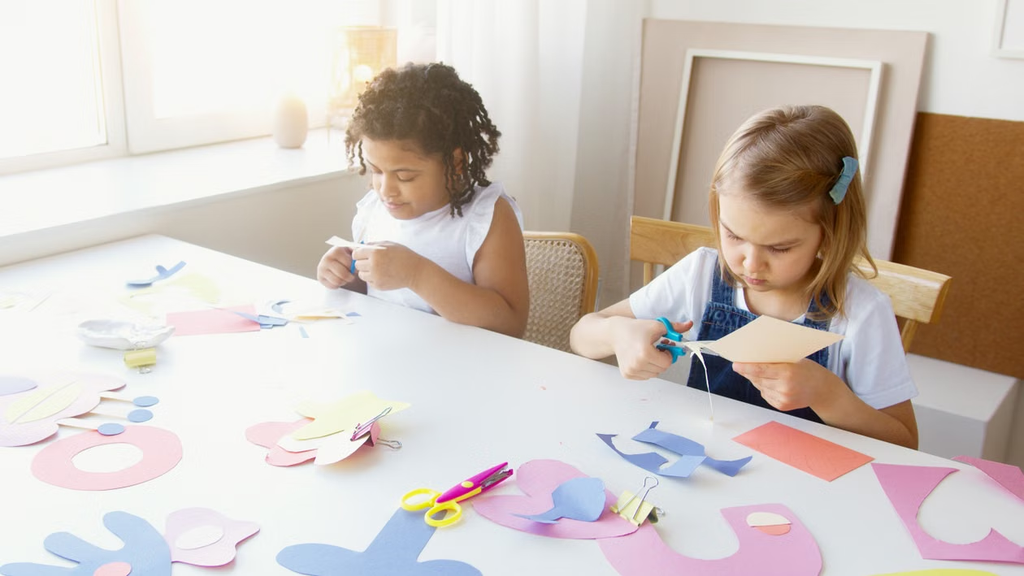
She thought a friendship was something you either had or lost.
We practiced one sentence for a week. Are you mad at me? Four words, and she needed six days to say them. That friend, as it turned out, had been sitting with somebody else because that girl was new and had nobody, which Maria could not have guessed and never asked about, and the whole thing turned on nobody in that lunchroom having the four words that would have opened it. Two years of friendship nearly ended over a kindness she had read as a verdict.The child who just moved
Moving resets everything, and the reset is harder than the original build. Existing groups are formed, the roles inside them are taken, and a new child arrives with no history to refer to and no shared week to mention, which means every single opening has to be manufactured out of nothing at a moment when the child is also tired, also homesick, and also figuring out where the bathrooms are.

Two things help more than anything else I have tried. Start with a shared activity instead of a shared conversation. A chess club, a team, a group class: any of them hands the child a reason to be in the room and a subject that is not themselves. Talking gets much easier once nobody has to invent what to talk about. Lowering the target is the other half. One person to sit with by Christmas is a realistic goal for a child who moved in September. Ten friends is not a goal but a wish, and a child who hears it as the standard will read one friend as failure. Here is what I remember from my own mid-year move, and it isn’t loneliness. It’s the specific exhaustion of having to be interesting on demand, every day, to people who already had enough friends. Nobody was unkind. I simply had no material.
What worked, in the end, was a girl who needed a partner for something. Not friendship. Logistics, and logistics turned out to be a much easier door.
The shy child is a different case
Shyness and poor social skills look identical from a distance and want opposite responses. A shy child usually knows exactly what to do and finds doing it expensive. Whether a person speaks up at all turns on their own estimate of how they are doing, not their measured ability, which is MacIntyre’s argument about second languages and travels to playgrounds without much trouble. A child who lacks the skills does not know, and often does not know that they do not know. The test is what happens once they are in: the shy child, past the first ten minutes, is frequently fine. Reduce the entry cost for the first kind. Arrive early, when there are two children in the room instead of twenty. Smaller groups. A structured activity where the task scripts the first exchange, not the child. With the second kind, teach the moves in the table above.Both are ordinary. Neither is a character defect.
What makes things worse
Arranging a playdate with a child yours has not chosen is the most common mistake I see, and it is always well meant. Proximity is not affinity, and a child made to host somebody they did not pick learns that their preferences do not count. Then there is the debrief in the car. Did you play with anyone? Who did you sit with? Did they talk to you? Three questions, and a child who has had a hard day now has to perform an account of it. Save them for a moment when the answer costs less. Worst of all is solving it in front of them. Speaking to another parent, or to the teacher, where your child can hear you arranging their social life removes the one thing they need, which is the sense that they can affect it themselves. And the word shy said out loud in their hearing, which I have written about elsewhere on the blog and will not repeat here, except to say that I’ve watched a girl still carrying that sentence at twenty.When it is more than a rough patch
Most of what parents bring me is ordinary, some of it is not, and the difference is worth naming. Difficulty that appears everywhere and not in one setting. Six months or more, not one bad semester. No response to any of the ordinary supports.
Distress outranks every item above it. Count the friends of two nine-year-olds and you may get the same number twice while looking at two unrelated situations. One child keeps trying and keeps being turned away. The other is perfectly content alone. The first needs help. The second may need nothing at all, and reading contentment as a problem creates one.
When several of those line up, that conversation belongs with the school counselor or a pediatrician. Executive function difficulty is closely tied to ADHD, one important component of it rather than a defining feature. It plausibly touches entry as well: the move that works is the one that holds the group’s frame, and holding a frame is exactly what a child short on working memory finds expensive. Our checklist of ten signs covers that side of it.What actually builds this
Practice on other children, which sounds obvious and isn’t, because most of the practice adults arrange is practice with adults. At home you are a soft audience by design. You wait when they pause. You forgive the joke that lands badly. You never once move on to somebody more interesting. Every one of those kindnesses removes the thing a child is trying to learn.
In our lessons for bilingual kids the point is not only Russian. It is four other children who will not wait forever, and a room where the turn has to be taken rather than given. The conversation school runs on the same principle, with speaking as the whole task. Maria and her friend are fine, and the whole repair took four words and six days, roughly what these things cost once somebody tells a child they are possible.Frequently asked questions
Teach the sequence, not the opening line. Watch first, then say one thing about what is already happening, then ask a question back.
Most children have been taught to introduce themselves, which is the move that fails most often.
Usually not, and the sentence is usually broader than the situation. Ask which of these it is: nobody to sit with, no invitations, one friend lost, or no preferences at all. Each has a different answer.
Worry is warranted when a child wants friendship, tries, is rejected repeatedly, and is distressed by it across settings for six months or more.
Of all the social skills for kids that get listed, four do the work: entering a group, keeping a conversation going by asking something back, repairing after an argument, and leaving without vanishing. The middle two are the ones nobody teaches.
No. A shy child often knows what to do and finds it costly; a child without the skills does not know. Reduce the entry cost for the first, teach the moves for the second.
Sources
- Collaborative for Academic, Social, and Emotional Learning. (n.d.). What Is SEL? casel.org
- Durlak, J. A., Weissberg, R. P., Dymnicki, A. B., Taylor, R. D., & Schellinger, K. B. (2011). The impact of enhancing students’ social and emotional learning: A meta-analysis of school-based universal interventions. Child Development, 82(1), 405–432. onlinelibrary.wiley.com
- Hartup, W. W. (1984). The peer context in middle childhood. In W. A. Collins (Ed.), Development During Middle Childhood: The Years From Six to Twelve. National Academies Press. ncbi.nlm.nih.gov
- MacIntyre, P. D., Clément, R., Dörnyei, Z., & Noels, K. A. (1998). Conceptualizing willingness to communicate in a L2: A situational model of L2 confidence and affiliation. The Modern Language Journal, 82(4), 545–562. onlinelibrary.wiley.com
- Putallaz, M., & Gottman, J. M. (1981). An interactional model of children’s entry into peer groups. Child Development, 52(3), 986–994. jstor.org
- Willcutt, E. G., Doyle, A. E., Nigg, J. T., Faraone, S. V., & Pennington, B. F. (2005). Validity of the executive function theory of attention-deficit/hyperactivity disorder: A meta-analytic review. Biological Psychiatry, 57(11), 1336–1346. pubmed.ncbi.nlm.nih.gov
Palme School: Russian for bilingual children · Conversation school · Free materials for parents
Lily Rozberg has been teaching for sixteen years, first English in Russia and now Russian to bilingual children across the US and Canada. She writes for Palme School about heritage language, reading, and the things report cards do not measure.