

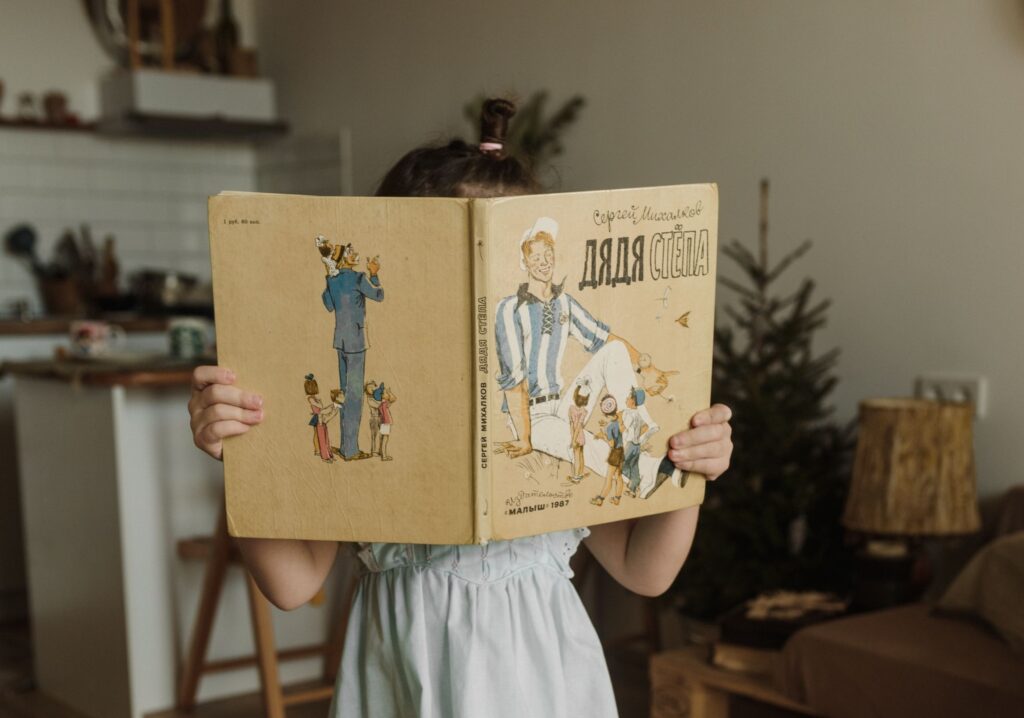

Mila is eleven, and her week was taken up by a poster on the Russian language, so the questions she usually saves for Grandma on a Sunday call were written down and asked in a row, among them how many people speak it, who made it, and whether one root really sits at the front of the word for friend and the word for other. The answers are gathered here, with the firm numbers kept apart from the ones the sources argue over.
1. Roughly 258 million people speak Russian worldwide. 2. Russian is an official language in 4 countries: Russia, Belarus, Kazakhstan, and Kyrgyzstan. It's also widely spoken in many other countries.

The number of people who speak Russian to some degree is estimated at over 250 million. Of these, around 150 million speak it as a first language, though the total varies by source. By either measure, it ranks among the eight or nine most spoken languages globally. It is considered the most spoken first language in Europe and is one of the six official languages of the United Nations. Russian is an official or co-official language in approximately four countries: Russia, Belarus, Kazakhstan, and Kyrgyzstan, and is a common second language throughout much of the former Soviet Union. In the United States, nearly a million people speak Russian at home, and over half a million do so in Canada. This is why a poster of this kind can be found in a Portland classroom and still be relevant to the language spoken at home.
Kazakhstan Kyrgyzstan Tajikistan Belarus Ukraine Moldova Armenia Azerbaijan Georgia Latvia Lithuania Estonia Uzbekistan
Two of Mila’s questions, whether Mongolians speak Russian and whether Armenians do, share the same answer, since in both the language came with the Soviet years and stayed on as a second language rather than a first. In Mongolia, tied closely to the Soviet Union for most of the twentieth century and writing its own language in Cyrillic to this day, Russian was long the first foreign language learned, and it is still spoken by much of the older generation, though the young now lean to English. In Armenia the official language is Armenian, but Russian is taught in the schools, met in the media, and used in trade with Russia, so a great many Armenians use it as a second language. The same is to be observed across much of the region, from Kazakhstan in the east to Moldova in the west, in which it is Russian that is held in common by neighbors by each of whom a tongue of their own is also kept.
Yes, the Russian language is gendered.

Russian is a gendered language to a degree that surprises a child raised in English, as each noun is assigned to one of three classes: masculine, feminine, or neuter, and whatever accompanies the noun must agree with it. There's no given reason why a table is feminine and a window neuter; the class is determined by the word's form, so the adjective preceding the noun and, in the past tense, the verb following it are made to take an ending that matches the gender. For Mila, this was the most difficult fact to fit on a poster, as there's no short rule, only the truth that the gender resides within the word and is learned along with it.
The Russian language developed over centuries from Old East Slavic, which was spoken in Kievan Rus'. It didn't have a single "creator" but rather evolved organically through the speech of the East Slavic tribes.

"Who made the Russian language?" is the kind of question whose answer a poster doesn't want, since no one made it. The language grew out of older East Slavic speech, from which Russian, Ukrainian, and Belarusian each descended, over many centuries. Although the alphabet can be traced to Cyril and Methodius in the ninth century and the modern literary language to Pushkin, on whose birthday, June sixth, the United Nations now observes its Russian Language Day, there was no single author of the language itself.
friend
One of Mila’s questions had no exact answer: how many Russian words begin with "друг," the word for friend. The root is among the busiest in the language, giving "друзья," the plural, "дружба," friendship, "дружить," to be friends, and "подруга," a female friend, among many more that a dictionary lists by the dozen. The curiosity she put at the center of her poster is that the same root sits inside "другой," the word for other, so that in the deep history of the language the friend and the other one are the one idea—the person who stands beside you—and a child who learns "друг" has half learned "другой" without knowing it.
Russian math refers to a particular approach to mathematics education and research that originated in Russia and has had a significant influence worldwide. It's characterized by several key aspects: * **Rigorous Foundations and Proof-Based Learning:** Russian mathematical education traditionally emphasizes a deep understanding of fundamental concepts and a strong focus on rigorous proofs from an early age. Students are taught to prove theorems and understand the logical underpinnings of mathematical statements. * **Problem-Solving Prowess:** There's a strong emphasis on developing exceptional problem-solving skills. This often involves challenging, non-routine problems that require creative thinking and a solid grasp of underlying principles, rather than rote memorization or algorithmic application. * **Abstract Thinking and Generalization:** Russian mathematics often encourages abstract thinking and the ability to generalize concepts. Students are trained to identify patterns, formulate general rules, and apply them to a wide range of situations. * **Strong Emphasis on Geometry:** Geometry holds a significant place in the Russian mathematical curriculum. It's not just about formulas but about developing spatial reasoning, geometric intuition, and the ability to prove geometric statements. * **Historical Figures and Schools:** The legacy of influential mathematicians like Kolmogorov, Landau, and Arnold, and the traditions established by their schools of thought, are an integral part of what is understood as "Russian math." These figures often contributed to fundamental theories and developed pedagogical approaches. * **Competition Mathematics:** The culture of mathematical Olympiads and competitions is very strong in Russia. These competitions foster a love for challenging problems and push students to excel, contributing to the development of high-level mathematical talent. * **Underlying Philosophy:** At its core, Russian math often embodies a philosophy that mathematics is a beautiful, logical system to be explored and understood, rather than just a tool for practical application (though its applications are also recognized). In essence, "Russian math" is often associated with a deep, conceptual, and rigorous approach to learning and doing mathematics, with a strong emphasis on problem-solving and logical reasoning.
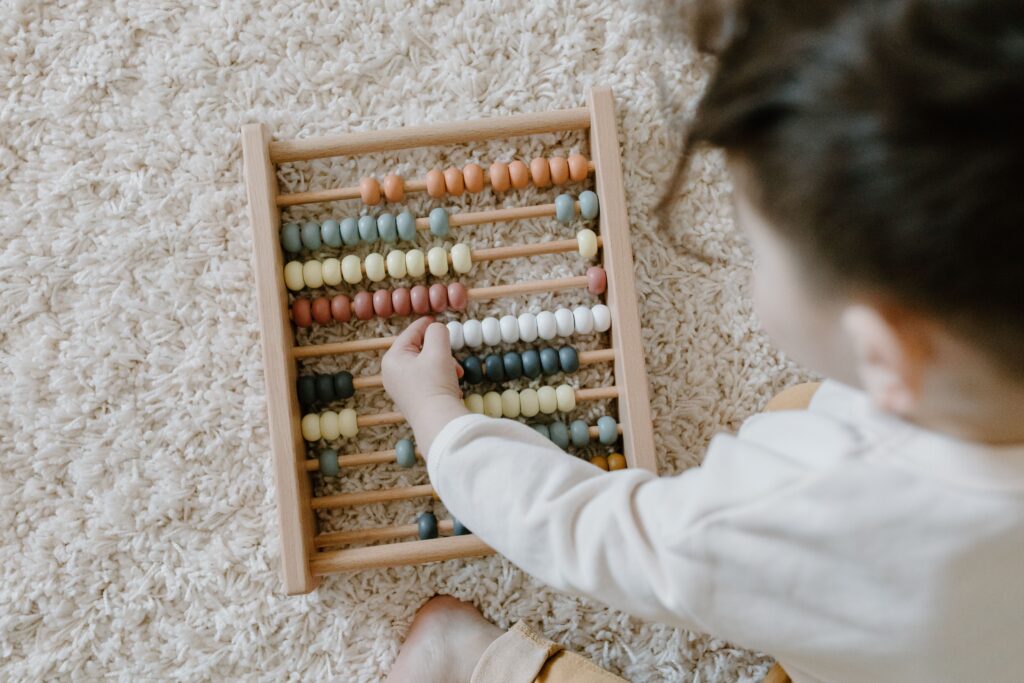
The last of Mila’s facts wasn't about language at all, since a search for Russian math leads not to Russian words but to a way of teaching arithmetic. For most, it means the Russian School of Mathematics, an after-school program started in 1997 near Boston by two Soviet émigrés and now spread across the United States and Canada. In its broader sense, it refers to the Soviet method that leads a child to the reasoning behind an answer before the answer itself.
Where a child holds a language as more than just facts
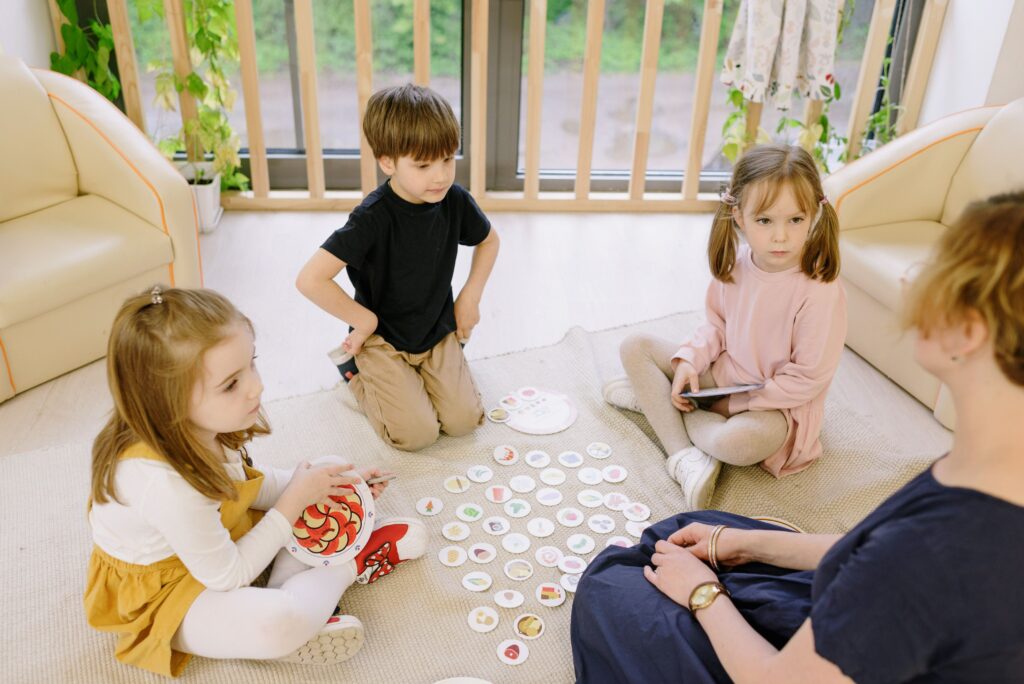
A poster of facts is a fine thing, but a child only internalizes a language by using it with other people, not by reading about it. At our school, groups are kept small, they meet a couple of times a week, and the words behind the facts, the genders learned with the nouns, and roots like "друг" ("friend") that open onto whole families of words, are encountered in use rather than in a list. The first two lessons are free and come one after the other. A child is first met by a methodologist, who determines the child's current level, and then joins a full group lesson with a teacher, so that the language on Mila's poster becomes the language spoken by Mila.
300 million
More than 250 million by common estimates, of whom around 150 million are first language speakers, though the exact figures are not agreed upon across sources. It is among the eight or nine most spoken languages and among the six official languages of the United Nations.
Yes, the Russian language is gendered.
It is. Every noun is considered masculine, feminine, or neuter, and the words accompanying it—the adjective next to it and the verb in the past tense—are obliged to take endings that show their agreement with it.
Mongolians are taught Russian as a foreign language in school, and many older Mongolians are fluent in it. However, younger generations are more likely to learn English.
Many do, the older generation most of all, since Russian was the main foreign language through the Soviet-aligned decades and Mongolian itself is written in Cyrillic. Among the young, English is now overtaking it.
Yes, many Armenians speak Russian, especially older generations and those who have had contact with Russian culture or education.
Not as a first language, since the official tongue of Armenia is Armenian. Russian, even so, is taught throughout the schools and carried widely by the media, and on that account it is understood and spoken as a second language by a great many Armenians.
Russian mathematics refers to the significant contributions and traditions of mathematics originating from Russia and the Soviet Union. It is widely recognized for its rigor, depth, and the development of several influential schools of thought in various mathematical fields. Key characteristics often associated with Russian mathematics include: * **Strong emphasis on problem-solving:** There's a long tradition of mathematical Olympiads and problem-solving competitions in Russia, which cultivates a deep understanding of mathematical concepts and the ability to apply them in creative ways. * **Rigorous foundational approach:** Russian mathematicians are known for their meticulous attention to logical rigor and the foundational aspects of mathematics. * **Development of distinct schools of thought:** Several influential mathematical schools have emerged from Russia, such as: * **The Moscow School (Kolmogorov School):** Associated with Andrey Kolmogorov, this school made profound contributions to probability theory, topology, and classical analysis. * **The St. Petersburg School:** Known for work in areas like differential equations, functional analysis, and number theory. * **The Kazan School:** Famous for its early work in Lobachevskian geometry. * **Pioneering work in various fields:** Russian mathematicians have made fundamental breakthroughs in areas like: * **Probability theory:** Kolmogorov's axioms are the foundation of modern probability theory. * **Topology:** Work by mathematicians like Pavel Alexandrov and Lev Pontryagin. * **Functional analysis:** Contributions from people like Sergei Sobolev and Mark Krein. * **Number theory:** Significant work by scholars like Ivan Vinogradov. * **Partial differential equations:** Contributions by Petr Novikov and others. * **Mathematical logic and set theory:** Work by Nikolai Luzin and his students. * **Theory of algorithms and computability:** Contributions by Andrei Kolmogorov. The term "Russian math" is not a distinct branch of mathematics itself, but rather a descriptor of the mathematical culture, educational system, and the body of work produced by mathematicians from Russia and the former Soviet Union. This distinct tradition has had a profound and lasting impact on the global mathematical landscape.
For the most part, the Russian School of Mathematics, an after-school program started in 1997 and now found across the United States and Canada, and in the broader sense, the Soviet style of teaching mathematics, where the reasons behind a method are taught before the method itself.
The Russian language evolved from Old East Slavic, which was spoken in Kievan Rus' from the 10th to the 13th centuries. There isn't a single "creator" of the Russian language; it developed gradually over centuries through the influence of various linguistic and cultural factors.
Not by any single person. It was a growth, not an invention, that emerged from older East Slavic speech. Although the alphabet is attributed to Cyril and Methodius in the ninth century, and the literary language to Pushkin, no single person can be credited as the author of the language itself.