

Grass is breaking through last year's leaves. A child is already rushing towards a puddle shouting «Puddle!», and you're standing there thinking, "Here we go again, English has won." Sound familiar?
Spring opens a window into which the Russian language can jump right out on a walk, without textbooks and without pressure. You just need to know how to call it. The Russian language on a walk sounds completely different than at a desk with a notebook. More lively, lighter, more fun.
Why does the park work better than a table with a notebook
Children aged 4–9 don't sit still. They run, jump, point, and ask «What's this?». Everything outside is new: buds on branches, rooks on the lawn, a stream along the curb. Every little thing becomes a ready-made word. And it's a word tied to a picture, a smell, the feeling of wet earth under their feet. Such words are remembered ten times better than those from flashcards.
At home, Russian often remains «Mom's language,» the language of requests, reprimands, and «go wash your hands.» Outdoors, you can make it the language of discovery. He shouted, «Puddle!» and you replied, «Luja! Ogromnaya luja!» (Puddle! A huge puddle!) And you ran together. It's no longer a lesson, but an adventure. What games can you play in the park in Russian with children aged 4–9 that feel just like that?
Five games that work right on the trail
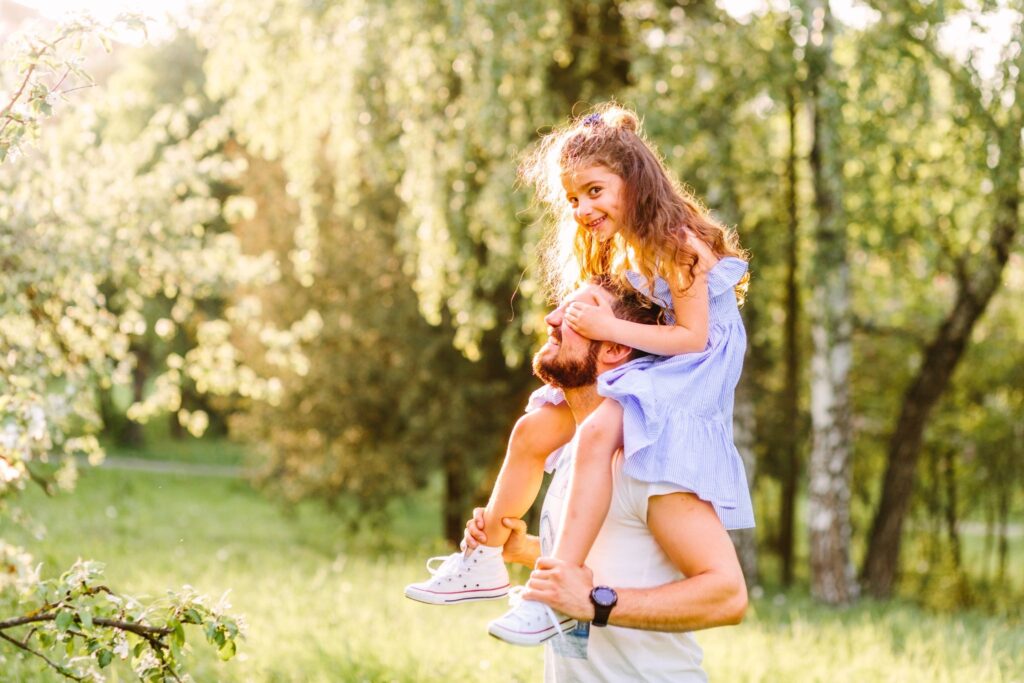
«Find and name»
The simplest. You walk through the park and take turns giving assignments: «Find something red.» The child looks around, points to a berry on a bush. «Red berry!» you say together. Next, the child asks you: «Find something round.» You point to a pebble: «Round stone!»
Why it works: the child searches on their own, chooses on their own, names on their own. You aren't dictating to them; they are controlling the game. Ten minutes of such a walk, and their vocabulary doubles with a dozen and a half new words.
«Who will notice more»
A counting game. «How many birds do you see?» He counts: «One, two... three birds!» «And puddles?» «Five puddles!» You can make it more complicated: «How many trees with buds?» This already involves numbers, nouns, and the genitive case naturally comes into play: «five puddles», «three birds.».
Don't correct him if he says «three bird.» Say, «Three birds, wow, a lot!» He'll hear the correct form and remember. Ten minutes later, counting to ten in Russian sounds confident, and he'll pick up another dozen nouns.
«Which? Which? Which?»
You stop at a tree. «Look, buds! What are they like?» He touches them: «Small.» «And what else?» «Green.» «And sticky?» And you both feel them and laugh. Then at a puddle: «What kind of puddle?» «Big! Dirty!»
This is a game with adjectives, but the child doesn't know it. He's just describing what he touches and sees. The wind rustles the branches, he squints and says, «Warm wind!» And just like that, you have a whole collection of words he hasn't learned, but experienced. Ten minutes, and his adjective vocabulary has grown by a dozen words without a single exercise.
«I see you don't see»
You say: «I see something. It's small and brown.» The child looks around and guesses, «A pinecone?» «Yes! A pinecone!» Now it's their turn to guess. «I see... it's big and wet.» «A puddle?» «No!» «A bench?» «Yes, the bench is wet!»
Here, a child learns to create descriptions in Russian not because they «have to,» but because otherwise you won't guess. Motivation is built into the game itself. In ten minutes, they will create a dozen descriptions, and each will be a short sentence in Russian.
«Spring List»
Before the walk, you agree on a goal: today we're looking for five spring things. The Palme School blog has a ready-made set of such tasks, and it works great as a starting point: find something round, something yellow, a bird, a puddle, a bud. You can fold your fingers or draw checkmarks with a stick on the ground. Found it and named it in Russian. By the end of the walk, the list is complete, and the child is proud. Fifteen minutes, five discoveries, and two to three new words are attached to each one.
How to play so as not to lose the desire
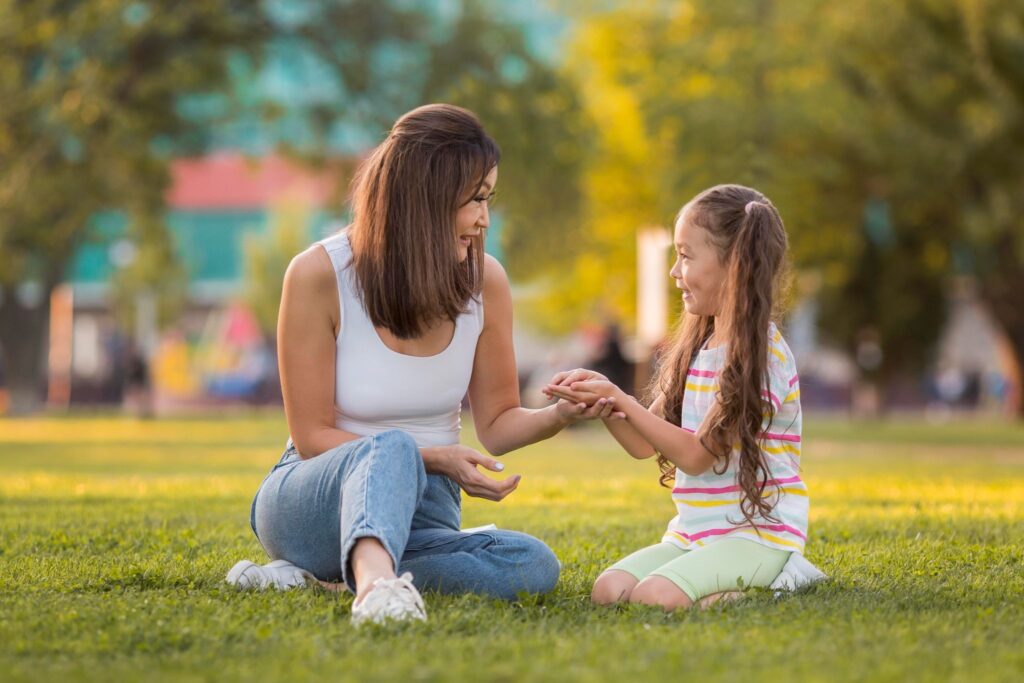
The main rule: you play, you don't test. If the child is shy or doesn't want to speak Russian, start yourself. Whisper: «Find red.» He will silently point to the tulip. You: «Red tulip! Beautiful.» He will smile. Next time, maybe he'll say it himself.
Praise the attempt, not the result. He said «red... flower»? Great. «Red flower, exactly!» Gently correct the wording and move on. No criticizing, no «say it right.» He heard the correct version, and that's enough.
Look, a bird! Yes, a bird! Look, it's sitting on a branch. Russian next to it, not instead of and not against.
What is best not to do
Don't turn a walk into an exam. Phrases like «say it in Russian,» «no, that's wrong,» or «you know this word» close the door you're trying to open. Instead of «no, not like that,» just say: «Great, a puddle!» And run on.
Don't force him to count correctly. If he says «four bird» instead of «four birds,» it's okay. He's counting in Russian, and that's already a victory.
Don't correct the accent. Is he saying «pochka» instead of «pochka»? A small thing that will go away on its own if Russian is heard around enough.
Try it today
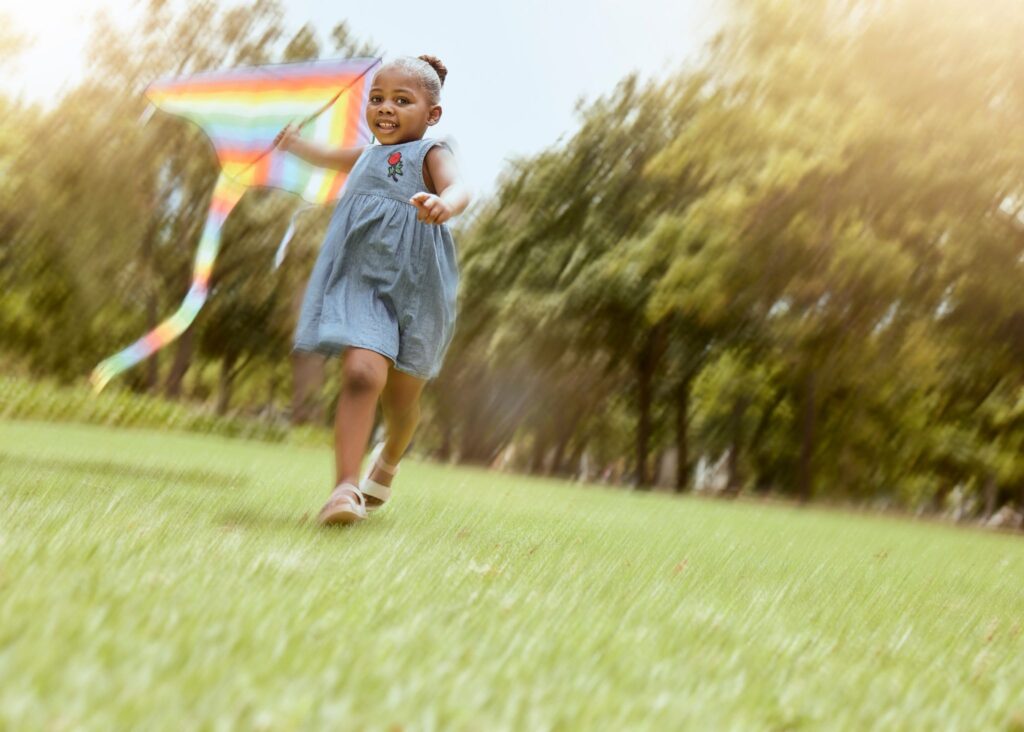
Choose one game. Just one: «find red» or bird count. Go to the park for fifteen minutes. Don't wait for perfect Russian, don't prepare a plan. Just play and see what happens.
Maybe he'll say three words. Maybe twenty. Maybe he'll laugh and run to the next puddle, already speaking Russian.