



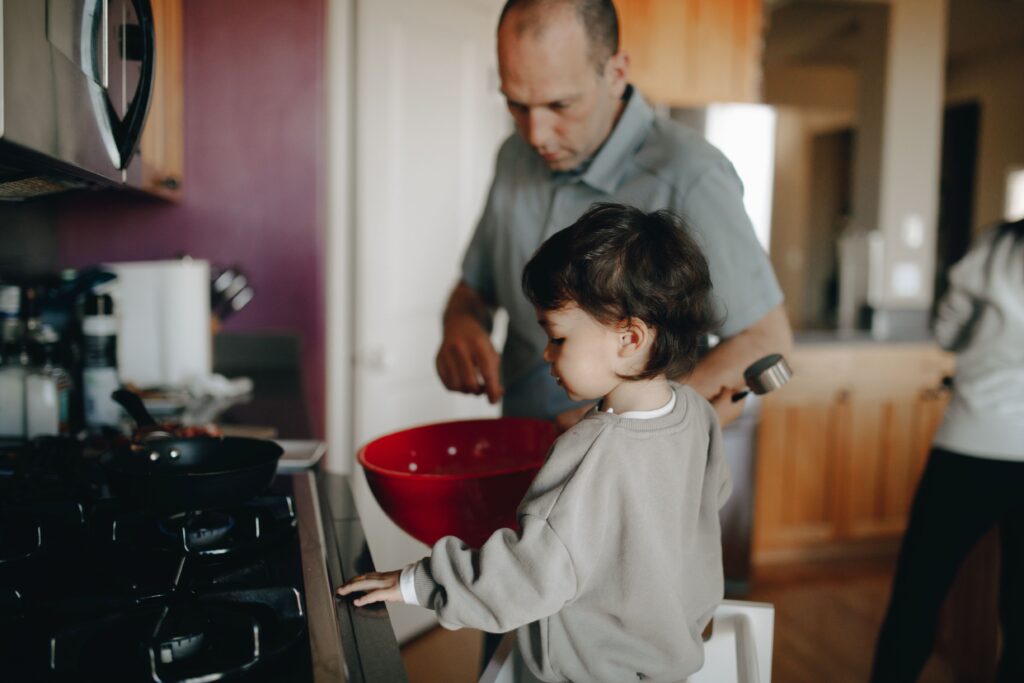
The afternoon is an ordinary one, in a neighborhood that sits on the north side of Austin. Leo is twelve. A friend is over after school when the father of Leo picks up the phone, and a minute later the friend asks Leo to do the accent. Leo tries and cannot, though the sounds have been in the house for the whole of his twelve years.
The friend who asked is after a party trick, a voice that can be switched on for a laugh. But the way Leo’s father sounds is left there by a first language that was Russian, and each piece of it can be tied to a sound the two languages do not share. What Leo cannot fake is what his father does without thinking, reaching for the nearest Russian sound wherever English asks for one that Russian does not carry.
How to do a Russian accent and the trouble with w and v
The feature that reaches a listener first is the closeness of the w and the v. The Russian language is in possession of a v but it does not hold the w that English uses, and the consequence is that the two are received by many Russian speakers as one sound that varies a little rather than as a pair that has to be kept apart. When the father of Leo remarks that the water is warm, the word water can be produced closer to vater, and on a different day the word vine can drift the other way toward wine. The lean is not settled in a single direction, and for that reason a person who is studying how to do a Russian accent and who converts each w into a v has gone further than the speech of Leo’s father actually goes.
How to talk in a Russian accent and the th sounds
Russian does not contain either th, the one in think or the one in this, and so Leo’s father reaches for the nearest sound that he already owns. The word three can be heard from him as tree, and a quick thank you can arrive as sank you, while the th in the middle of bother is given a soft z whenever he says that he will not bother with something.
The r and the l in a Russian accent
For a person studying how to do Russian accent feature by feature, the r and the l are the sounds that the mouth has to be retrained for, because they are produced in places that English does not use.
The dropped a and the in a Russian accent
There is one feature of the accent that a listener catches by what is left out rather than by any sound that is added. Because Russian works with no a and no the at all, a person who was raised inside that system tends to let those words drop when speaking English, so that an English sentence such as put the keys on the counter can be produced by Leo’s father as put keys on counter. When his father tells him to shut the door behind him, the the in front of door is liable to go missing from the sentence Leo hears.
| Feature | What happens | Example |
| w and v | Russian has a v but no w, so the two merge into one sound that drifts in both directions | water → vater, vine → wine |
| th as in think | Replaced by the nearest sound the speaker already owns, a t or an s | three → tree, thank you → sank you |
| th as in this | Replaced by a soft z | bother → bozer |
| r | Tapped or rolled with the tip of the tongue, where the English r bends the tongue back without touching | river said with a rolled r |
| l | Made with the tongue pressed flat and heavy, darker than the light English l | little said with a heavy l |
| a and the | Dropped entirely, since Russian carries no articles at all | put the keys on the counter → put keys on counter |
A child who keeps the Russian language is in possession of those same sounds from the inside, which is the reason the imitation is not available to Leo as a trick to be switched on. An accent like his father’s is the audible record of a second language that a person carries, and a child who holds onto both languages is handed the same set of sounds, with the added ease of moving between them at will.
Common questions from parents about a Russian accent
01Is it alright to do a Russian accent in a school skit?
02Will my own accent rub off on my kid’s English?
Keep your child’s Russian active

For a family in which Russian is spoken at home, the practical step is the provision of regular reasons for the child to use it, and that is the work our program carries out for children who are growing up inside English. It is built for children of the ages four to seventeen.
A beginning can be made with two free lessons. The first of these is an assessment with a methodologist, in the course of which the child is spoken with and the current level is determined, so that the work is fitted to the child from the start. After the assessment there comes a trial group lesson with a teacher, in which the child is placed in one of our small groups and the running of a regular class is seen from the inside. Nothing has to be prepared in advance, and the two lessons together are a clear way of finding where the child stands and of keeping the Russian moving forward.