

A six-year-old boy runs into the kitchen with a drawing in his hand. It is a green cat with very long legs, and he holds it so close to your face that you can hardly see it. What do you say? In English you would probably answer “Good job!” without thinking, and he would grin and run off. In Russian the answer can be just as short, but there are more words to pick from, and some of them tell a child a lot more than a simple “well done.”
The first word to learn is молодец (molodets), which is how to say good job in Russian at home, at school and on the playground. This article gives you 15 ways to praise a child, starting with the simplest ones and moving toward phrases that show you really looked at what your child did. Along the way you will see what changes for a boy, a girl or a whole group, and why a few of these phrases may work better than the famous молодец.
How to Say Good Job in Russian: Molodets
Let’s start with the main word. Молодец means “well done” or “good job,” and you say it about something a person did, like finishing a hard task, helping somebody or making a smart choice. Elon says it is common with children and also used between adults. The stress is on the last part, so it sounds like “muh-luh-DYETS.”
1. “Молодец!” (Molodets!). On its own it works when it is clear who you are talking to, for example when your child has just put the last toy back in the box.
2. “Ты молодец!” (Ty molodets!), “You did great!” Ты is the informal “you,” so this is what you say to your own child or to a friend. If you are talking to several children, you say “Вы молодцы!” (Vy molodtsy!), and to one adult in a polite way it is “Вы молодец!” (Vy molodets!).
Many learners are surprised that молодец is a masculine noun and people still use it for girls. Elon notes that “Ты молодец!” sounds perfectly normal said to a woman or a girl. The dictionary site Kartaslov lists the older meanings of the word, a strong young man and a fine fellow from folk tales, and it also gives a modern example about girls, “молодцы наши девчонки” (molodtsy nashi devchonki), “our girls did great.” So you don’t need a different word for your daughter.
Words for Different Moments
Молодец is the everyday word, but there are others, and each one has its own feeling. It helps to think about what exactly your child just did.
3. “Умница!” (Umnitsa!), “Clever one!” It is a warm word, and it works for boys and girls alike. Parents say “Ты у меня умница” (Ty u menya umnitsa), “You’re my clever one,” to sons all the time. Elon notes that it is often used for women and girls, but you can use it for any child. Small children often hear the sweeter form “Умничка!” (Umnichka!). It fits best when a child understood something quickly, like “Ты так быстро решила задачу, умница!” (Ty tak bystro reshila zadachu, umnitsa!), “You solved the problem so fast, clever girl!”
4. “Отличная работа!” (Otlichnaya rabota!), “Great job!” This is probably the closest match to the English “Good job!” when a child has finished something, like homework or a chore. You will also hear “Хорошая работа!” (Khoroshaya rabota!), which is a bit calmer and means “Good work!”
5. “Ты отлично это сделал!” (Ty otlichno eto sdelal!), “You did that really well!” Say сделал to a boy and сделала (sdelala) to a girl, because the verb changes with the gender of the person you are praising. The same goes for all the two-form phrases below. You can also say “Ты отлично справился!” (Ty otlichno spravilsya!), “You handled it really well,” with справилась (spravilas’) for a girl.
6. “Браво!” (Bravo!), “Bravo!” Just like in English, it is a cheer for a performance, so use it after a song, a dance or a little show in the living room.
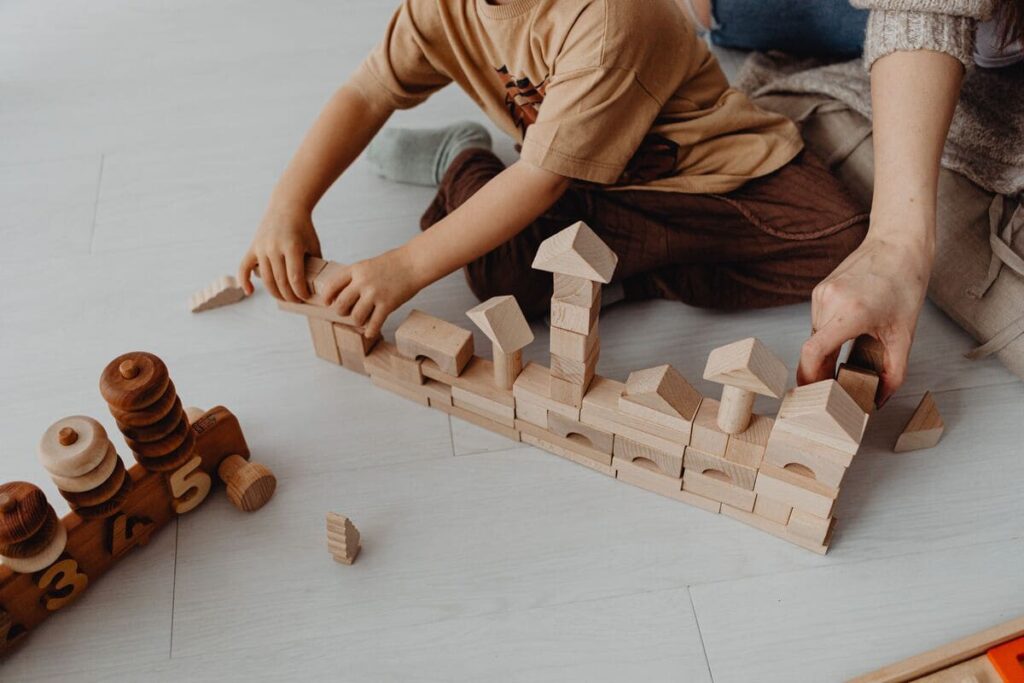
7. “Здорово!” (Zdorovo!), “Great!” This one is lively and informal, and it is perfect when a child shows you something exciting, like a high jump or a tower of blocks. It looks a lot like здорова from our article on how to say bless you in Russian, but the stress is different: ЗДО-ро-во for “great,” and здо-РО-ва for “healthy.”
8. “Ничего себе!” (Nichego sebe!), “Wow!” It is what you say when you are surprised in a good way, for example when your child has built something much bigger than you expected.
9. “Вот это да!” (Vot eto da!), “Now that’s something!” It is another happy exclamation, a bit like a gasp, and children love it.
If you want to praise how something looks, such as a neat drawing, our article on how to say beautiful in Russian has more words for that, including прекрасно (prekrasno), “wonderful.”
Praise for Trying and Getting It Done
Sometimes a child doesn’t do something perfectly but tries really hard, and that is when you need different phrases.
10. “У тебя получилось!” (U tebya poluchilos’!), “You did it!” or, word by word, “It worked out for you!” It is a happy phrase for the moment when a child has tried several times and finally succeeds, for example when they tie their shoes alone. Here the verb doesn’t change for a boy or a girl.
11. “Так держать!” (Tak derzhat’!), “Keep it up!” It is encouragement, and it sounds a bit like a coach talking, so it is nice for older children who practice a sport or an instrument.
Phrases That Show You Really Looked

The last four phrases come from a different idea, and there is research behind it. In 1998, the psychologists Claudia Mueller and Carol Dweck published a study in the Journal of Personality and Social Psychology with fifth graders in the United States. After a successful task, some children were told they must be smart, and others were told they must have worked hard. The children praised for intelligence mostly chose tasks that would let them look clever, and the children praised for effort were more likely to pick tasks where they could learn something new. After a failure, the first group did worse on the next set of problems, while the effort group did better. The authors concluded that praising intelligence can backfire, and that praising effort helps children bounce back. You can read the original paper here.
This does not mean you must stop saying умница, which is a lovely word. You can keep it, and add a few words about the work your child put in. A Ukrainian news site, Vikna, made a similar point in 2023, when the family psychologist Valentyna Chaika said that “ты молодец” tells a child very little because it does not say what exactly was good. She suggests showing real interest and saying what you noticed. The phrases below are close to the ones the article recommends.
12. “Я так горжусь тобой!” (Ya tak gorzhus’ toboy!), “I’m so proud of you!” This one is about the child as a person and not about a single task, so keep it for moments that really matter.
13. “Ты долго над этим работал!” (Ty dolgo nad etim rabotal!), “You worked on this for a long time!” For a girl, say работала (rabotala). It shows that you noticed the time and the effort.
14. “Расскажи, как ты до этого додумался?” (Rasskazhi, kak ty do etogo dodumalsya?), “Tell me how you figured that out.” For a girl, додумалась (dodumalas’). It is a question, but a happy one. Your child gets a chance to tell you the story behind the drawing or the tower. A shorter version is “Как ты это придумал?” (Kak ty eto pridumal?), “How did you come up with this?”
15. “Ты мне очень помог, спасибо!” (Ty mne ochen’ pomog, spasibo!), “You helped me a lot, thank you!” For a girl, say помогла (pomogla). Many parents forget that спасибо is a kind of praise too, especially when a child carried the groceries or set the table.
How Much to Praise, and How Children Answer
Say something nice to a child and watch what happens. They answer “Спасибо!” (Spasibo!), “Thank you!”, and a second later they are off again with ten more ideas for you. Grown-ups are harder. Tell a friend that she did a great job and you will probably hear “Ой, да что ты!” (Oy, da chto ty!), “Oh, stop it!” She isn’t angry. That is just the polite way to be modest, and you have most likely done it yourself.
Not every Russian parent hands out praise easily, by the way. One post on the Transparent Language blog, “What Are Russian Parents Like?”, says that parents are proud of their kids but don’t praise them much, especially for just taking part or trying. Some people worry that praise in front of others will embarrass a child, or “go to their head.” Russian even has a word for it, захвалить (zakhvalit’), “to praise too much.” That is one blogger’s opinion, so take it as a little color, not as a rule.
And what about your own child? The study we talked about earlier points in a simple direction. Children cope better with a failure when they know that you noticed how hard they tried. So say what you really see, and only when it is true. You don’t need a medal for every little thing. One honest “У тебя получилось!” after a long, hard try can mean more than ten quick молодцы.
Free download
500 Russian Words for Kids
A starter word list to help your child begin speaking Russian abroad
A Short Scene After School
Think about the last time your child showed you something they made. A tower of blocks, a poem, a map of the school yard. You were probably cooking, or answering a message, and you said “Nice!” without looking up. (Everybody does that. It is a very human thing.)
Next time, try something else. Put the phone down. Look at the thing for a moment, a real moment. Then say “Ничего себе! Ты долго над этим работал” (Nichego sebe! Ty dolgo nad etim rabotal), “Wow! You worked on this for a long time.” Ask “Расскажи, как ты это придумал?” (Rasskazhi, kak ty eto pridumal?), “Tell me how you came up with it.” And then comes the hardest part, which is to listen. Children love to explain. Ten minutes may go by. When they finally finish, and if you mean it, you can say “Я так горжусь тобой” (Ya tak gorzhus’ toboy), “I’m so proud of you.”
You didn’t say молодец even once, did you? Your child will still know that you are pleased. It is written all over their face. If a little brother or sister runs into the room at that moment and stares at the tower, the right word for them is probably “Здорово!” (Zdorovo!), “Cool!”
And the boy with the green cat from the beginning? Look at his drawing and say “Какие длинные лапы! Как ты это придумал?” (Kakiye dlinnyye lapy! Kak ty eto pridumal?), “What long paws! How did you come up with this?” He will tell you the whole story of that cat. For a six-year-old, it is the best praise there is.
Frequently Asked Questions About Saying Good Job in Russian
How do you say good job in Russian?
Most people say молодец (molodets) or “Ты молодец!” (Ty molodets!), “You did great!” After a finished task you can also say “Отличная работа!” (Otlichnaya rabota!), “Great job!” To a group, say “Вы молодцы!” (Vy molodtsy!).
Can you say молодец to a girl?
Yes. The word itself is masculine, but Russians say it to girls and women all the time, and “Ты молодец!” sounds natural to a daughter.
What is the difference between молодец and умница?
Молодец is for what a person did. Умница is for being clever, and it often sounds warmer. Both are fine for boys and for girls. Little kids also hear умничка (umnichka), the sweet form.
How do you say “I’m proud of you” in Russian?
Say “Я горжусь тобой” (Ya gorzhus’ toboy). It is a strong and personal phrase, so keep it for moments that really matter.
How do you say “keep it up” in Russian?
Say “Так держать!” (Tak derzhat’!). It is cheerful, like something a coach would shout.
What to Do Next
Children enjoy praise phrases because they use them with each other all the time, from “Молодец!” after a goal to “Здорово!” for a friend’s drawing. In a small group lesson, kids practice cheering each other on in Russian, which is more fun than repeating the words alone. If your child is new to the language, our Russian as a foreign language course is a good place to start. If your family speaks Russian at home and your child wants to read and write more confidently, take a look at Russian for bilinguals.
Before you pay for anything at Palme School, you can try two free lessons. The first is a short introductory session with a curriculum specialist, and the second is a trial lesson with a small online group. Each lesson takes 40 minutes, and we teach children ages 4 to 17.