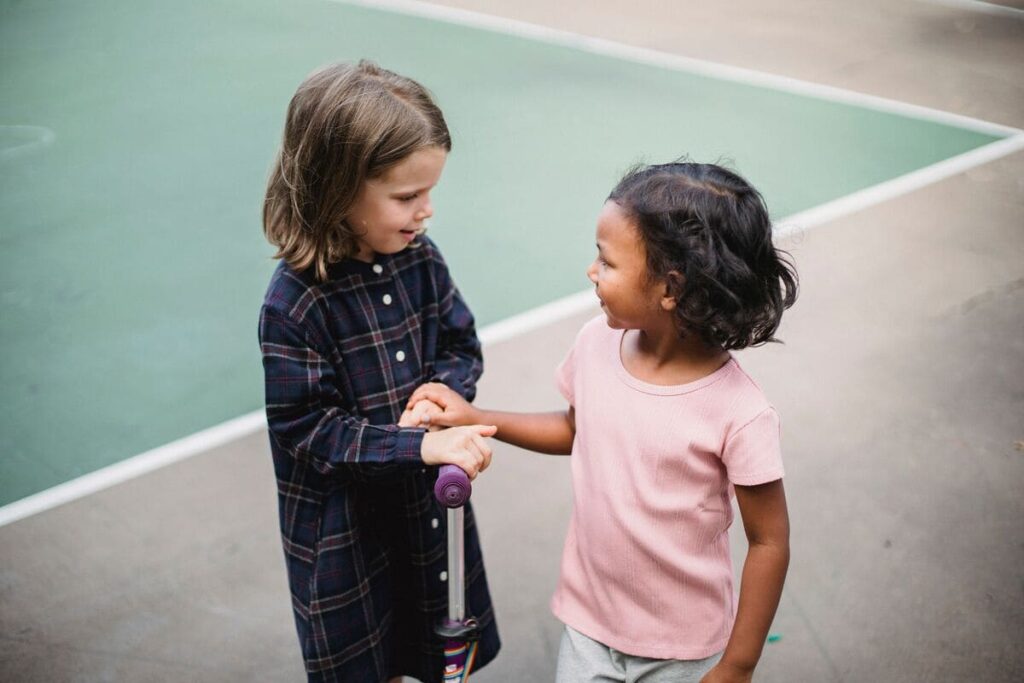
Think about the people you spend time with in a normal week. There is the friend you’ve known since school, the neighbor you chat with in the elevator, and the coworker you sometimes have lunch with. In English we use more or less the same word for all of them. Russian works differently, because the word you choose also tells people how close you really are.
So here’s how to say friend in Russian. For a close friend, you say друг (drug) for a man and подруга (podruga) for a woman. For someone you like but don’t know very well, you say приятель (priyatel’). And for someone you simply know, there’s знакомый (znakomyy). In this article, we’ll look at each word, see which one to use so you don’t sound too intense or too cold, and finish with some warm words that kids and close friends use with each other.
One Ladder of Friendship Words
The table below shows the words you’ll come across most often, from the closest relationship to the most distant.
| Russian | Transliteration | Roughly means |
| friend | drug | friend (a close friend, usually a man) |
| подруга | podruga | friend (a close female friend) |
| приятель / приятельница | priyatel’ / priyatel’nitsa | pal, friendly acquaintance (man / woman) |
| знакомый / знакомая | znakomyy / znakomaya | acquaintance (man / woman) |
| одноклассник / одноклассница | odnoklassnik / odnoklassnitsa | classmate (boy / girl) |
| дружище | druzhishche | buddy, old friend (warm, for a man) |
Think of it as a ladder. At the bottom is знакомый, someone you know. One step up is приятель, someone you enjoy spending time with. At the top is друг, a person you trust. Russian for Everyone puts it in a similar way: друг and подруга are for a very good, close friend, while приятель and приятельница are for someone you’ve known for quite a while but wouldn’t call your best friend.
Drug and Podruga: The Close Friend
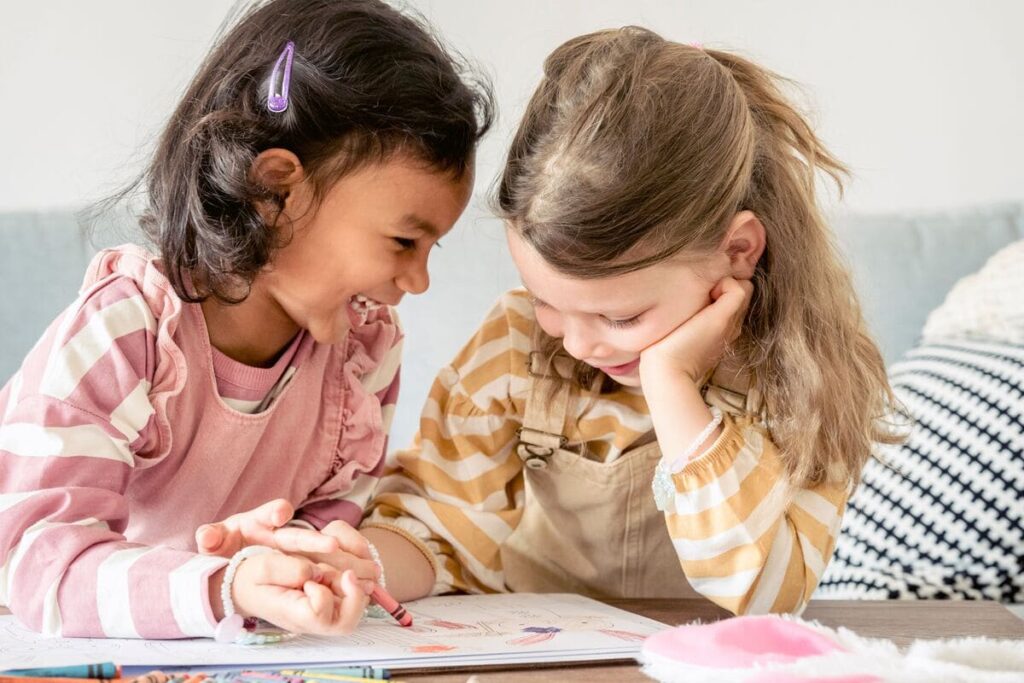
Друг is the standard word for a friend, and it’s a strong one. According to the Polyglottist Language Academy, it’s the strongest word on the list, carrying a sense of trust, loyalty and a long-term bond, and calling someone друг too early can sound exaggerated or even strange. People don’t hand out this word lightly.
For a woman, the word is подруга (podruga). It’s not simply друг with a new ending. It’s a separate word, built with the little prefix по-, so it’s best to learn the two as a pair. “Это мой друг” (Eto moy drug) means “This is my friend,” and “Это моя подруга” (Eto moya podruga) is the same sentence about a woman. Notice that мой also changes to моя, because the whole phrase has to agree.
Друг isn’t strictly a male word, either. In a general sense it can describe a woman too, and “Она мой лучший друг” (Ona moy luchshiy drug), “She’s my best friend,” is a perfectly normal sentence. Some women use it on purpose, to say that the friendship is strong and simple. But if you’re just starting out, pairing друг with a man and подруга with a woman will always sound natural.
The plural is друзья (druz’ya). It doesn’t follow the usual pattern, so it’s worth learning as a separate word, and it also works for a mixed group of boys and girls. MasterRussian gives three good examples: “Он мой лучший друг” (On moy luchshiy drug), “He’s my best friend”; “Теперь мы друзья” (Teper’ my druz’ya), “Now we’re friends”; and “У него много друзей” (U nego mnogo druzey), “He has a lot of friends.” Notice that after много, the plural changes again, to друзей. That’s a case ending, and we can leave it for later.
Two more words belong here. The verb дружить (druzhit’) means “to be friends,” and дружба (druzhba) means “friendship.” So “Мы дружим” (My druzhim) is a natural way to say “We’re friends,” and it sounds a little less weighty than calling someone друг.
There’s one thing to be careful about. The Polyglottist article says подруга can informally mean a romantic partner, and Russian for Everyone says something similar about both друг and подруга: either word can mean a boyfriend or girlfriend, though not necessarily. So if you say “моя подруга” in the wrong context, someone might think you mean your girlfriend. The clear words for a romantic partner are “моя девушка” (moya devushka), “my girlfriend,” and “мой парень” (moy paren’), “my boyfriend.” If you mean a friend and want to be extra clear, you can say “просто подруга” (prosto podruga), “just a friend.”
Podruzhka and Other Words Kids Use
Now to the words children use most. Girls say подружка (podruzhka), a smaller, friendlier form of подруга. “Это моя подружка Маша” (Eto moya podruzhka Masha), “This is my friend Masha,” is exactly how a six-year-old would say it. For adults the word can sound a bit girlish, but between kids it’s everywhere.
At school, the word that fits best is одноклассник (odnoklassnik) for a boy and одноклассница (odnoklassnitsa) for a girl. It means “classmate,” and it only says that two children sit in the same class, not that they are close. If two kids are in the same study group at a university, the word is одногруппник (odnogruppnik). So a child might say, “Это мой одноклассник” (Eto moy odnoklassnik), “This is my classmate,” and later, when they start playing together, “Это мой друг” (Eto moy drug), “This is my friend.”
One more word for kids is дружок (druzhok), a small, affectionate form of друг. It’s playful and sweet when an adult says it to a child, or between children. Be careful with grown-ups, though. When one adult says “Слушай, дружок…” (Slushay, druzhok…), “Listen, buddy…” to another, it can sound patronizing, as if the speaker were talking down to a little kid. So keep дружок for children and for people you know very well.
Priyatel: A Friend, but Not Quite

Maybe there’s a guy at your gym you always joke with before training, and you like him fine, but it would never cross your mind to call him when something goes wrong. In Russian he’s a приятель (priyatel’). He isn’t a stranger, but he isn’t really a друг either, and a woman like that is a приятельница (priyatel’nitsa). The Polyglottist article has a short example, “Мы приятели” (My priyateli), which means “We’re casual friends.”
You’ll use this word mostly when somebody asks who the person next to you is and you don’t want to say too much or too little. “Это мой приятель” (Eto moy priyatel’) works nicely for that, because it sounds easy and a little relaxed. It’s a word you say about a person to someone else, though, and not to the person, so you wouldn’t go up to somebody new and say “Привет, приятель!” (Privet, priyatel’!).
Znakomyy and Tovarishch: Acquaintances and Comrades
At the bottom of the ladder is знакомый (znakomyy), which means “acquaintance,” or, if you take it word by word, “someone known.” It can be a coworker you say hello to in the hallway, a neighbor from the third floor, or a man a friend introduced you to once at a party. The Polyglottist article says it’s the safest word when you aren’t sure, and gives the example “Он мой знакомый” (On moy znakomyy), “He’s an acquaintance.” For a woman you say знакомая (znakomaya), and if you like the person a bit more you can say хороший знакомый (khoroshiy znakomyy), a “good acquaintance,” which is warm but still not close.
Then there’s товарищ (tovarishch), which means “comrade.” According to Wikipedia, it started as a word for a business partner or someone who travels with you, and after the Russian Revolution people used it for almost everyone in the Soviet Union, the way we might say “Mister” or “Sir” in English. Today it sounds very Soviet, so you’ll mostly hear it in history lessons and in jokes. There’s one place where it’s still alive, though, and the same article says it’s the official way to address people in the Russian armed forces, as in “товарищ старший лейтенант” (tovarishch starshiy leytenant), “Comrade Senior Lieutenant.” So when a friend says “товарищ” with a smile, it’s a joke, and when a soldier says it, that’s simply the rule.
Brothers and Other Warm Words for Close Friends
When two people get really close, they usually stop using the regular words, and men in particular start calling a good friend брат (brat), which means “brother,” even if they aren’t related at all. Wikipedia’s page on Russian forms of addressing also lists братан (bratan) and браток (bratok) as words for a close friend. Братан sounds a bit rough, like something from the street, so don’t pick it up only because it means “brother.” You’ll hear your friends say it, and it’s better for you to wait a while before you try it yourself.
A softer word is дружище (druzhishche), a warm form of друг for a man, a little like “old buddy.” You can say “Привет, дружище!” (Privet, druzhishche!), “Hi, buddy!”, to a man you’ve known for years. All of these are meant for people you know well, and if you say them to a stranger it feels strange, and some people may even take it badly.
If you like the softer, sweeter side of Russian, our post on Russian terms of endearment shows how Russians turn names and words into warm nicknames.
How to Talk About Your Own Friends
Now let’s put the words to use. You can start with a simple introduction: “Это мой друг Антон” (Eto moy drug Anton), “This is my friend Anton,” or “Это моя подруга Лена” (Eto moya podruga Lena), “This is my friend Lena.” If you’re not sure how close you are yet, “Это мой знакомый” works, and “Это мой приятель” falls in between. For phrases to use when meeting someone new, see our guide on how to introduce yourself in Russian.
Russian also has nice ways to describe a friendship. A friend you’ve known since childhood is друг детства (drug detstva), and your best friend is лучший друг (luchshiy drug) or лучшая подруга (luchshaya podruga).
It also helps to know that many Russian speakers don’t call someone a friend right away. Trust grows over time, and the word you use reflects how close you are. So don’t worry if a Russian acquaintance doesn’t call you друг after one meeting. It’s not a sign of coldness, and when it does happen, it usually means a lot.
Here’s a simple way to remember how to say friend in Russian with the right word. For someone you trust, use друг or подруга. For someone you like but don’t know well, use приятель. If you’re not sure at all, use знакомый. And if a friend tells you “Теперь мы друзья!” (Teper’ my druz’ya!), “Now we’re friends!”, you can answer with a big smile and “Конечно!” (Konechno!), “Of course!” We explain the shorter, shruggier answers in our guide on how to say OK in Russian.
Frequently Asked Questions About Saying Friend in Russian
How do you say friend in Russian?
The standard word is друг (drug) for a man and подруга (podruga) for a woman. The plural is друзья (druz’ya).
What is the difference between друг and приятель?
Друг is a close friend you trust. Приятель is a pal, someone you enjoy talking to but don’t know deeply. Calling someone друг too early can sound exaggerated.
Can подруга mean girlfriend?
Sometimes, yes. Informally, подруга can mean a romantic partner, so context matters. The clear words are “моя девушка” (my girlfriend) and “мой парень” (my boyfriend). To say it’s just a friendship, say “просто подруга” (prosto podruga), “just a friend.”
What is the safest word for someone I don’t know well?
Знакомый (znakomyy), or знакомая (znakomaya) for a woman. It means “acquaintance” and says nothing about how close you are.
How do you say “best friend” in Russian?
Say лучший друг (luchshiy drug) for a man and лучшая подруга (luchshaya podruga) for a woman. For example, “Он мой лучший друг” means “He’s my best friend.”
How does a child say “classmate” in Russian?
Одноклассник (odnoklassnik) for a boy and одноклассница (odnoklassnitsa) for a girl.
Free download
500 Russian Words for Kids
A starter word list to help your child begin speaking Russian abroad
What to Do Next
Words for people are some of the first words children want to learn, because they talk about their friends all the time. In a group lesson, they can practice saying “Это мой друг” and “Это моя подружка” with classmates, which is much more fun than practicing alone. If your child is a complete beginner, our Russian as a foreign language course is the place to start. If your family speaks Russian at home but your child finds reading and writing harder, take a look at Russian for bilinguals.
Palme School offers two free lessons so you can try before you decide. The first is an introductory session with a curriculum specialist, and the second is a trial lesson online in a small group. Each lesson lasts 40 minutes, and children ages 4 to 17 can join. Who knows? Maybe your child will soon say to a new classmate, in perfect Russian, “Давай дружить!” (Davay druzhit’!), “Let’s be friends!”