

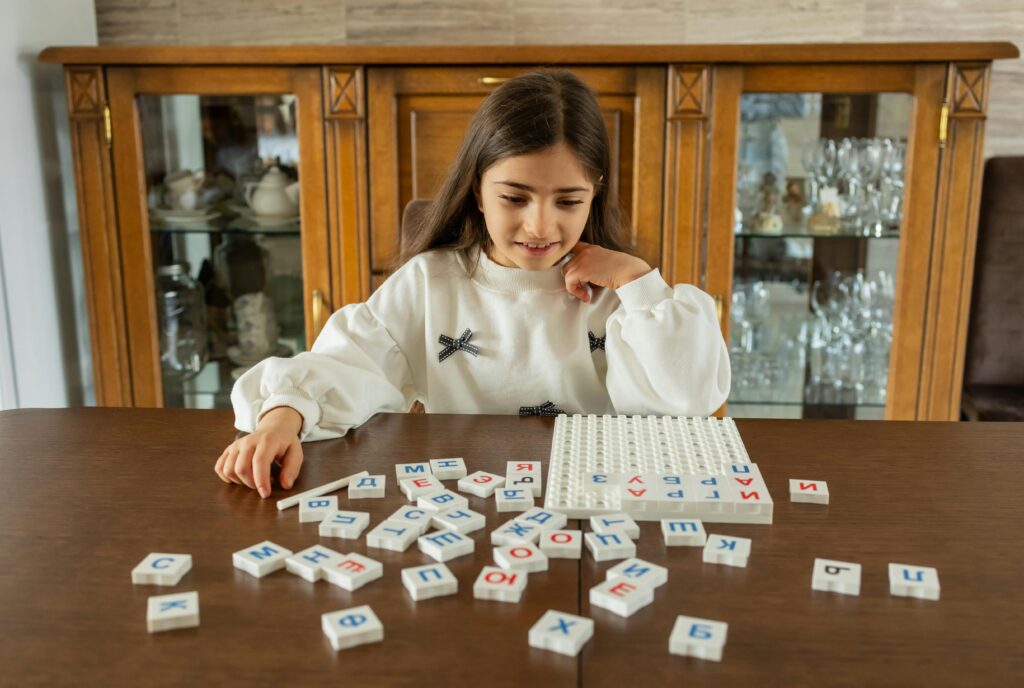

A mother in a suburb to the north of Denver has done the reading that many parents in her position have done, and in most of what she has found it is stated that the Russian language ranks among the harder languages that an English speaker is able to take on. At the age of eleven, the whole of the day of her son Mark is passed in English, and the handful of Russian words that have been retained by him are the ones by which use is made at the dinner table. The question that is turned over by her is whether any sense is to be found, in the case of a child whose thinking has settled already into English, in the taking on of a language that is filed by most guides under the heading of the difficult. It can be said that the Russian language is hard to learn, and yet the reputation that is carried by it is heavier than the situation warrants, for the reason that the greater part of the difficulty is situated in the opening stretch of the study and is not maintained at the same level across the years by which that opening is followed.
The honest difficulty of learning Russian for English speakers

A useful measure from which a beginning can be made is provided by the Foreign Service Institute, the body by which American diplomats are given their training in foreign languages. Each language is rated by that institute according to the approximate count of the classroom hours that are required of an English speaker for the reaching of professional working proficiency, and within that rating the Russian language is situated in the harder of the middle tiers, at a figure that is close to 1,100 hours, which is the equivalent of about 44 weeks of full time study. (The label that is attached to that tier varies between sources, since an older five part scheme that still circulates online numbers the categories differently, so the hours are the figure to trust rather than the category name.) Set against the roughly 600 to 750 hours that are required for Spanish or French, the Russian language asks for a good deal more, and yet it sits far below Arabic, Mandarin, Japanese, and Korean, the languages for which around 2,200 hours are estimated.
One caution is worth the keeping in view at the point where the question of how hard it is to learn Russian is raised in these terms. The figure of 1,100 hours is widely subjected to misreading, for the reason that what is counted by it is the intensive classroom hours of motivated adults by whom the language is studied all day under professional instruction, and what is described by it is a very high level of mastery by which few learners are in need. The amount of the Russian language by which a family is allowed to talk together and to keep a grandparent within reach is arrived at a long way in advance of that mark.
The Cyrillic alphabet is the part of the Russian language that is feared the most and demands the least
At the very start of the study, the first obstacle by which a learner is met is the Cyrillic alphabet, which is the feature of the Russian language that is regarded as the most daunting from the outside and is found, at the same time, to require the least effort of all. The number of letters that are contained within it is 33.
The real difficulty in learning Russian is its grammar

The part of the Russian language that earns its reputation is the grammar, and within the grammar two features account for most of the difficulty that is reported by English speakers. The first of them is the case system, by which the ending of a Russian noun is changed in accordance with the job that is being done by it within the sentence, across six cases, in such a way that a single word is met in several forms in advance of the moment at which its pattern is understood. English marks almost none of this, which is the reason that the case endings seem so foreign at the beginning. The second is verb aspect, the distinction that is drawn in Russian between an action that is viewed as complete and the same action that is viewed as ongoing or repeated, a distinction for which English carries no single matching device.
The advantage children have in learning Russian
This is the ground on which the work of our school is based. The groups are kept small, a couple of meetings are held each week, and the hour is run as time that is spent inside the Russian language rather than as a lecture about it, which is the setting in which a case ending or a verb pair is taken up by a child without the difficulty that is presented by the same material on the page. The door is opened by two free lessons, one after the other. A methodologist sits with the child first and works out the level at which the child stands, and after that a full lesson is taken with a group and a teacher, so that a parent in the position of Mark’s mother is able to see what the difficulty that is described in the guides comes to inside a classroom, with a child of her own.
Is Russian one of the hardest languages an English speaker can learn?
It is one of the harder languages, but not the hardest, sitting in a middle tier. The Foreign Service Institute places it well above Spanish and French in the hours that are required and well below Arabic, Mandarin, Japanese, and Korean.
How soon can my kid hold a conversation in Russian?
The point at which ordinary conversation is moved along without effort is generally arrived at after a figure of somewhere between 400 and 600 hours of steady work, which, in the case of a child by whom regular lessons are attended and by whom Russian is also heard at home, is reached within a period of one to two years. The full professional level that the well known 1,100 hour figure describes sits much further out and is more than most kids will ever have reason to need.
Is the Cyrillic alphabet the hardest part of learning Russian?
The alphabet looks like the hardest part, though it is the part that is cleared most quickly. The 33 letters are usually learned within a couple of weeks, and children tend to take to them faster than the adults who worry on their behalf. The grammar, in particular the six cases and the verb system, is where the lasting work is found, while the script is behind a learner within weeks.
Is my child too old to start Russian, or to pick it back up?
A learner of four and a learner of fifteen are both brought there by routes that differ from one another, which is the reason for which our groups are run across the whole range from four to seventeen, and a child by whom the Russian language has been allowed to drift is regularly brought back to it without a beginning again from nothing being required.