

Names and identifying details of every student below have been changed.
Alina is ten, lives outside Charlotte, and has been told she is amazing roughly four thousand times. Her parents are warm, attentive, and generous with praise. She doesn’t believe a word of it. Her details are changed, as they are everywhere on the blog. Ask whether she is good at math and she says no. Asked how she knows, she can tell you: the practice test, the thing that happened in class in October, the girl at the next table who finishes first.
Four thousand times, and she still says no
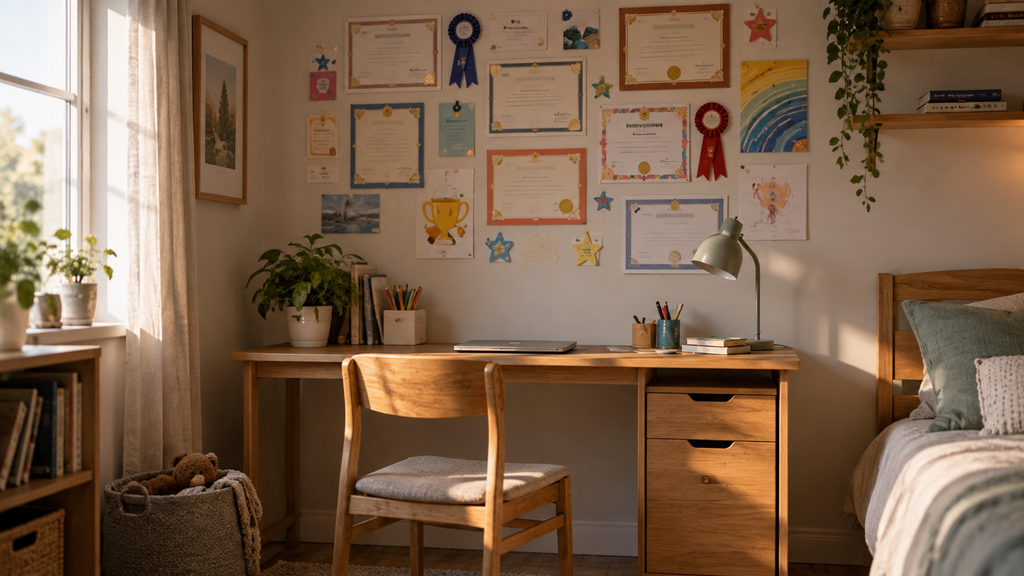
Confidence is not a mood. It is a conclusion drawn from evidence, and children audit the evidence.
The year I decided my English was fine
People told me my English was good for about six years before I believed them, and the telling did nothing at all. Colleagues said it. Students’ parents said it. My mother said it, from Vancouver, which counted for less than she hoped.
What changed it was a Tuesday.
Six years of being told. Forty minutes of proof.
A pipe burst in the building where I was teaching, and I spent forty minutes on the phone with a plumber, in English, about a subject I had no vocabulary for, and at the end of it the water stopped. Nobody praised me. Nobody was watching. But I had a piece of evidence that praise had never given me, and the file finally had something in it.
What the research actually found
Self-esteem programs in the nineties rested on a simple idea: raise how children feel about themselves and the rest follows. Schools built programs on it. Parents built vocabularies on it. Then somebody checked. A major review of the evidence found that high self-esteem does not cause better school results. The relationship runs the other way, or through a third thing, and the benefits that survived scrutiny were modest: people with high self-esteem show more initiative and feel better. The authors returned to it fifteen years later and did not soften much, noting that the original recommendations had been built on correlations. None of that is the whole picture, and the second half matters more for a parent. Other researchers argue the review measured the wrong thing. Global self-esteem, the I am a good person kind, does look inert. But academic self-concept, which attaches to a particular subject instead of a whole person, appears to be both a cause and an effect of achievement, each feeding the other over years.The useful distinction is not between confident and unconfident children.
It is between confidence about nothing in particular and confidence about something specific, which behaves differently and can actually be built.Criticism, and the specific kind that sticks
Criticism of a piece of work is survivable, ordinary, and necessary to getting better at anything. Criticism of a person is a different object entirely, and children file the two separately without being taught to. That paragraph doesn’t say what you meant is about a paragraph. You never think before you write is about a child, and it goes into the folder as a general finding rather than a note about Tuesday.Worst is accurate criticism delivered as a summary of the person. Children accept accurate descriptions of themselves from the people who know them best, which is precisely why a throwaway line about being clumsy outlives the glass it was about.
Where overprotection does its damage
Here is the mechanism, and it has nothing to do with softness. A child builds the I am decent at math conclusion the same way anybody builds any conclusion, by accumulating instances. Difficult thing attempted, difficult thing survived, and the record grows. That accumulated record is the whole of confidence.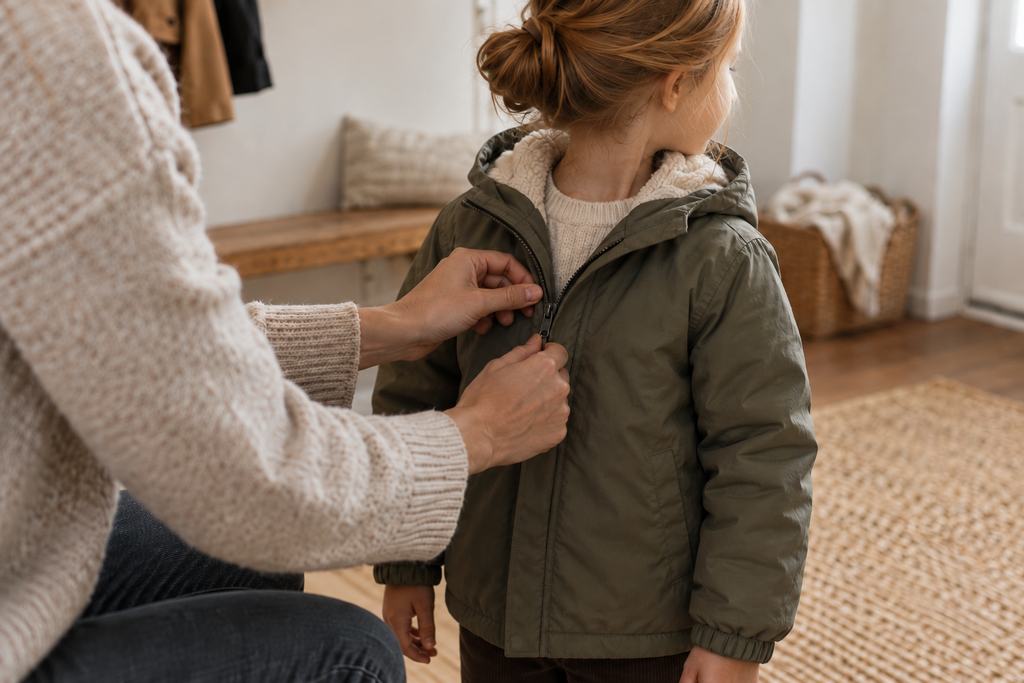
You can’t talk a child into a conclusion they have no evidence for.
Every time an adult steps in before the difficulty lands, one instance fails to be recorded. The parent who calls the teacher about the group project, who packs the bag the night before, who answers the waiter’s question because the pause was getting uncomfortable, and who quietly fixes the sentence before anybody else reads it, is not making the child weaker in any of the ways that phrase suggests. They are keeping the file empty. The child then arrives at eleven with a parent who says you can do anything and a folder with almost nothing in it, and the child, being reasonable, trusts the folder.By age, roughly
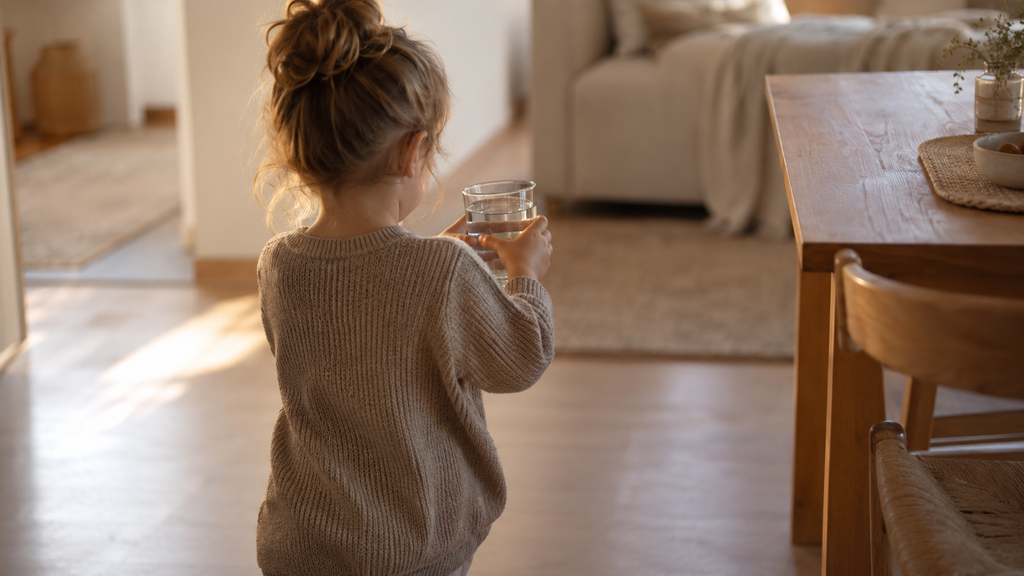
What follows is my classroom shorthand, not a developmental norm. At five or six, competence is physical and immediate. Pouring, zipping, carrying something breakable across a room. The evidence a child collects at this age is almost entirely about the body, which is why letting them carry the glass matters more than it appears to.
By nine, comparison arrives and never leaves. A child now knows where they sit in the room, and no adult can talk them out of that ranking. What you can do is widen the number of rooms, so that the ranking in one is not the whole account. Around twelve, the audit turns inward and gets harsh. This is the age at which children start explaining their successes away, and the useful adult move is not reassurance. It is specificity: naming what they did, in detail, so that the explaining-away has something to work against.
By fifteen, most of it is out of your hands, and what remains is whether they have somewhere the difficulty is real and the outcome is theirs.
What actually builds it
Difficulty that belongs to the child, survived in front of somebody who did not step in. Every part of that formula is load-bearing. The difficulty has to be real, or the evidence isn’t worth filing. The outcome has to be theirs, or the file records your competence instead. And somebody has to be present, because a difficulty survived alone in a bedroom teaches much less than one survived in a room with witnesses.
This is also why the two minutes after a failure matter more than any amount of encouragement, and why a child who cannot speak up in class needs smaller rooms rather than bigger reassurances. In our lessons for bilingual kids a child gets a word wrong in front of four others, and the lesson continues, which produces one entry in the file every few minutes. The conversation school does the same with speaking as the whole task.Neither hands out confidence. Both hand out instances.
Alina is better at math than she was a year ago. She now describes herself as average at it. Her parents heard that as a setback; I thought it was the first accurate thing she’d said about herself all year.
At Palme School we teach online, in groups of up to eight, two forty-minute classes a week, and the first two lessons are free. You can book those here, and there are printable materials for parents in our resource library.Frequently asked questions
Give them difficulties that are genuinely theirs and do not rescue them from the middle. Confidence is a conclusion drawn from a record of survived difficulties, and that record has to be real to be worth anything.
Not on its own, and the evidence for boosting self-esteem directly is weaker than the nineties assumed. What holds up better is domain-specific confidence, the kind attached to an actual subject.
Often not criticism but an absence of evidence. A child with nothing difficult in their file has nothing to draw a conclusion from, however warmly they are spoken to.
Criticism aimed at the person, not the work, does add to it, because children accept general descriptions from the people who know them.
Ask for specifics and take them seriously rather than arguing. Then find one area where improvement is measurable and let them watch it move.
Sources
- Baumeister, R. F., & Vohs, K. D. (2018). Revisiting our reappraisal of the (surprisingly few) benefits of high self-esteem. Perspectives on Psychological Science, 13(2), 137–140. doi.org
- Baumeister, R. F., Campbell, J. D., Krueger, J. I., & Vohs, K. D. (2003). Does high self-esteem cause better performance, interpersonal success, happiness, or healthier lifestyles? Psychological Science in the Public Interest, 4(1), 1–44. doi.org
- Marsh, H. W., & O’Mara, A. (2008). Reciprocal effects between academic self-concept, self-esteem, achievement, and attainment over seven adolescent years. Personality and Social Psychology Bulletin, 34(4), 542–552. doi.org
Palme School: Russian for bilingual children · Conversation school · Free materials for parents
Lily Rozberg has been teaching for sixteen years, first English in Russia and now Russian to bilingual children across the US and Canada. She writes for Palme School about heritage language, reading, and the things report cards do not measure.