

When a child lives abroad, the Russian language almost always ends up being «second fiddle»: at kindergarten and school, everyone around speaks another language, and books and cartoons are also more often not in Russian. At the same time, parents want their child not only to understand their grandparents' speech but also to read confidently in Russian, and even better, to do so with pleasure.
In this article, we'll explain how at Palme School we teach children aged 5–9 years to read in Russian: how our cyclical program is structured, what immersive lessons are, how we use neuro-gymnastics and workbooks, and why this approach alleviates parental anxiety.
Why «just teach to read in Russian» doesn't work

Bilingual children aged 5-9 face multiple challenges: they are mastering the school language of their country of residence while simultaneously needing to maintain and develop Russian. The brain has to constantly switch between different alphabets and sound systems, which is why «reading a little Russian at home» often doesn't yield noticeable results.
Parents face typical situations:
- The child knows the letters but cannot «put them together» into syllables and words.;
- reads syllable by syllable, but doesn't understand what they've read, and quickly loses interest;
- After local school, there's no energy or motivation left for another «Russian-style study session.».
Added to this is the anxiety of adults: «we started too late,» «I don't know the method,» «what if the Russian language overwhelms the child.» At Palme School, we take these specifics into account and build reading instruction so that the child progresses up a clear ladder, rather than trying to «catch up» to an abstract norm.
Cyclical Program 3.0: Reading the Stairs, Not the Straight Line
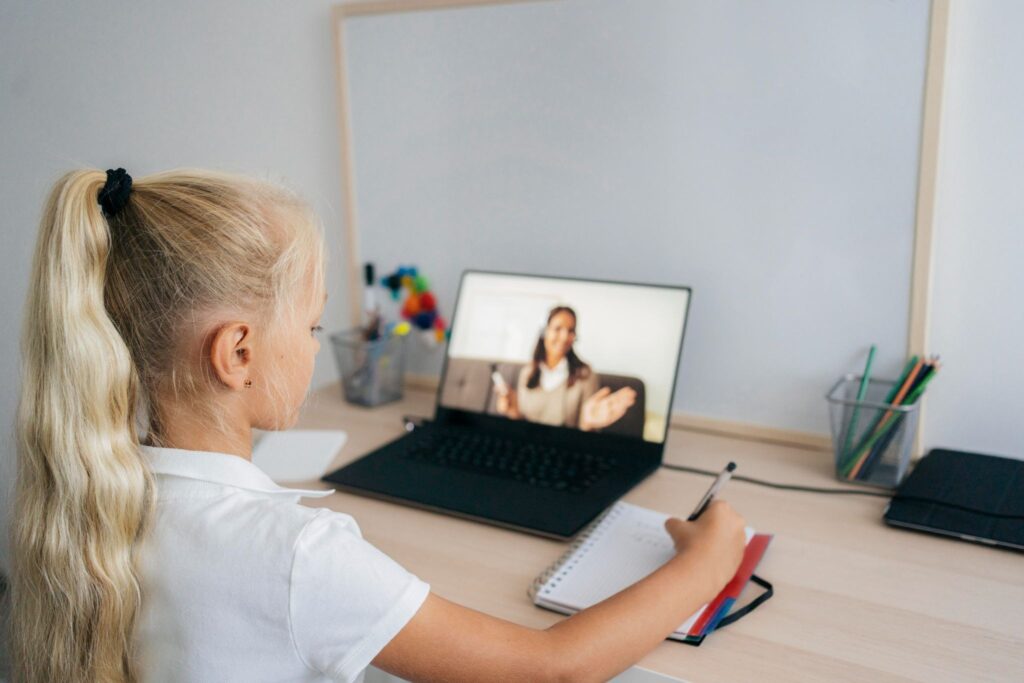
At Palme School, we use a cyclical program rather than a linear progression through the textbook from the first to the last page. This is important for bilingual students, as children join at different times, with varying levels and different workloads in the local school.
In the «Reading School,» learning is organized in cycles. At the start of the program, it's important for the child to feel confident in reading and writing in Russian. During this period, they become familiar with the alphabet, learn to recognize letters, connect them with sounds, put together syllables and the simplest words, and also try writing in print.
At the next stages, we work not only with individual words but with texts. Children read short stories, move from syllable-based reading to more fluent reading, discuss what happened with the characters, and try to explain in their own words what the text was about.
Each stage is time-limited: the cycle has a beginning and an end. During this time, we revisit important topics several times through games, exercises, and discussions to ensure that new skills are truly reinforced and don't disappear within a week. If a family joins not «from scratch,» but in the middle of the year, the child will still go through all the key stages: the cyclical structure allows for important program blocks not to be missed.
This alleviates some of the parents' anxiety: it's clear what the child is doing right now, what result they are aiming for, and what will happen next.
Communicative and Lexical Approach: Reading to Speak

At Palme School, learning to read isn't just about «teaching them to put letters together.» We use a communicative and lexical approach simultaneously, tailoring them to the needs of bilingual children.
- Within the lexical approach, a child memorizes not individual words, but ready-made expressions and whole phrases that they hear in spoken language. Such material is easier to transfer to everyday communication and begin to use independently.
- The communicative approach aims for lively interaction: reading in Russian should not only be «correct,» but also done in such a way that one can discuss the text, ask questions, and share opinions.
During reading lessons, children:
- They read short dialogues and act them out in roles;
- read mini-stories and connect the plots to their own experiences in the discussion;
- they answer questions about the text and gradually learn to formulate their own.
This way, reading immediately becomes part of communication, not a separate «alienated» skill, and the child quickly understands why they need to read in Russian at all.
Immersive Lessons: When Reading Becomes an Adventure

For us, an immersive format is a lesson built around a story. In immersive lessons, a child doesn't sit passively but is constantly doing something as part of the story. They can help characters, participate in an expedition, or «walk» through a museum, and at each step, they encounter short phrases and tasks in Russian that they need to read and understand.
The text in this format works as a prompt or part of a game. The child doesn't read just to check a box, but to perform an action, so they concentrate better and are more willing to memorize new words.
In such a situation, the teacher not only explains but also helps children experience this story together. Students have the opportunity to influence what's happening, suggest their own solutions, and the pictures and plot support their desire to speak and read Russian. Reading is woven into play and shared activities, and the material is reinforced naturally, without feeling like dry drilling.
Neurogymnastics and Writing Practice: How We Prepare the Brain and Hand for Reading
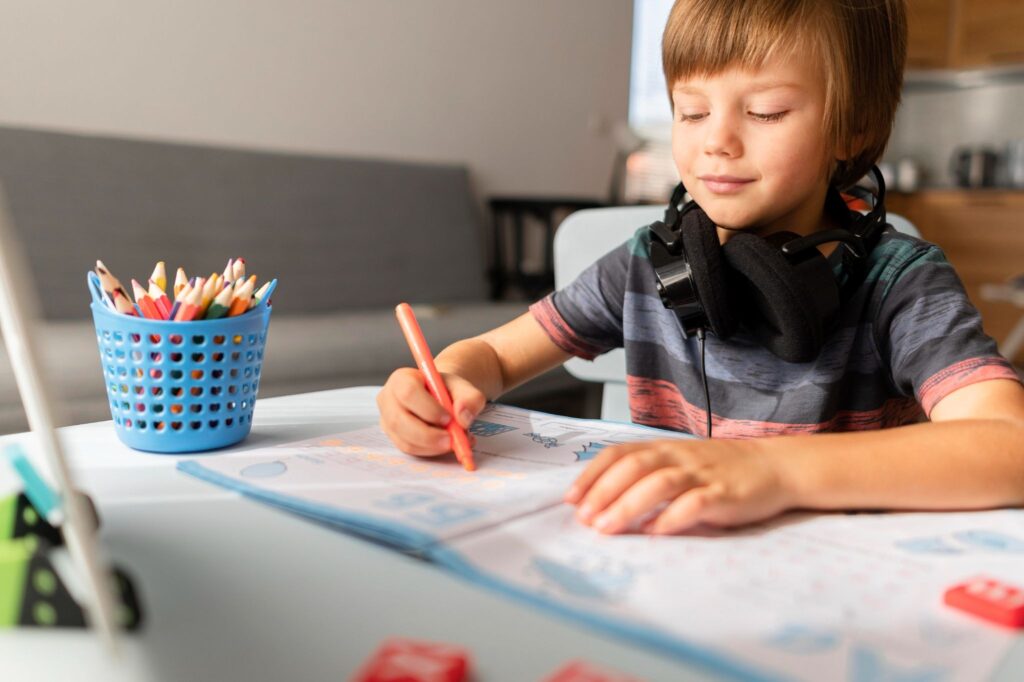
Before reading and text work exercises, we do a short «brain warm-up.» These are very small exercises that help the child switch to the lesson, get in the mood for work, and not get distracted by trifles.
After such an exercise, it's easier for children to start a lesson, maintain their interest longer, and approach Russian reading and writing tasks more calmly. It also has a beneficial effect on fine motor skills, pronunciation, and overall readiness for working with text.
Handwriting and penmanship in our programs complement reading:
- They develop the skill of distinguishing letters and their combinations, which is important for confident reading;
- They learn to read cursive that the child encounters in everyday life (notes, postcards, handwritten memos);
- help to better remember the spelling of words, including those with silent consonants.
We take age and level into account: in the initial stages, small but regular exercises are sufficient, and the focus in lessons remains on understanding and communication, rather than filling copybooks with entire pages.
What are we reading: from the first letters to the classics

The «Reading School» program at Palme School is designed for children aged 4-14, with separate levels for ages 5-9.
- Preschoolers (ages 4–6) in our classes learn to «hear» the Russian language: they play with sounds, get acquainted with letters, and gradually begin to understand how one thing is connected to another.
- Younger schoolchildren (7-9 years old) are already trying to read on their own. First, it's syllables and very short words, then short texts. We discuss what happened there together and ask the simplest questions about the content.
At the beginner levels, we use texts with pictures, simple everyday dialogues (introductions, family, school, shopping), and short stories on topics relevant to children.
Fragments of «old» texts and classical literature are gradually introduced into the program in an adapted form:
- This helps to build vocabulary through diverse grammatical constructions;
- provides a basis for understanding modern Russian idioms and set expressions;
- Trains reading more complex sentences.
Thus, the child moves step by step from the first letters to conscious reading and better feels the living Russian language.
Homework: Flexible, no printer, no overload
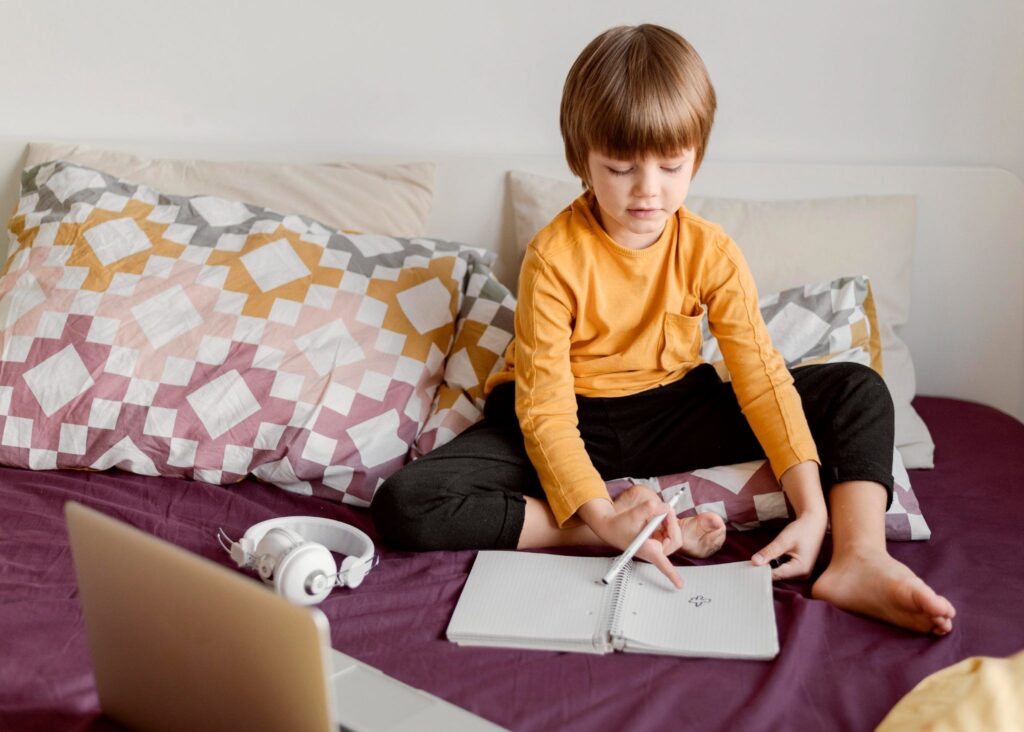
We understand that families have different circumstances, so homework can be completed in a format that works for you: you can print out the worksheets and complete them by hand, use a separate notebook, or utilize an online PDF editor.
At the A1.0 (for the youngest and beginners) level, homework often involves cutting and coloring. This isn't just «fun»; it's a way to develop fine motor skills and attention span while simultaneously reinforcing the lesson's vocabulary. At this stage, complex grammar isn't our priority. Instead, we focus on building confidence. The child builds vocabulary, grasps typical phrases, and begins to use Russian in the simplest everyday situations without the pressure of writing long texts.
We create homework assignments that help children advance in reading and speaking, without turning the Russian language into a constant source of conflict at home.
Full immersion: what to do if a child doesn't understand Russian yet

A common parent question: «What if my child barely understands Russian, will they manage?» In our Russian language programs, instruction is focused on practical language use, and this can only be achieved through immersion.
In class, we:
- maximize the use of Russian while minimizing the use of intermediary languages;
- We rely on presentations with illustrations of words, actions, and situations.;
- We play audio and video materials so that children can hear Russian speech and begin to recognize familiar words in a live flow.
Before any questions or tasks, the material is first introduced in an understandable, playful form, and children are given time to adapt to the new communication format. For families who are more comfortable with the translation method, there is an option for individual lessons, but in groups, the priority is gradual immersion in the Russian environment.
Security and Quality: How We Work with Lesson Recordings

Some activities may be recorded, but these recordings are used solely for internal quality control and dispute resolution. Without parental consent, they are neither published nor shared with third parties. Recordings are stored for a limited time and are then automatically deleted.
This helps the school both monitor the quality of lessons and, at the same time, respect the privacy of children and their families.
Introductory lesson with a methodologist: your first risk-free step

Before you start studying, we offer you to sign up for an introductory lesson with a Palme School methodologist.
At this meeting:
- The specialist will gently check how the child currently perceives and reads in Russian.;
- assess vocabulary and comfort level in a Russian-speaking environment;
- will help choose a program and level: from RKI-0 to «Reading School» and a Russian language course for bilinguals.
Parents can ask any questions about the workload, homework, schedule, and format of classes. The introductory lesson is free, and it helps to see that the child can actually learn to read in Russian without overload and constant conflicts.
You can sign up for an introductory lesson with a Palme School instructor on our website by filling out a short form. This is the first step towards making reading in Russian an understandable and achievable skill for your child, rather than a source of stress for the whole family.