

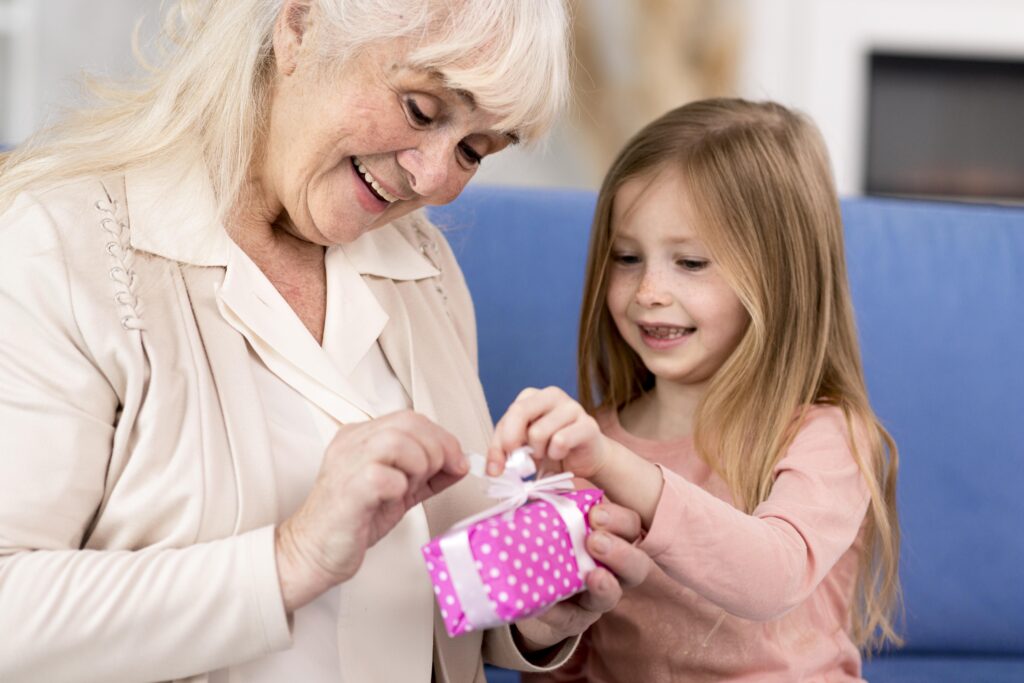

Grandmother gives her granddaughter a cookie. The girl takes it, says «thank you,» and walks on. Grandmother smiles, but deep down, she's still waiting for a different word. The intonation seems to be the same, but the feeling she gets is different.
This isn't a story about «poor upbringing» or a checkbox for «good mom / bad mom.» The child thanked me, and truly thanked me, sincerely. In Russian, the right word for that moment seems to hide; it exists, but doesn't come to mind first. «Thank you» feels closer, and it pops out.
Based on the experience of Palme School, bilingual children's language often behaves exactly like this. It's not the set of words the child «learned in Russian class» that works, but the one that is heard around them every day: at school, on the playground, in cartoons.
How «thank you» lives in Russian
In Russian, gratitude is rarely limited to a single word and intonation. «Spasibo» [Thank you] is the basic, go-to option that works almost everywhere: with family, teachers, neighbors, and a shopkeeper.
But a whole layer of other forms lives around it. Parents and children use in spoken language:
- «Thank you so much»: when you want to emphasize that the help or gift is truly important.;
- «Thank you so much;
- «Heartfelt thanks: more formal and solemn, more often in letters or speeches.
In English, «thank you» often feels like a period. You say it, and the topic is closed. In Russian, people tend to add a bit of context or emotion to «спасибо» (spasibo): «Спасибо, очень вкусно» (Spasibo, ochen« vkusno - Thank you, it's very tasty), »Спасибо, ты мне правда помог« (Spasibo, ty mne pravda pomog - Thank you, you really helped me), »Спасибо, я так рада" (Spasibo, ya tak rada - Thank you, I'm so glad). This isn't a rule of etiquette, it's just how the language is accustomed to tying into the live situation and the person.
Bilingual children hardly hear these elaborated forms if the adults around them speak concisely. Mom said «thank you» and that was it. Dad said «thank you» and also added nothing. The child draws a logical conclusion: one word is enough. There's nothing terrible about this, but it results in fewer nuances than the language actually offers.
| Form | Who is it for? | Situation | Tone |
|---|---|---|---|
| Thank you. | Hello everyone | Any | Neutral |
| Thank you very much | Hello everyone | They truly helped. | Warm |
| Thank you very much | Hello everyone | Special case, took time | Very warm |
| Thank you | Adults, colleagues | Official setting | Official |
| Thank you | To strangers, elders | Meetings, letters, ceremonies | Very official |
| Thank you very much | Adults | Letters, formal occasions | Solemn |
| Thanks | To friends, peers | Chat, correspondence | Informal |
| Please / You're welcome | Hello everyone | You're welcome« | Neutral / Warm |
Why do children say «thank you» instead of «spasibo»?»
Most of our bilingual students are simply better trained in «thank you.» At school, with friends, in clubs, in cartoons, and in games, this word is heard dozens of times a day. «Spasibo» (thank you) is more often heard at home, in conversations with relatives, and sometimes in Russian lessons.
When a quick reaction is needed, the brain doesn't hold a meeting or search for the «ideal» option. It automatically retrieves what has been repeated the most. Therefore, «thank you» pops out before «спасибо», even if a child knows both words perfectly well.
This isn't stubbornness or inattentiveness. The brain here isn't arguing with adults; it's simply working according to its usual pattern: what it hears more often is what it accesses first.
Parents in lessons often say the same thing: «He knows “thank you,” we've gone over it a hundred times, but in real life, “thank you” still comes out first.» This is exactly the situation where it's not knowledge that's lacking, but the quantity of real-life repetitions.
What can be done at home
Correcting a child the moment they say «thank you» rarely has a good effect. The child gets embarrassed, tenses up, and might stay silent next time to avoid making a mistake.
It's best not to stop him, but to gently add nearby: «Yes, thank you,» and calmly move on. Without a pause, without a sigh, and without a long speech. This way, the child hears the necessary word in a live context and doesn't feel like they've done «something wrong.».
A very simple but regular method works well. Adults themselves say «thank you» out loud and often:
- To the seller and courier;
- to the neighbor who helped with the door;
- To a teacher or coach;
- each other for dinner or help around the house.
The child doesn't repeat immediately, but their internal «piggy bank» is filling up. After some time, «thank you» starts to come out on its own, without prompting.
You can play short skits at home. An adult gives an imaginary candy: «Here's a candy for you, what will you say in Russian?» Or helps put on a jacket: «I helped you, what do you say in response?» It's important that it's a game and a normal conversation, not a «politeness exam.».
You're welcome.«

The place where children often get lost is the answer. He was told «thank you,» and he's not sure what to say and reaches for the usual «okay.».
The simplest working option is «please.» One short word that works in almost any situation. If a child confidently uses only this, it's already enough to support polite exchange.
«Don't mention it» sounds a little warmer. It's closer to «no problem» or «don't mention it,» a sign that helping was not difficult and was a pleasure. Later, other forms are easily added: «you're always welcome,» «glad to help,» «feel free to ask.» Children quickly pick them up from adult speech.
Separate story: «na zdorovye.» This is usually said in response to thanks for food: for a meal, dessert, or treat. Grandma fed him, grandson said «thank you,» grandma replies «na zdorovye.» They don't say this for «thank you» for help with homework or for a gift, and it's useful for children to hear this difference several times in real situations.
How do we work with this at Palme School?

At Palme School classes, «thank you» and «please» are included in the first block of any basic Russian program. We don't teach them as a separate list of words, but immediately connect them with real situations: children play in a store, in a cafe, «visiting grandma,» thanking and responding to thanks.
The guys hear these words in different contexts, use them themselves, and receive answers from the teacher and classmates. Gradually, «thank you» and «please» stop being just a rule of politeness and become part of lively communication.
Parents often notice that after a few weeks, the child starts saying «thank you» in Russian on their own at the store or at home, without reminders. It's just a habit that has finally moved from the English layer to the Russian one.
The first two lessons at Palme School free, and «thank you» is said many times, so that the word becomes familiar to the child, not just «the word that Grandma expects instead of “thank you”.».
How to correctly pronounce «spasibo»
Stress on the second syllable: spaSIbo. Transliteration: spaSIbo. In spoken language, you often hear «spasib» or «spasibo» with swallowed sounds, and that's normal; adults say it too. But it's easier for a child to first learn the full, clear form, and then life itself will «compress» it.
The difference between «спасибо» and «благодарю» is primarily one of formality and intensity. * **Спасибо (Spasibo):** This is the most common and versatile way to say "thank you" in Russian. It's suitable for almost any situation, from casual interactions with friends to more formal settings. It's a general expression of gratitude. * **Благодарю (Blagodaryu):** This word literally translates to "I bless" or "I give good." It's a more formal and often more heartfelt way to express thanks. It carries a stronger sense of appreciating a favor or kindness. You might use it in more formal situations, when you want to express deeper gratitude, or when addressing someone you want to show particular respect to. Think of it this way: * "Спасибо" is like "Thanks" or "Thank you." * "Благодарю" is more like "I thank you" or "I am grateful."
«Thank you» is a word for every day, for family, friends, neighbors, teachers, and shopkeepers. «I am grateful» sounds more formal and official, and you're more likely to encounter it in letters, on stage, and in business conversations. It's not essential for a child to actively use this word at home, but it's great if they learn to recognize it and understand the situations in which it's used.
You're welcome.«
The simplest option: «please»—a short word that works in almost any situation. «You're welcome» adds a bit more warmth and shows that it wasn't difficult to help. «Bon appétit» is a different story: it's a response specifically for thanks for food, so grandma says it after lunch, not after helping a child zip up their jacket.
Yes, you can say «спасибо большое».»
Yes, and children often grasp this form first, as it sounds more emotional. This is said when one wants to emphasize that help or a gift is truly important: a teacher saved them with homework, a neighbor watched the child. It's important for a child to hear «thank you very much» not only in books but also in real-life situations around them.
Why is the child saying «thank you» instead of «spasibo»?»
Because «thank you» simply comes up more often in his life: at school, on the playground, in cartoons and games. When a quick reaction is needed, the brain pulls up the most practiced option, not the one that's «correct according to the parents» intention.« It helps not to stop the child with »speak Russian,« but to gently add »Yes, thank you" next to it and calmly move on.
When someone says «na zdoroviye»
This phrase is used in conjunction with food and treats, not with any requests or expressions of gratitude. If someone has been fed borscht, offered cookies, or poured a glass of compote, saying «na zdorovye» is very appropriate. You wouldn't say it in response to «thank you» for help with homework or for a gift, and it's beneficial for children to hear this distinction a few times in real-life situations.
How to teach a child to say «thank you»
The easiest way to start is with one working reaction: «please,» so as not to overload. You can practice at home: the adult thanks for a real action («Thank you for helping to clear the table»), the child responds, and everyone pretends it's a normal conversation, not training. Gradually, you can add other variations: «you're welcome,» «anytime,» and catch moments for them in life, not just in play.
You're welcome / Don't mention it«
This is a polite response from more formal speech, similar to «don't mention it» or «it's nothing.» This is often used in letters, at work, and in polite conversations with adults. In family settings and with children, «you're welcome,» «please,» or a short «don't worry about it» sound much more natural.