



When a family travels a lot, the journey becomes a separate part of life: traffic jams on the way during the weekend, long flights, waiting at the airport. These hours can just be «endured,» or the time can be turned into a living practice of the Russian language without notebooks or screens. This is especially important for children who grow up abroad and don't hear Russian every day.
This article features 15 simple games for the car and airplane: word games, storytelling, attention, and imagination. They are all suitable for children of different ages and help expand vocabulary, practice speech, and simply spend time together in Russian.
How to use these games
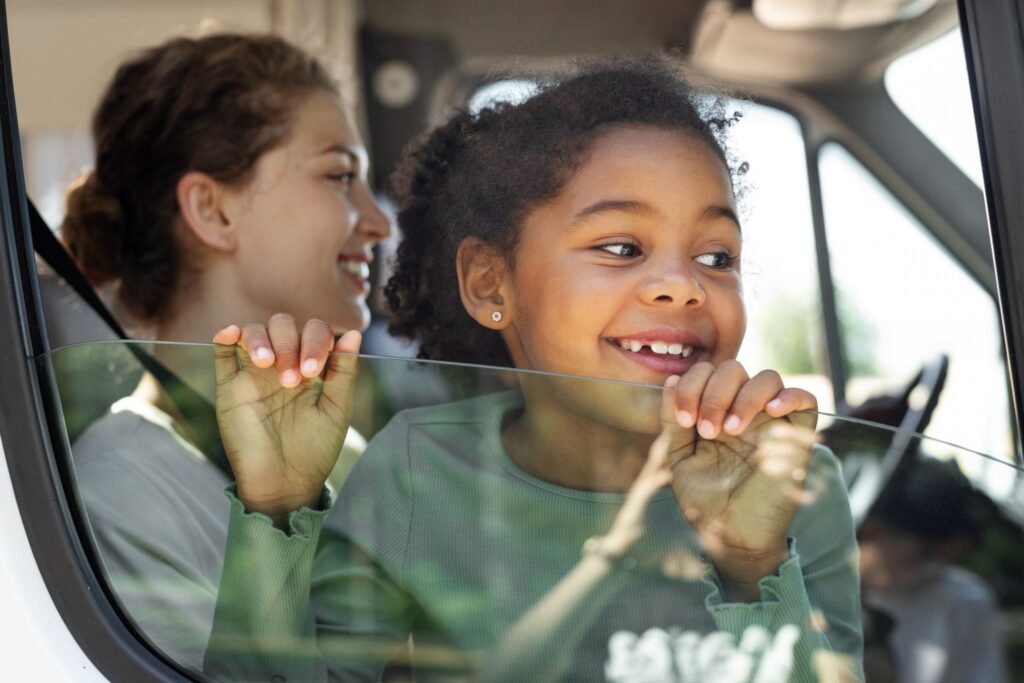
- All games are verbal, with no phones, paper, or toys; your voice and imagination are enough.
- For toddlers, we simplify the rules; for older children, we add scoring, time, themes, and «difficulty levels.».
- You don't have to do all 15 in one trip: choose 2–3 favorites so the child doesn't get tired of the Russian language itself, but associates it with something pleasant.
Word games
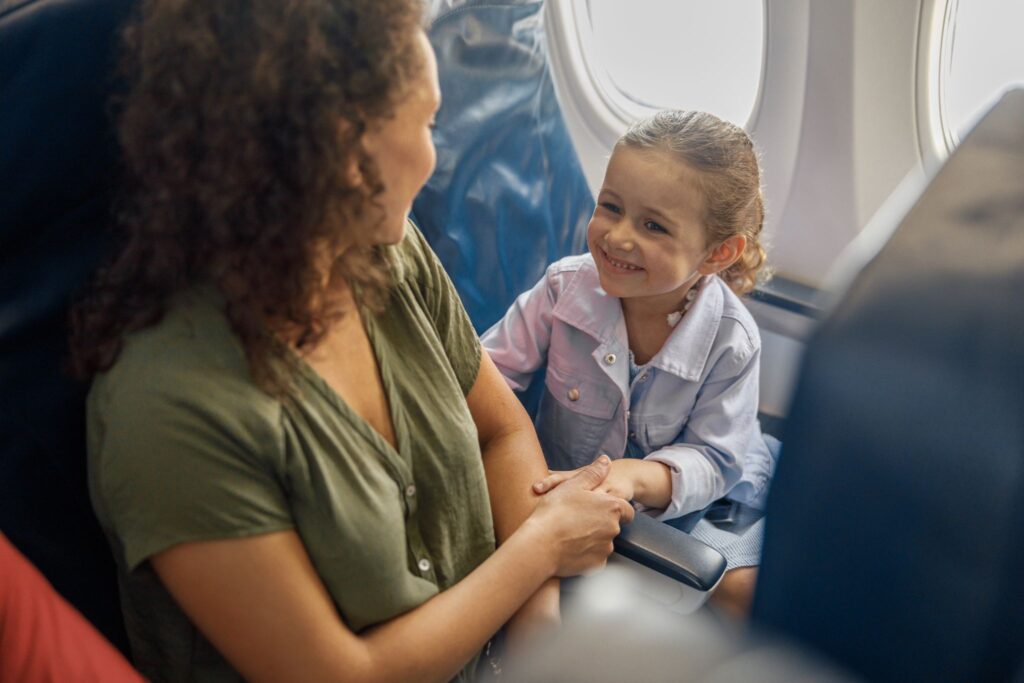
I see«
One player says, «I see something...» and adds a characteristic: red, round, big. The others guess the object. For younger children, choose colors and simple characteristics («small,» «soft»), and for older children, more complex descriptions («something we use in winter,» «something you can eat»).
Words on the last letter«
The first player says any Russian word, the next says a word starting with the last letter of the previous word: «car, orange, nose, airplane...». Younger players can be given hints, while older players can be made to play with more difficulty: only on one theme (food, animals, transport).
3. «Forbidden word»
You agree that a common word («car,» «I,» «yes») becomes forbidden for 5-10 minutes. Whoever accidentally says it has to complete a funny task: come up with a sentence with a new word, sing a line in Russian, tell a mini-story. This way, children practice speaking without realizing they are «studying.».
4. «Who has more?»
Choose a theme: fruits, things found at the airport, or words starting with 'R'. Take turns naming suitable words until someone can't continue. For older children, you can add a timer or award points for the number of words. This turns the game into a mini Russian challenge.
Imagination games and stories
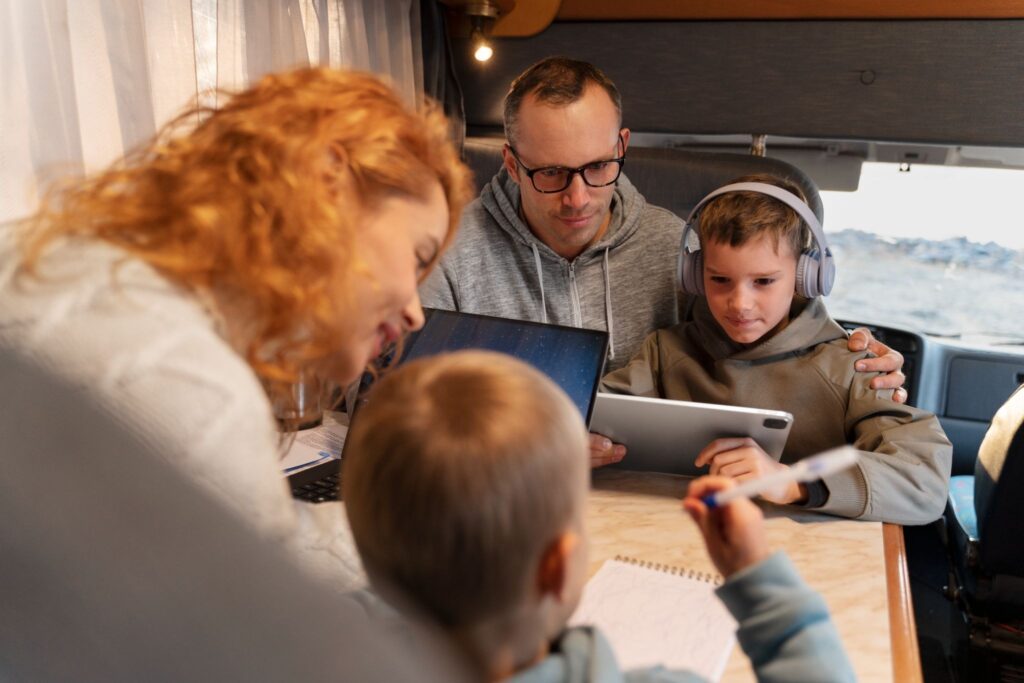
5. «Dream Trip»
One player starts the story: «We got on the plane, and suddenly...» each subsequent player adds one sentence. For little kids, you can offer suggestions («and suddenly there was...?»), and with teenagers, you can agree on a genre: fairy tale, detective, or science fiction. These stories are excellent for developing coherent speech and imagination.
Three words, one story«
One person comes up with three random Russian words: «ship, suitcase, ice cream.» The other person has to create a short story where all three words appear, then you switch roles. The «more nonsensical» the words, the funnier the story turns out.
Continue the phrase«
The adult begins: «Something incredible happened in our car today…,» and the child continues with one sentence. You can set the mood for the story beforehand: funny, a little scary, or magical. The game helps practice sentences and emotions in Russian in a safe way.
8. «One and because»
You invent a character (cat, girl, robot), a child asks questions: where does it live, what does it like, what is it afraid of. Then, together, you come up with what happened to it on the road. This is how many new words about feelings, actions, and objects appear «along the way.».
Games for attention and memory

9. «I'm packing a suitcase»
The first person says, «I'm packing a suitcase and putting in a... book.» The second person repeats and adds their own item, «...a book and a doll.» The third person says three words, and so on. With younger children, you don't need to insist on the full sequence; you can just brainstorm other things to put in the suitcase. With older children, you can make it more challenging by using the alphabet: each subsequent item starts with the next letter.
10. «Be the first to notice»
You agree on what to spot first: a red car, a person with a suitcase, or a child with a backpack. Whoever sees it loudly says in Russian: «I see a red car!» On the plane, you can look for «a person with a blue bag,» «a flight attendant with a cart,» and «a suitcase with stickers.».
What disappeared?«
Suitable for waiting at the airport. You choose 5-7 items with your eyes and name them in Russian. Everyone closes their eyes, one person «removes» one item from the list and says, «One is gone.» The others must remember who was «removed.» The game trains memory and vocabulary without any cards.
For the little ones (approximately 4–6 years old)
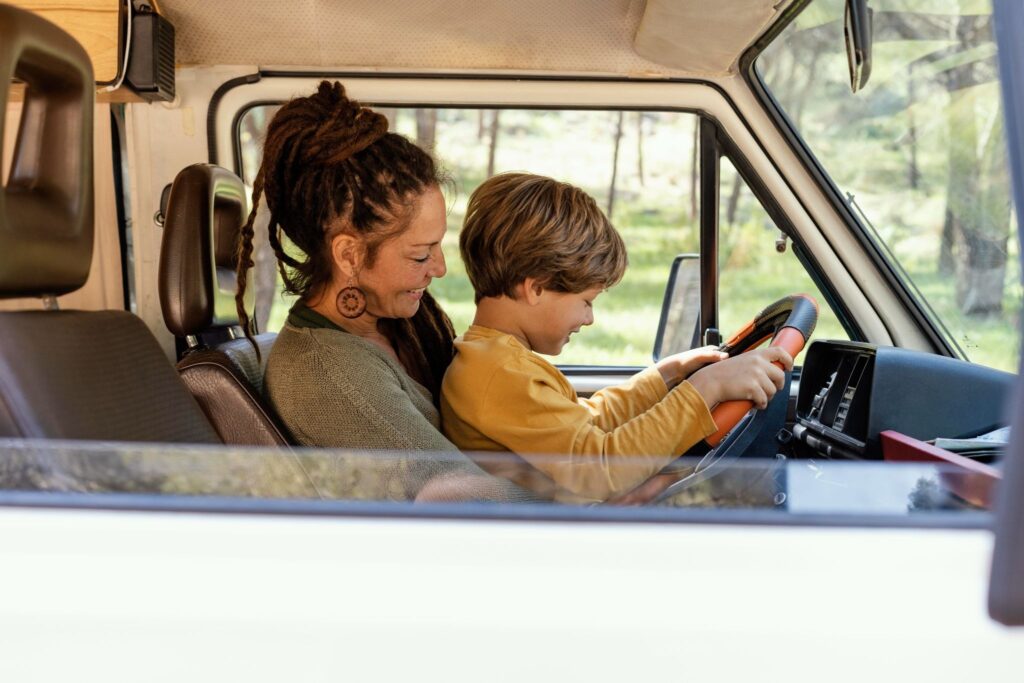
12. «Who says what?»
You name an animal, and the child has to say the sound and a short phrase in Russian: «Cow moo-moo, cow eats grass.» You can use animals from books, cartoons, or simply invent fantastical beasts and their «voices.» This way, the child learns simple sentences and new words.
13. Show and Tell«
Ask: «Show the window,» «Touch the belt,» «Where is the door?». Then switch roles, and the child gives the commands. This is a simple but effective practice for understanding and actively using Russian without strain or «sit still.».
For older children (ages 7–12)

14. «Cities (and Beyond)»
Classic game: name cities by the last letter, but it can be expanded to «names,» «animals,» or «countries.» The main rule: everything must be in Russian. This game is well-suited for schoolchildren who can already read confidently and know geography.
15. «Roadside Interview»
Child «journalist,» adult hero: pilot, traveler, astronaut. The task is to ask questions in Russian: «Why did you decide to become a pilot?» «Where are you flying next?» Then you can switch roles. This is excellent practice for asking questions and giving long answers.
Why do such games really help Russians

Speech therapists and speech development specialists have long used road games as a tool for improving vocabulary, coherent speech, and attention. Conversation games help a child:
- to hear and pronounce Russian more often in natural situations;
- to practice sentence construction, asking questions, and telling stories;
- Learning to wait, listen to others, and not interrupt are important communication skills.
Parents don't need any special preparation: you simply play with your child in Russian during the time you're already spending on the road.
Russian online at Palme School at home

If you want Russian to be present not only in the car and on the plane, but also at home, without it turning into endless notebooks, you can add regular online classes to these games. At Palme School, Russian language lessons:
- short and clear, so they can actually be fitted into the family schedule;
- $take place$ in a game format similar to road games;
- suitable for children who live abroad and don't always hear Russian around them.
Trying it is simple: sign up for a trial lesson at Palme School and see how your child will use Russian both on the go and at home without boredom or pressure.