

Names and identifying details of every student below have been changed.
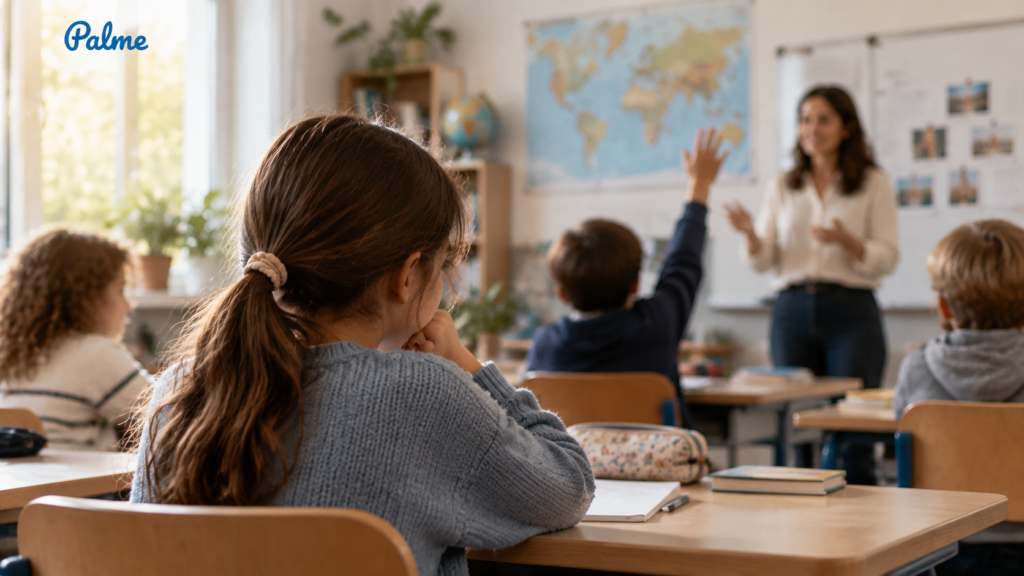
Yana, eleven, in the Sacramento suburbs, knows the answer and stays quiet. Her mother has this on good authority: Yana gives her the answer in the car afterward, correctly, unprompted, every time. Her details are changed, as they are everywhere on the blog. Low confidence is the obvious reading. The more useful one is that she does more arithmetic than the room leaves time for, and that the room, not the child, is the thing set up wrong.
Deciding whether to speak takes longer than the room gives you.
So how long does she actually get
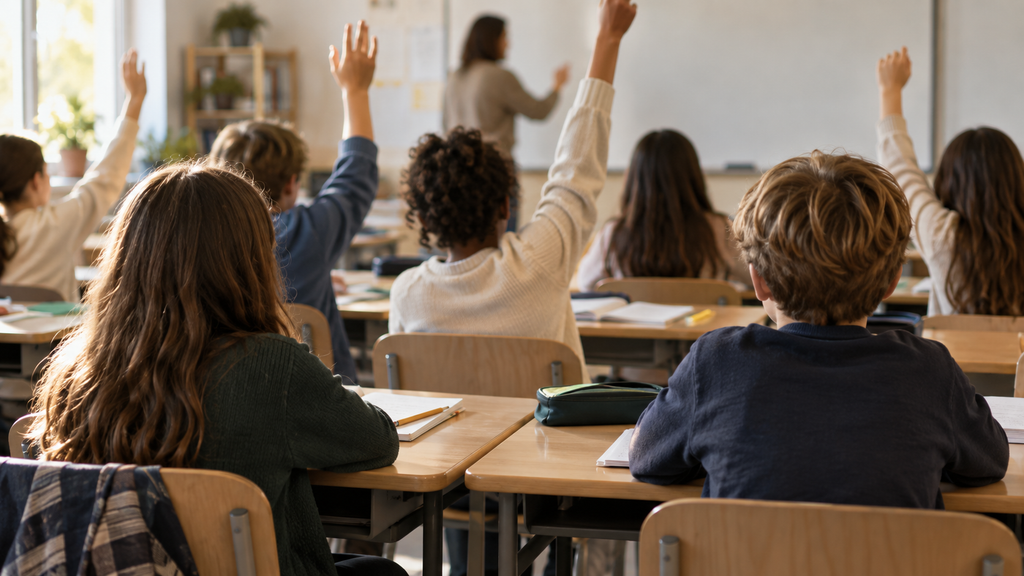
Here is a number that reframes the whole problem, and it comes from classroom recordings, not from anything about children. When a teacher asks a question, the average pause before somebody has to respond is less than one second, a figure Mary Budd Rowe arrived at by recording classrooms and measuring the silences on the recordings. Teachers also react within about a second after a student stops talking.The room gives a child one second to decide whether to be wrong in front of everybody.
One second is plenty for an answer you already have in words. It is nowhere near enough to notice a thought, put it into a sentence, estimate how that sentence lands in a room of thirty that will remember it, and open your mouth. Most adults couldn’t. Three seconds is the number that matters, and not because more is always better. Rowe found a threshold at about two and a half: below it, adding time changes almost nothing, and above it the classroom changes.| At one second | At three seconds |
|---|---|
| Short answers | Longer answers |
| The same few hands | More children volunteering unasked |
| Facts only | Speculation, the maybe it’s because kind |
| Frequent «I don’t know» | Fewer refusals |
| The quick students | Students the teacher had filed as slow |
Why this room is harder than the others
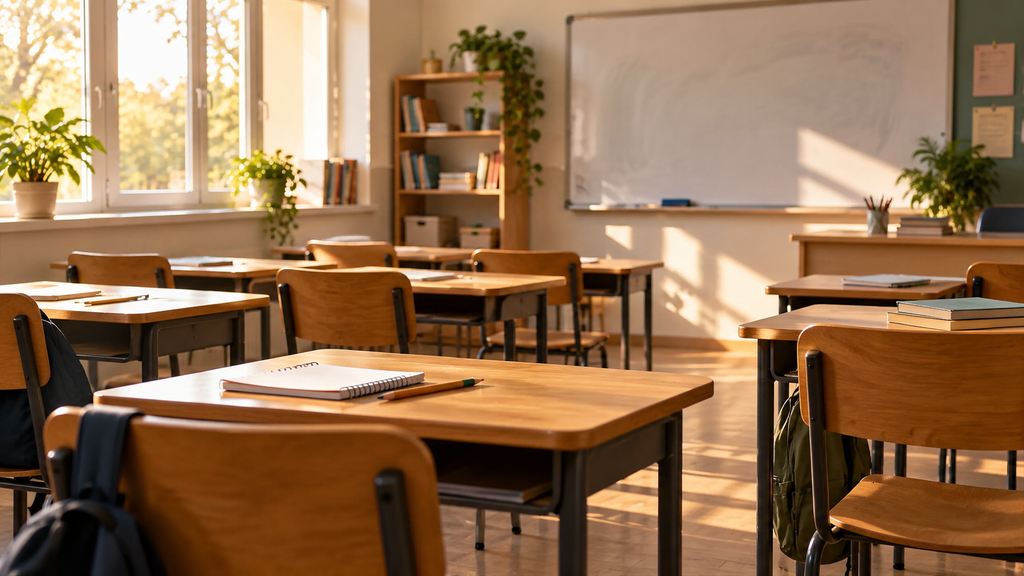
Three things at once, and almost nothing else in life combines them.
Speaking in class stacks three demands on top of each other, and a child who freezes is usually responding to the stack rather than to any single item in it.| The demand | Why it costs |
|---|---|
| A large fixed audience | The same people tomorrow, next week, and in the group chat tonight |
| No way to take it back | A wrong answer to one friend evaporates; in class it is witnessed and archived |
| No rehearsal | The question arrives without warning |
Years later I timed myself on a recording of one of my own lessons. My average wait was well under two seconds. I had been teaching a decade. I thought of myself as patient.
What you can actually do at home
Comfort is not the aim here. Nobody can arrange comfort for anybody else. The aim is to make speaking survivable often enough that comfort has time to arrive on its own.| Do this | Why it works |
|---|---|
| Start with one listener, then two | A grandparent on a video call is a rung, not the ladder |
| Rehearse specific situations | Three sentences prepared on Friday for Sunday’s question |
| Practice the recovery | Wait, let me start again proves a bad opening is repairable |
| Count to five before you answer | You break your own habit as much as build theirs |
| Ask them to teach you something | An expert operates under different rules from a student |
What makes it worse
Announcing it in front of them. She’s quiet, she doesn’t like to answer, said to a teacher within earshot, stops being a description of a Tuesday and becomes a fact about the child, one repeated at every parent-teacher conference for four years by adults who are only being helpful. Rescuing mid-sentence. Finishing their thought when they stall is kind, and it teaches that stalling ends a turn. Rewarding the outcome does the same from the other side: a child praised for right answers learns that speaking is for right answers. Asking about it every day, too. Did you put your hand up today? turns the whole thing into a reportable performance, and the report becomes another thing to dread.When it is more than being quiet
Most of this is ordinary and improves with practice, though a few patterns warrant more than a parent can give alone. Silence that appears everywhere and not only in class. Physical distress before school. Months, not a difficult stretch. A child who wants to speak, tries, and cannot get the words out. That conversation belongs with the school counselor or a pediatrician. It is a common one. Bring specifics. Which situations, how long, what happens in the child’s body beforehand.
So what does build it
Repetition in a room small enough that the turn comes back around, and comes back often enough that no single turn carries much weight.Twenty-five people, one chance a week. Five people, a turn every few minutes.
That arithmetic is most of the reason small groups work. It has nothing to do with atmosphere or warmth or anybody being encouraging, and a parent choosing between options is better off counting turns than reading descriptions of the teaching philosophy. In our lessons for bilingual kids the turn is unavoidable and arrives often. The conversation school is built around the same arithmetic with speaking as the whole task. Neither is a confidence course.A quiet child does not become a loud one. They become a child who can when it matters.
Yana put her hand up in October, once, and got it wrong. She reported this in the car with something close to satisfaction, which is the only outcome I would have accepted as evidence. Our piece on how children join a group covers the other half of the same problem. At Palme School we teach online, in groups of up to eight, two forty-minute classes a week, and the first two lessons are free. You can book those here, and there are printable materials for parents in our resource library.Frequently asked questions
With the size of the audience, not with the child’s confidence. Build from one listener upward, and rehearse specific situations in advance.
Give longer pauses at home than feel natural, practice recovering from a bad start, and stop asking whether they put their hand up today.
Very. The classroom combines a large permanent audience, no rehearsal, and almost no time to weigh it up, which is a demanding combination for anybody.
It is worth attention when the silence appears everywhere, lasts months, or comes with physical distress before school.
Sources
- Rowe, M. B. (1972). Wait-time and rewards as instructional variables: Their influence on language, logic, and fate control. ERIC ED061103. eric.ed.gov
- Rowe, M. B. (1986). Wait time: Slowing down may be a way of speeding up! Journal of Teacher Education, 37(1), 43–50. doi.org
Palme School: Russian for bilingual children · Conversation school · Free materials for parents
Lily Rozberg has been teaching for sixteen years, first English in Russia and now Russian to bilingual children across the US and Canada. She writes for Palme School about heritage language, reading, and the things report cards do not measure.