

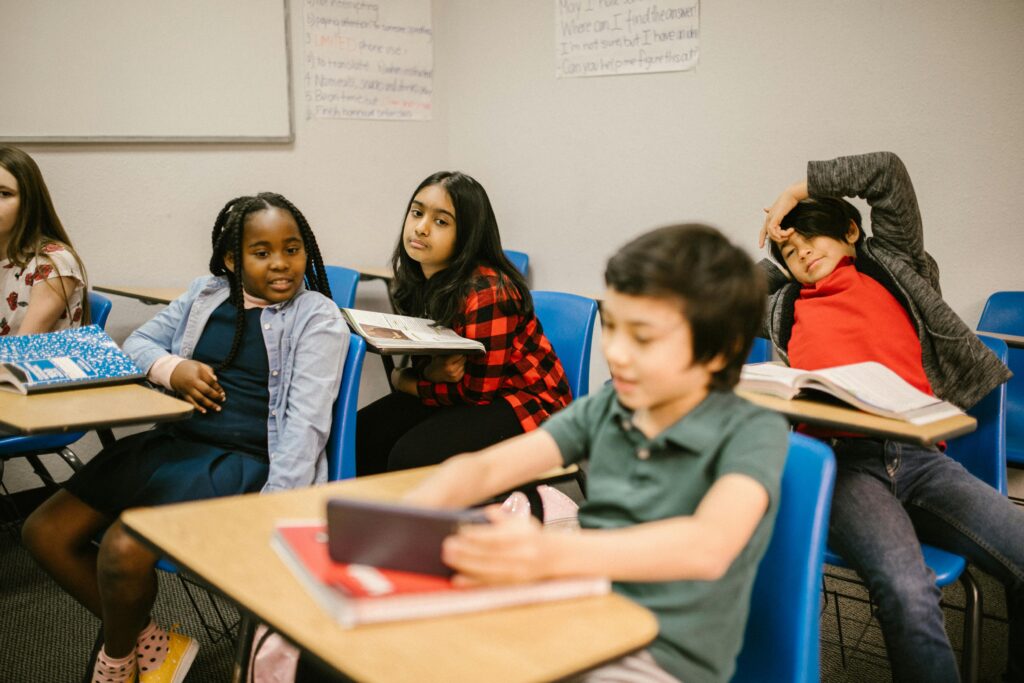

Let's go in order. The board of the largest school district in Los Angeles met on April 21, 2026, and voted on a resolution that will send American schools in a new direction regarding technology. Six board members voted yes, and one abstained. Los Angeles Unified, as reported by NBC News, became the country's first major district administration ready to introduce screen limits in classrooms.
What exactly was approved?.
First. A complete ban on digital devices for children up to second grade. No iPads, no Chromebooks, no school laptops in preschool groups and in first grade. The only exceptions are for children in the virtual program and for mandatory district tests.
Second. Screen time limits by grade level and by subject. The board must present precise figures to the council by June 2026, and the policy will take effect from the 2026-27 academic year.
Third. Prohibition of devices during lunch, breaks, and transitions between classes for elementary and middle school students. Previously, in many LAUSD schools, children were on their phones and iPads during these windows. Now, it is not allowed.
Fourth. Blocking YouTube and other streaming platforms on school devices. Plus blocking gaming platforms Roblox and Fortnite.
Fifth. Encouraging paper assignments. Auditing school contracts with edtech companies. A transparent process for parents who want their child to learn without a tablet to opt out of technology.
This isn't a local news story. This is a shift in a national trend. We'll now break down why American schools have suddenly started to combat screens, what studies show, and what this means for families raising bilingual children.
Why did this happen now?
The resolution didn't come out of nowhere. It was lobbied for by the parent group Schools Beyond Screens, which has about 2,000 local active members, according to NBC News. These are parents who have spent a year pressuring the district, collecting data, and speaking at board meetings.
Their main argument was as follows. During the pandemic, schools massively handed out iPads and Chromebooks to children because it was impossible to study without them. After the pandemic, the digital devices remained in the classrooms. And at some point, parents noticed that school had become a place where a child spends seven to eight hours a day in front of a screen. Lessons on an iPad. Tests on an iPad. Reading on an iPad. Break with an iPad. And on top of school hours, there was YouTube, TikTok, and games at home in the evening. The total screen time became enormous.
Nick Melvoin, an LAUSD board member who initiated the resolution, told NBC News: «During COVID, devices were a way to teach kids. But it's been a few years, it's time to reconfigure.».
Parents at a council meeting shared specific stories. Children were receiving poor grades because they were distracted by video games in class. Schools were organizing a whole day each week when everyone took online math and reading tests, and this ruined all other subjects. Many children developed symptoms of anxiety, sleep problems, and vision deterioration.
The most important thing is not in these stories, but in the fact that they became widespread enough for the largest American county to pass such a decision unanimously.
What do the studies show
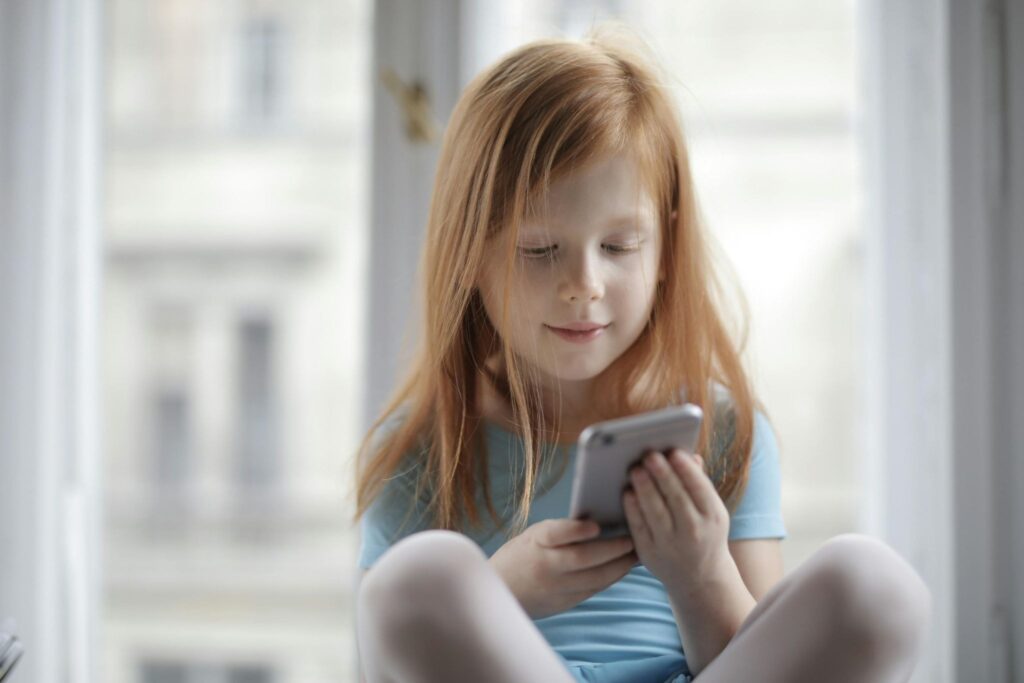
Parents' concerns are confirmed by data. Over the past couple of years, a considerable amount of scientific literature has accumulated describing the links between a child's screen time and their mental state.
One of the most large-scale studies was published in early 2026. The authors took a sample of over 50,000 American children and adolescents aged 6 to 17 and examined how the habit of spending hours in front of screens correlates with anxiety, depression, ADHD, and behavioral difficulties. The picture that emerged was grim. Excessive screen time is linked to all of the listed problems, and this connection works through two channels: the child moves less and sleeps worse.
Sleep suffers first. The blue light from the screen suppresses melatonin production, the content excites the nervous system, and time that could have been spent sleeping goes to YouTube. Children go to bed later, sleep worse, and wake up tired in the morning.
The CDC paints a similar picture. According to their 2025 publication, adolescents who spend a lot of time in front of screens are more likely to experience depressive symptoms, anxiety, sleep disturbances, weight problems, feelings of loneliness, and lack of physical activity.
The comparison of extremes is particularly telling. If you take teenagers aged 14-17 who spend seven or more hours a day in front of screens and compare them to those with about an hour of screen time, the difference is stark. The first group has an approximately 2.4 times higher probability of being diagnosed with depression. Anxiety is diagnosed 2.3 times more often. And they are prescribed mental or behavioral health medications three times more often.
In June 2025, the American Psychological Association released a press statement and specifically emphasized one point: too much screen time leads to emotional and behavioral difficulties in children, and these difficulties, in turn, cause children to retreat back to screens. This creates a vicious cycle.
In 2025, a large study was conducted in Canada with the participation of nearly 27,000 children. The result aligns with the general logic. Girls aged 5-11 whose recreational screen time does not exceed 2 hours per day had half the risk of being diagnosed with an anxiety disorder compared to those who spend more time on screens.
This painting is the backdrop against which LAUSD makes its decisions. The district reads the same studies as parents and comes to the same conclusion.
From Los Angeles to 16 states

LAUSD is not alone in this movement. By the spring of 2026, according to NBC News, legislators in sixteen states have introduced their versions of restrictions on classroom technology. In Alabama and Utah, some of these measures have already been adopted at the state level.
To understand the scale. LAUSD has about 600,000 students. The decision made here will spill over into dozens of other districts across the country within a year or two, because the same parents with the same concerns are pushing for it.
The trend is embedded in a broader context. A year ago, LAUSD banned students from using smartphones during the school day. That worked well, and now the district is moving on to laptops and iPads. Next, they will likely be reviewing their edtech programs themselves.
There's an important nuance in the resolution that's often missed in brief news reports. Board member Kelly Gonesh specifically said, «I hope the new policy will prioritize technologies that have real educational value. Programming, robotics, video production, targeted support for specific students. And move away from routine tasks like reading text off a screen and unlimited video streaming.».
So the district doesn't ban technology altogether. The district divides screen time into two types. Active, developmental, controlled by the educator, and passive, consumerist, algorithmic. The first is retained. The second is reduced.
What does this change for Russian-speaking families
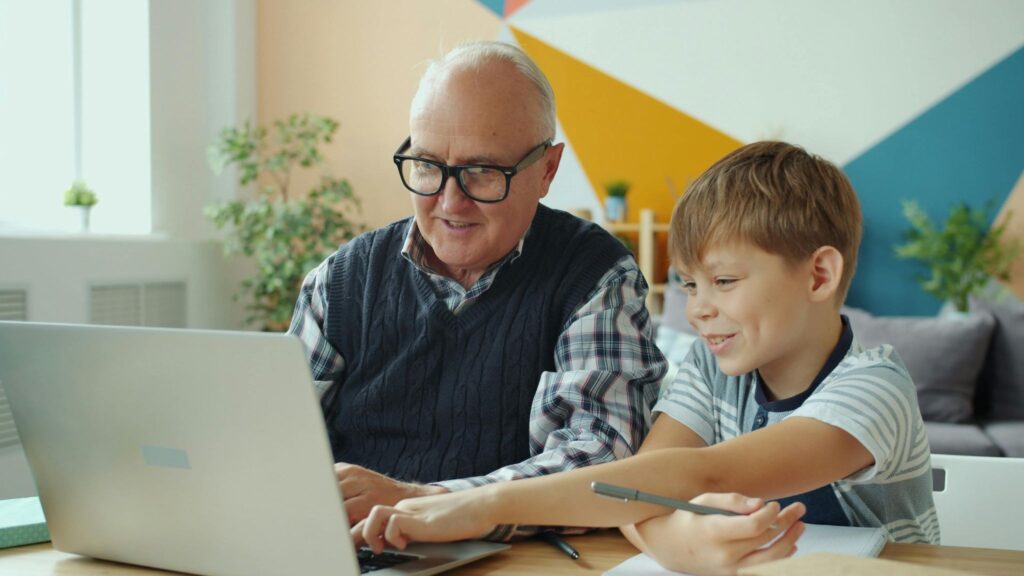
Now to our corner. We are in Palme School We work with bilingual children via video calls, so formally, we are also a screen. And immediately after the vote in LAUSD, parents started writing to us with the same question, explicit or implied: «Is my child getting too much screen time?»
Understanding parents is easy. The school now says digital devices are harmful. And the child still has an hour on Zoom in the evening with a Russian teacher. Mom looks at this and thinks: the lessons seem useful, but if the school is massively cutting back on screen time, should I be too?
Here's a story from our cast de____. Lisa, ten years old, lives in Los Angeles. She attends an LAUSD school, the very one where the new policy will now take effect. She has been studying Russian online since she was five. Her mother is a working mother, a natural controller, accustomed to getting everything done.
After voting, Mom sent us a message: «I'm on the fence. On one hand, I know Russian Lisa needs it. On the other hand, she'll now be at school for five hours without screen time, and I'll come home to her spending another hour on the computer with your teacher. Is this a problem now?»
That's the right question. And the answer is hidden in that very quote by Kelly Gones. The type of screen is more important than the fact of the screen itself.
When a child watches YouTube, scrolls through TikTok, or plays Roblox, their attention is passive. The platform's algorithm is designed to hook, hold, and not let go. The child does nothing; they are being done to. This is the type of screen time linked to anxiety, sleep disturbances, and decreased concentration in studies.
When a child works with a teacher via video call, the picture is different. They speak. They answer questions. They read aloud. They write. They think. They actively participate. Their attention is not passive, but active. It becomes a conversational format, with the conversation simply going through the camera. No platform tries to keep the child longer than necessary. The lesson lasts forty minutes, and it truly ends, without algorithmic tricks and without mixing in new content.
In other words, the school isn't blocking all screens. It's blocking those where a child is left alone with an algorithm. A live educator falls into a completely different category, and the LAUSD resolution directly acknowledges their value.
A mom from San Diego articulated it perfectly at the cast: «I see the difference between YouTube and Russian class. When my son gets off YouTube, he's sluggish, like he's just woken up. When he gets off class, he's the opposite, he's active. He can talk, tell you what they covered. They're completely different things, even if both are on the computer.».
Dad from Seattle, a Russian speaker, whose daughter is seven, said it more concisely: «My daughter has forty minutes with a teacher once a week. This isn't screen time in a bad way. It's a conversation. If we could send her to the teacher physically, we would. It's just that the teacher is in Moscow, and we're in Seattle.».
What do we do at Palme School
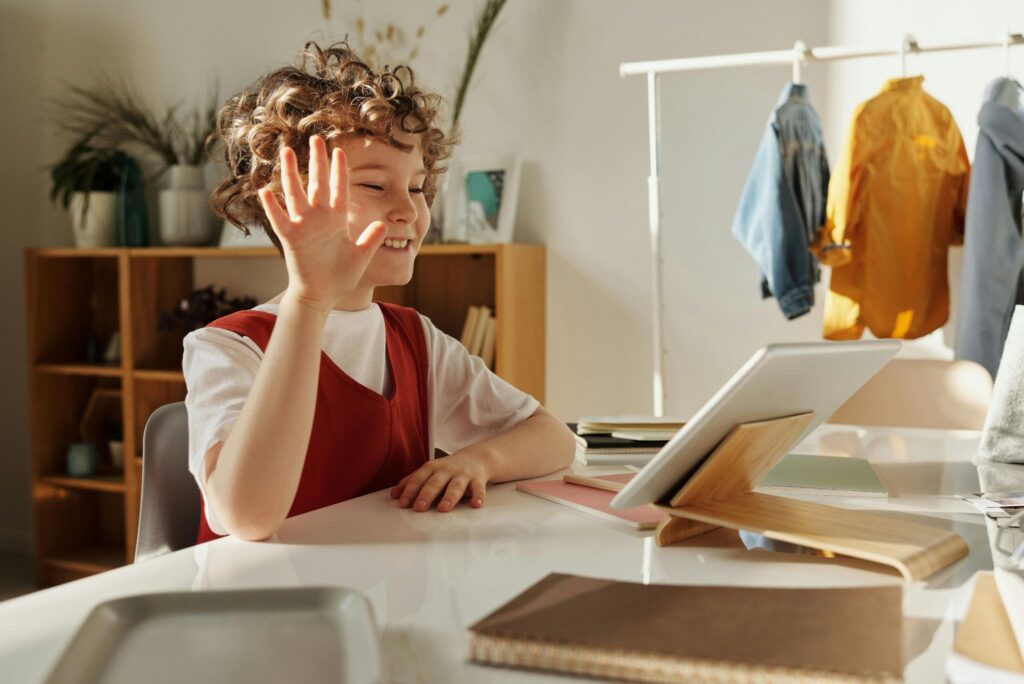
Briefly.
We work with children aged four to seventeen from the USA, Canada, and Australia whose native language is Russian. Lessons are held online via video call. The educator guides the child through the program. for his age and level.
The lesson lasts forty minutes. This is not background noise. It's not passive consumption. The child actively participates here, speaks, reads, writes, answers, thinks. No algorithms that hold attention longer than necessary.
Usually, one to two lessons a week plus a little homework is enough to maintain Russian at a good level. This is not a lot, and it does not take away from the child's other activities.Your first two lessons are free.. You can watch them to see how a class is structured and to understand whether it falls into the category of «harmful screen time» or rather a conversation with a teacher via camera.
What exactly did the LAUSD board approve on April 21, 2026?
NBC News reports: The vote concluded with 6 in favor, 1 abstention. The board adopted a resolution that mandates the district to prepare a policy limiting screen time for all grade levels and all subjects. The finalized text must be presented to the board by June 2026, and the policy will go into effect for the 2026-27 school year.
Will other US school districts follow the lead of LAUSD?
It seems so. NBC News reports that in 2026, bills restricting the use of technology in schools are already being discussed in sixteen states. Alabama and Utah have already adopted their regulations. The trend is gaining momentum, especially after the Los Angeles precedent.
Why are schools only now starting to battle screens?
Because sufficient evidence has finally accumulated, which was previously unavailable. The CDC clearly links excessive screen time in teenagers with anxiety, depression, sleep disturbances, and reduced physical activity. For those who spend more than seven hours a day in front of screens, the diagnosis of depression occurs approximately 2.4 times more often. With this level of evidence, schools can no longer dismiss it.
Does the LAUSD ruling apply to online lessons outside of school?
No. The resolution concerns the use of digital devices in classrooms, during breaks, and at lunch, within the school day. After-school family educational activities are not covered by the resolution.
Is an online Russian lesson harmful for a child who already has a lot of screen time at school?
This is a question about the type of screen time, not about the act itself. Passive content like YouTube and games is indeed linked to anxiety and sleep disturbances. Active dialogue with an educator via video call belongs to a different category. In this format, the child speaks, thinks, and responds, rather than passively consuming.
What to do if a child is tired of screens after school?
It makes sense to choose a convenient time for the lesson. Many families schedule Russian lessons not for the evening after school, but for weekends or days when the child has a lighter schedule. It also helps to take physical breaks between school and the online lesson.
How much screen time for a child is considered safe?
For a long time, parents were advised to limit entertainment screen time to two hours a day. But in 2026, the American Academy of Pediatrics revised its approach and moved away from a strict hourly limit. Now, the emphasis is on the quality of what the child is watching and the context of its use. The simple idea behind the update is this: Not all screen time is created equal. An hour of passive scrolling and an hour of live engagement with an educator cannot be added to the same category; differentiating them by type is more important than by the number of hours.
What is Palme School's stance on screen time?
We agree that passive screen time is harmful to children. That's why we structure our lessons as a live dialogue, not a broadcast. Forty minutes of active participation, then it's over. No algorithmic traps, no background content delivery.