
Palme School

Online Russian Language School in the USA and Canada
Online school in Russian for bilingual children and teenagers
💡 Get bonuses with us! Referral program

Unusual drawing techniques for children

All kids love to draw! And if they don't? After all, there are children who cannot be persuaded to pick up a felt-tip pen or a paintbrush. Should we leave them as they are or try to get them interested in other kinds of creativity? Today - on the Day of Creativity and Inspiration - we will show you 5 unusual drawing techniques that you can introduce to your child. What if it inspires them to create their own masterpieces?

Conventional materials in the work

Milk

You'll need a bowl of milk, watercolors, a brush.

The technique is similar to ebru painting. Except that painting on the waterand we suggest using milk. Firstly, there is no need to add a special extract that makes the water more viscous. Milk itself contains fat and retains the colors on the surface. Secondly, this way you get brighter colors.

How to draw? Make streaks of paint on the milk, and then gently lay a piece of paper on the surface to transfer the drawing to it. Don't forget to dry it.

Wax shavings

You will need: wax crayons, sharpener, paper.

Sharpen crayons of different colors, arrange the shavings on a piece of paper in any abstract pattern and put the sheet briefly in the microwave to melt the shavings. Don't forget to cool it down.

Colored threads
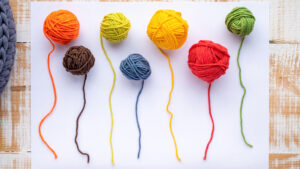
You will need: any colorful threads, cardboard, glue, pencil

Use a pencil to draw an outline. Use glue to draw lines on top of the pencil and glue the outline with thread. If you want a clearer outline, use a thicker thread. You can also glue the empty parts with thread or leave only the thread outline.

Salt


You will need: paper, salt, glue, paint.

Similar to threading, draw a picture with a simple pencil and apply glue around the outline. Before the glue dries, sprinkle salt on it. Shake off the excess. You will have a "frosty" contour. If desired, you can paint it with paints.

Liquid soap

You will need: paints, paper, liquid soap.

Add a little liquid soap to watercolor paints and stir until lightly foamy. Such paints leave beautiful traces of bursting bubbles on the paper

We wrote about how to develop creativity and creativity in children this article.

Our school has art classes with Russian teachers. If your child is passionate about creativity, you can develop their abilities at our classes. To find out more, leave a request in the form below and a manager will contact you.


Do you want to support child's successes In studies?
Helping to develop knowledge, confidence, and a love for learning through modern Russian language classes and beyond.
Ukrainian differs from Russian in several key ways, including pronunciation, vocabulary, and grammar. Despite these differences, they are often confused because they are both East Slavic languages and share a common ancestor, Old East Slavic. This shared heritage means they have a significant degree of mutual intelligibility, particularly in spoken form. **Key Differences:** * **Pronunciation:** * **"Г" sound:** In Ukrainian, the letter "г" is typically pronounced as a voiced velar fricative, similar to the "g" in "go" but softer, almost like a gentle breath. In Russian, "г" is usually a hard "g" sound. * **"И" and "Ы" sounds:** Ukrainian has distinct "и" (pronounced like the "i" in "bit") and "i" (pronounced like the "ee" in "see"). Russian has "и" (similar to Ukrainian's "и") and "ы" (a harder, more guttural sound not present in Ukrainian). * **Vowel reduction:** Russian has significant vowel reduction, where unstressed vowels change their sound (e.g., "o" can sound like "a"). Ukrainian generally pronounces vowels more clearly, regardless of stress. * **"Є" and "Ї" sounds:** Ukrainian has specific letters like "є" (pronounced like "ye" in "yes") and "ї" (pronounced like "yi" in "yield") which are not found in Russian. * **Vocabulary:** * While many words are similar or identical, Ukrainian has a richer influence from Polish, and also incorporates words from Turkic languages and other European languages to a greater extent than Russian. * Examples: * Thank you: Ukrainian - дякую (dyakuyu), Russian - спасибо (spasibo) * To speak: Ukrainian - говорити (hovoryty), Russian - говорить (govorit') * Yes: Ukrainian - так (tak), Russian - да (da) * No: Ukrainian - ні (ni), Russian - нет (net) * **Grammar:** * **Vocative case:** Ukrainian retains and actively uses the vocative case for direct address, which has largely disappeared from modern Russian except in very specific or archaic contexts. * **Verb conjugations:** There are differences in verb endings and some verb forms. * **Grammatical genders and noun declensions:** While largely similar, there are minor variations in how nouns change form based on case and gender. **Why They Are Confused:** 1. **Shared Ancestry:** Both languages descend from Old East Slavic, the language spoken in Kyivan Rus'. This common origin means they have a large base of shared vocabulary and grammatical structures. 2. **Geographic Proximity and Historical Interaction:** For centuries, the territories where Ukrainian and Russian are spoken have been in close contact, often under the same political empires (like the Russian Empire and the Soviet Union). This led to significant linguistic borrowing and influence in both directions. 3. **Mutual Intelligibility:** Due to the shared roots and similarities, speakers of Ukrainian and Russian can often understand a significant portion of what the other language is saying, especially in simpler conversations or written texts. This superficial understanding can lead to the misconception that they are dialects of the same language. 4. **Political and Historical Context:** During periods of Russian imperial and Soviet rule, the Ukrainian language was often suppressed or discouraged, and there was a promotion of Russian as the dominant language. This historical context sometimes led to the view, particularly among those outside Ukraine, that Ukrainian was merely a dialect of Russian. However, linguistic analysis clearly shows they are distinct languages.

Do you want your child to love learning?

At Palme School, classes are held online in live groups with experienced teachers. Choose a subject and sign up for a free first lesson.

Sign up for the newsletter
We at Palme Online School fall in love with the Russian language and Russian culture

Leave a request for a free call

Sign up for a free lesson.
Apply for a free introductory lesson to get acquainted, determine your goals, and find a suitable group.
Sign up for a free lesson
Submit a request for a free first session with a guidance counselor to get to know each other, determine your goals, and match your child with an educator
Sign up for a free lesson
Submit a request for a free first session with a guidance counselor to get to know each other, determine your goals, and match your child with an educator
Sign up for Russian Dictation
Sign up for a free lesson
Submit a request for a free first session with a guidance counselor to get to know each other, determine your goals, and match your child with an educator
Sign up for a free lesson
Submit a request for a free first session with a guidance counselor to get to know each other, determine your goals, and match your child with an educator
Sign up for a free lesson
Submit a request for a free first session with a guidance counselor to get to know each other, determine your goals, and match your child with an educator
Sign up for a free lesson
Submit a request for a free first session with a guidance counselor to get to know each other, determine your goals, and match your child with an educator
Sign up for a free lesson
Submit a request for a free first session with a guidance counselor to get to know each other, determine your goals, and match your child with an educator
Sign up for a free lesson
Submit a request for a free first session with a guidance counselor to get to know each other, determine your goals, and match your child with an educator
Sign up for a free lesson
Submit a request for a free first session with a guidance counselor to get to know each other, determine your goals, and match your child with an educator
Sign up for a free lesson
Submit a request for a free first session with a guidance counselor to get to know each other, determine your goals, and match your child with an educator
Sign up for a free lesson
Submit a request for a free first session with a guidance counselor to get to know each other, determine your goals, and match your child with an educator