

Russian-speaking families in the US and Canada often face questions from children about Easter. A child sees chocolate eggs, bunnies, and baskets in stores, hears about egg hunts at school, and at home remembers "kulichi" (Easter bread) and dyed eggs. This is a great opportunity to connect two cultures through a simple conversation in Russian.
An explanation doesn't require lectures. It's enough to show that the holiday is one, but the traditions are different, and to give the child the words to talk about what's happening around them. This way, the Russian language becomes a living tool for real life.
What does the child see around
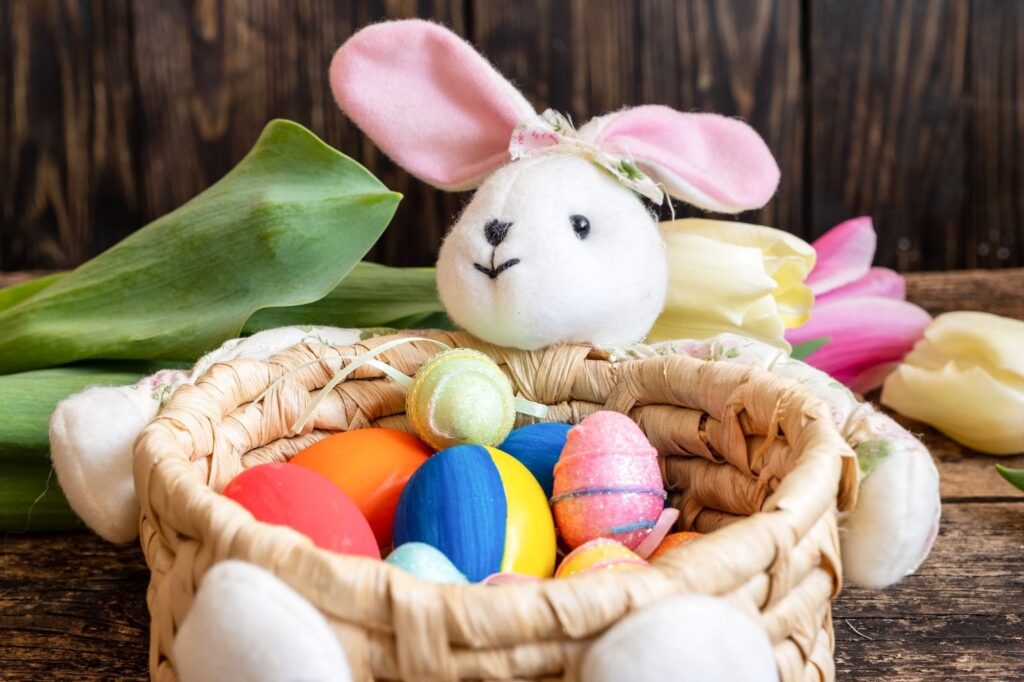
In the US and Canada, Easter turns into a real spring carnival for children. Even before the holiday, supermarkets are overflowing with plush bunnies (Easter Bunny), plastic eggs filled with candy, gift baskets, and garlands with chicks. Preschoolers in kindergartens and schools draw eggs and sculpt figures, and on the weekends, parks and churches are filled with children hunting for hidden eggs (Easter Egg Hunt).
Adults hide eggs in the grass, bushes, or in the house, and children search for them with baskets. The one who collects the most eggs wins. Sometimes, coins, stickers, or toys are placed inside the eggs. Another popular game is the Easter Egg Roll: children roll eggs across the grass with a spoon, competing to see whose egg rolls the farthest without cracking. A famous example is the annual event on the White House lawn.
For a child, it looks like a fun treasure hunt. He quickly notices the symbols and asks, «Why the hare? Where's the Paskha?».
Russian Easter vs. American

In Russia, Easter is a family and church holiday with kulichi (Easter cakes), paska (a sweet cheese dish), dyed eggs, and the greeting «Christ is Risen - Truly He is Risen.» The main elements are: the table, the service, and egg games.
In the USA and Canada, the focus is on children and spring: the Easter Bunny brings eggs, chocolate baskets, and picnics. Church is important for believers, but many celebrate secularly: parades, games, and dinners with ham and hot cross buns. Catholic Easter is earlier than Orthodox Easter. Sometimes they coincide, as was the case last year, April 20, 2025.
Don't contrast traditions: here's a hare, at home a kulich, and that's okay. One holiday takes on different characteristics in different countries. A child will understand that they complement each other.
Simple phrases for conversation
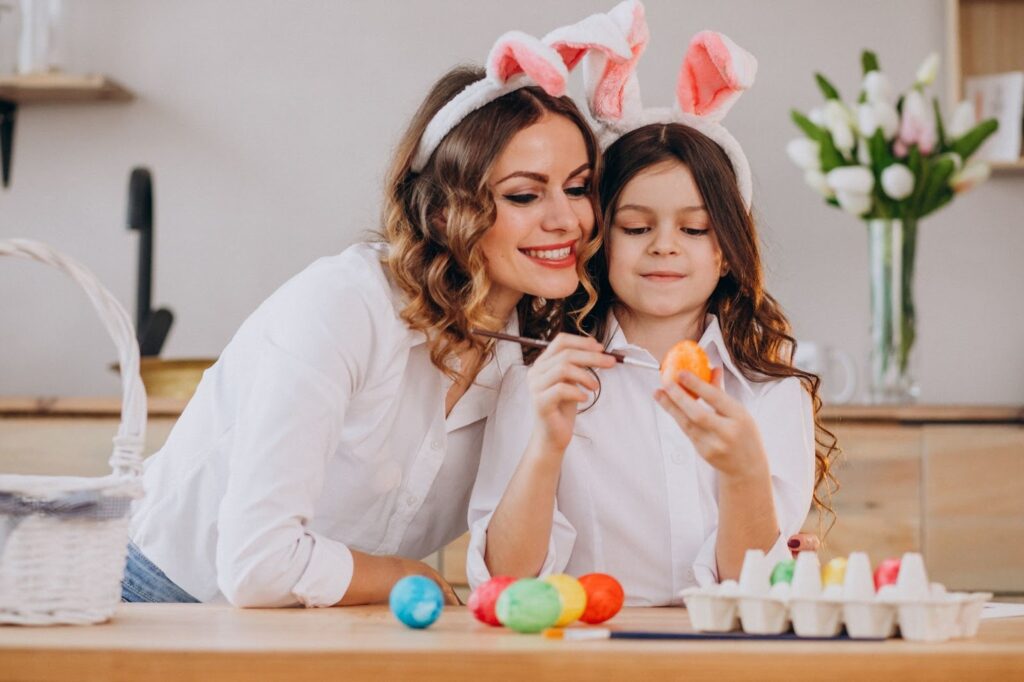
Start with questions:
- What did you see at school about Easter?
- Why are there rabbits with eggs everywhere here?
- How do we celebrate at home?
Short explanations:
- «The Easter Bunny is like Santa Claus, a fairytale helper. He hides eggs, and adults help.
- «Egg hunt is a hunt for eggs. We look for sweets in the grass.
- «A basket for finds. Like a bucket for treasures.
- «Here Easter is spring, with games. At home with kulich and church.
For toddlers, show pictures. For schoolchildren, compare: «In Russia, we dye eggs with onion skins; here, with stickers.» Add: Easter is about joy, family, and spring everywhere.
Useful dictionary in Russian
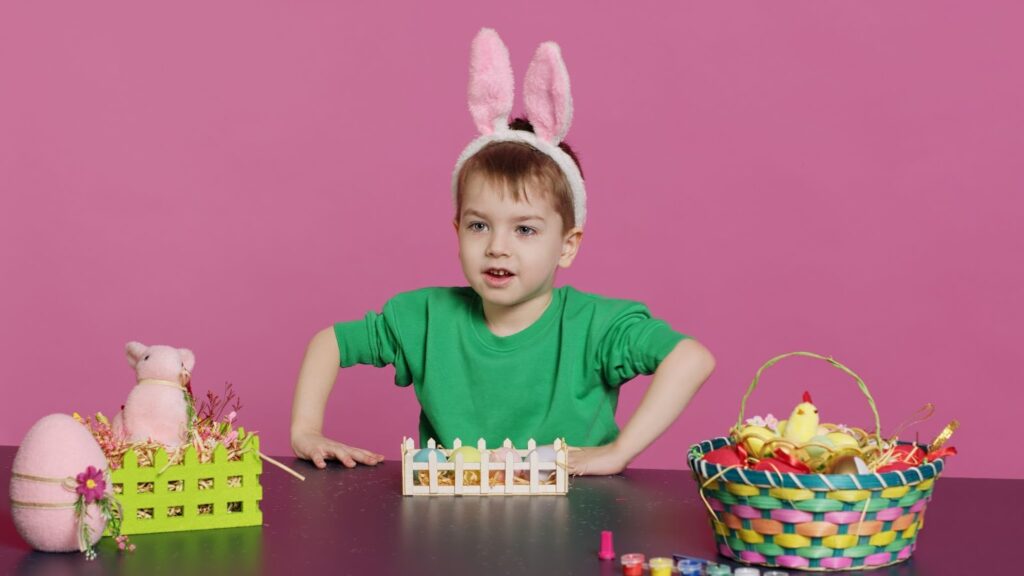
Learn 8-10 words together. Hang the list on the refrigerator or draw it:
- Easter.
- Easter egg.
- Basket.
- Easter Bunny.
- Egg hunt.
- Jewelry.
- Easter cake.
- Hot cross buns.
- Spring festival.
Play: «Name it in Russian.» «Point to the picture.» «Make a sentence: I found an Easter egg!».
10-minute mini-game

- Collect Easter items (toy eggs, bunny pictures).
- This is a hunting basket.
- Hide 5 eggs and search together: «Where's the Easter egg?»
- Here they hide them, at home we paint.
- The hare hid the eggs, and we found them!.
Repeat 2-3 times a week. The child will speak about Easter in Russian fluently.
Why does this work
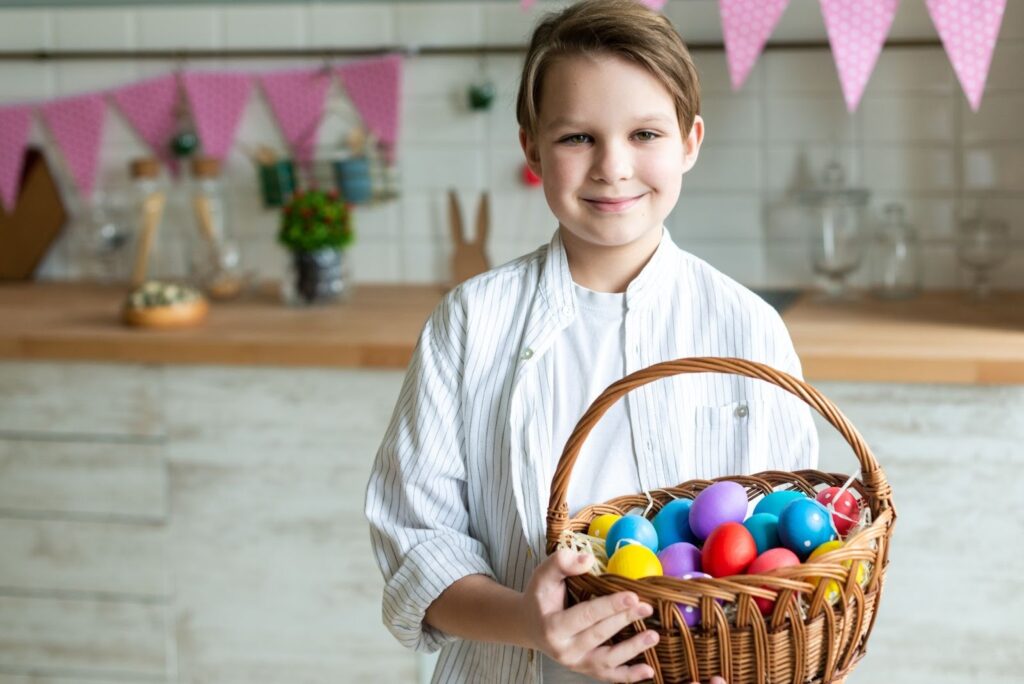
Such conversations build a bridge between worlds. The child doesn't get confused, but rejoices: Russian is needed for everything: school, games, holidays. They feel a connection to their family and their new country.
At Palme School, we explain traditions this way: through language and practice. Easter becomes not a problem, but an opportunity to speak Russian about life here and at home.