



When two languages coexist in a family, parents must not only raise their children but also devise a language strategy: how to organize communication so that both languages are truly integrated into the child's life, rather than remaining in the background. For Russian-speaking mothers in an English-speaking environment, this is also a way to maintain Russian as a living family language, rather than just a «scheduled lesson.» One of the most popular approaches in such cases is the OPOL (One Parent One Language) method, in which each parent consistently uses only their own language with the child. In practice, things do not always go as smoothly as described in books and articles about bilingualism.
Let's figure out what this method offers, where it starts to falter, and how to make it work not just in theory.
Where does the idea of «one parent, one language» even come from?»

Most often, parents learn about this method not from scientific articles, but from each other. Someone says at the playground that at their home the mother speaks only Russian and the father speaks only English, and the child supposedly started speaking two languages on their own. Someone shares a similar story in a chat for bilingual families or in a group for Russian-speaking mothers abroad. Gradually, the feeling forms that this is not just one of the options, but almost a mandatory rule for all mixed families.
This approach has an obvious advantage: it sounds very simple. In a world where moving, school, and routines are already complicated enough, it's nice to have at least one straightforward solution. There's no need to make a plan, no need to count Russian and English hours, no need to decide what language to speak on Wednesday evenings. Each parent stays in their own language, and it seems like the system will run itself from then on.
This arrangement is particularly appealing to families where one adult speaks Russian and the other does not. The Russian language is seemingly assigned to one person; the mother becomes the one the child speaks Russian with, while the other parent is responsible for the language of the country where you live. The picture looks neat and logical, and initially, it genuinely helps to somehow structure the chaos of two languages at home.
What does it look like on a day-by-day basis, not in the method description?
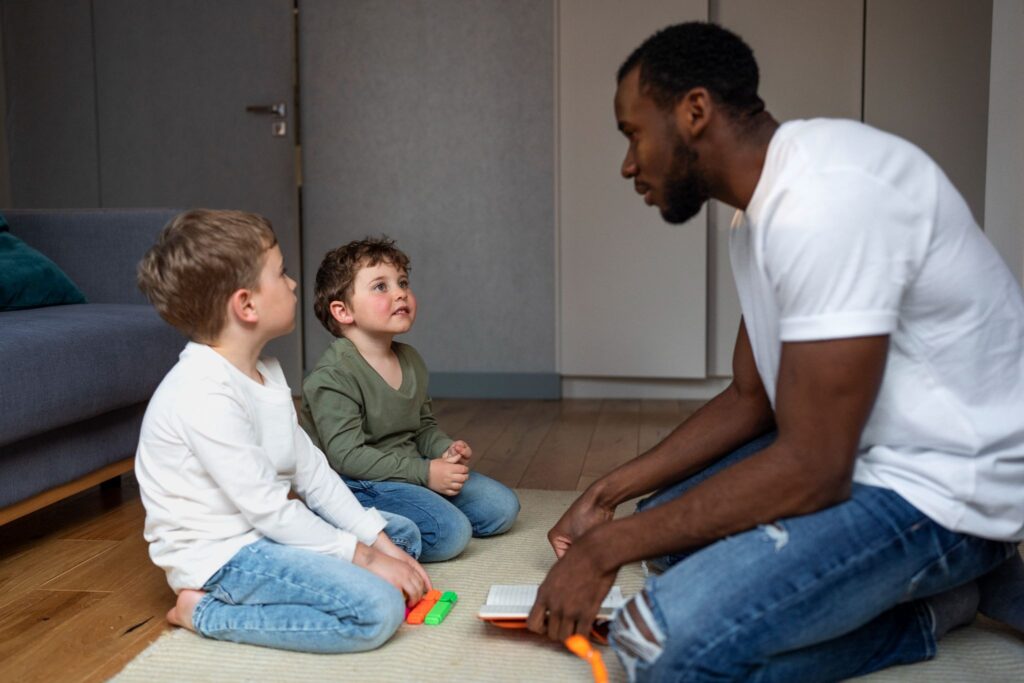
In preschool, everything often goes quite smoothly. The child quickly learns who in the family speaks one way and who speaks another, and hardly thinks about the fact that there are two languages. Parents see how the child understands spoken language, begins to respond, and feel that the idea has worked.
The turning point usually comes closer to school age. By six or seven years old, the child spends more and more time in an English-speaking environment: at the local school, in clubs, with friends, in games and videos. English fills almost all of their waking hours, while Russian remains primarily in communication with their mother, sometimes for a few hours in the evening and a little on weekends.
Gradually, the answers in Russian are becoming shorter, with English words appearing more frequently, and then entire phrases. At some point, the child is almost always answering their mom in English, even though they perfectly understand Russian speech. Formally, OPOL (One Parent, One Language) is being followed: the mom speaks Russian, the child speaks English, each sticking to their own language. But the initial goal, spontaneous two-way communication in Russian, is starting to slip away.
The «one parent, one language» method: where it starts to falter
The weaknesses of this approach do not arise because parents did not try hard enough, but because of the construct itself.
The first thing that almost always makes itself felt is the different scale of the language environment. The language of the country in which you live, the child hears from dozens of people in many different situations, at school, in the street, in classes, in games, on the Internet. A language that comes only from one parent is known to be in a less favorable position. If there are no additional sources, Russian remains in the status of a language that the child mostly understands, but rarely chooses for himself.
The second point has to do with the burden on the one who is assigned to Russian. When it is the mother who is associated with all attempts to speak Russian, to correct, to ask to repeat, to return the conversation to Russian, it is very easy to feel that all responsibility for the language lies with one person. And if the child is tired, resists, switches to English, this person has the feeling that he or she is not coping well, although this is the child's natural reaction to unequal conditions for languages.
The third group of difficulties arises in general family situations. For example, the whole family is having dinner together, and the second parent doesn't understand Russian. So that they don't feel left out of the conversation, everyone switches to English, and the "one parent, one language" rule is no longer followed literally. Or a child comes in highly emotional with a story important to them and starts telling it in English because it's quicker and easier, while the adult insists on Russian. In the end, it's not the method that suffers, but the connection.
Finally, older children start to form their own views on how their family operates. Between the ages of eight and ten, many react painfully to the fact that their home life isn't like everyone else's. Some feel embarrassed speaking Russian in front of friends, while others get angry about being forced to respond in a language they hear much less often. In these situations, Russian risks becoming a symbol of parental demands rather than a resource that helps the child.
Does all this mean that the «one parent, one language» method should be abandoned?
No. Rather, it's a reason to look at it differently. OPOL is not a magic scheme that itself creates a bilingual, but rather one of the tools that helps set a direction. It gives the child a clear signal that there are two languages in their life, and both are connected to important adults. It's a good starting point, but not the finish line.
Even if a parent strictly sticks to their chosen language, it may not be enough for Russian to develop as actively as the surrounding language. This is not the mother's or father's fault, but simply a limitation of the situation, where one person cannot replace the entire world of Russian speech for a child.
What does a Russian need besides one parent?
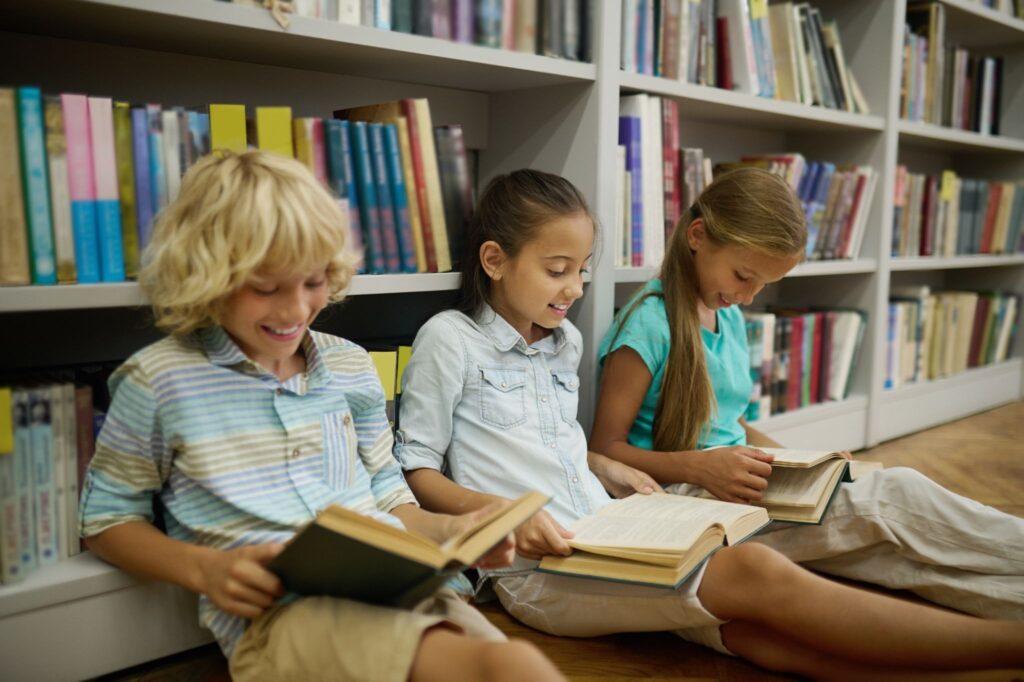
When specialists in child bilingualism describe the conditions under which a language feels stable, they usually talk about several things at once. Not only the regularity of communication is important, but also how many different situations a child has in that language, whether they have appropriate books and media, and whether they themselves have reasons to choose that language, and not just respond to adult requests.
If you apply this to OPOL, it turns out that the method covers only part of the problem. It helps to make Russian a regular part of family communication, but it has almost no effect on how much more Russian there is around, how diverse the topics are, and how the child himself feels about it. Therefore, at some point it almost always has to be supplemented by other people, other formats and other occasions to speak Russian.
How to make the «one parent, one language» method more sustainable
If you are already using this method or just thinking about it, here's what can help the Russian language not remain only a mother tongue.
Expanding your social circle in Russian. When the Russian language comes from only one parent, it's one voice, one way of speaking, and one set of topics. It's beneficial for a child to hear Russian from different people and in different contexts from peers, from teachers, from other adults. This gives the feeling that Russian isn't just Mom's language, but a language spoken by a whole world of people.
Allow yourself flexibility. If the whole family is at the table and Dad is uncomfortable not understanding the conversation, it's okay to switch to English. If a child is upset and needs to vent, and doesn't have enough words in Russian, it's okay to listen to them in any language. The OPOL method is more of a guideline than a strict law. Sticking rigidly to the rule at the expense of relationships is never worth the outcome.
Create situations where Russian is needed. Correspondence with grandma. Russian-language podcasts or bloggers that interest the child. Summer camp. Books and movies that are only available in Russian. The more contexts in which Russian is personally needed by the child, the higher the chances that they will use it.
Don't consider switching to English a failure. If a child responds in English, it doesn't mean the method isn't working. It means it's easier for them right now. You can gently steer the conversation back to Russian with a question or rephrasing, but without reproach. The phrase, «You said he *was angry*. How do you say that in Russian: «злился» or «бесился»?" sounds like an invitation, not an exam.
Set up regular classes. This is perhaps the most effective way to support OPOL. When a child has Russian lessons with a teacher who understands the bilingual situation, the mother stops being the sole source of the language. A second context emerges, an educational one, but a living one, and this noticeably relieves the burden on the entire family.
The stories we see at Palme School

Children from OPOL families often come to school, and the situations are similar. Here are a few typical scenarios.
A child who understands everything but doesn't speak. The mother consistently spoke Russian for five years, and the child perfectly understands, but only responds in English. The parents thought something was wrong. In group classes, it turned out that he could speak; he just didn't have anyone to speak with besides his mother. When other children in similar situations appeared, he started speaking within a few weeks.
A mother who felt like the «language police.» She admitted that she was tired of constantly correcting and redirecting her child back to Russian, and it started to ruin their relationship. When the child started attending school, the language aspect fell to the teacher, and the mother was able to simply communicate with her child in Russian, without the role of a monitor.
A family where the dad started learning Russian. It's not directly related to OPOL, but it happens that when a child starts speaking more confidently, the other parent also gets involved, learns words, and tries to understand what's being discussed at dinner. Russian stops being the secret language of the mom and child and becomes part of common family life.
How does Palme School complement OPOL

The «one parent, one language» method gives a child their first contact with Russian, a habit of hearing it every day, and an emotional connection to the language through their relationship with the parent. But for Russian to develop further, for the child to be able to think, joke, argue, and tell stories in it, an environment outside the family is needed. For many families, this becomes the foundation upon which bilingual Russian language classes for children are later built.
At Palme School, children study in small groups with peers who have similar language situations. Classes are being built based on RKI principles from live communication, not from a textbook. This means the child gets precisely what OPOL cannot provide alone: practice with other people, a variety of topics, and the feeling that Russian is not just Mom's language, but their own.
If you feel that OPOL has been working well, but now Russian is getting stuck or your child is increasingly switching to English, try signing up for a trial lesson. It is not a replacement for your method, but support that helps it continue to work and gives your child more real-life practice of the Russian language.