


Names and identifying details of every student here are changed, as they are everywhere on the blog.
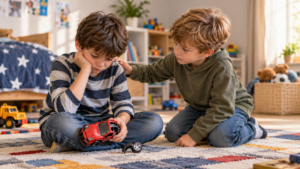
Nastya’s son is 11 and the fight happens every evening at the same hour. Two hours, she says. Everybody else gets more, he says. Then the phone gets taken, the door gets slammed, and she is left in the kitchen feeling like the villain in her own apartment. Her question was not about rules. It was whether the two hours she keeps defending are even the right number.
The honest answer is that the number stopped being the point, and that this changed recently enough that most of us missed it.
What the guidance says now
Pediatric guidance used to give parents hours by age, and that is what everybody quotes at each other in group chats. This year the approach moved. Instead of counting minutes, the questions are about the child, about what is actually on the screen, and about what the screen is replacing in that particular evening. Pediatricians even gave it a name this year, the five Cs, five questions about the child, the content, the mood around it, what it crowds out, and what you talk about afterward.
Little ones still have a number attached to them, about an hour a day of decent programming from 2 to 5, and that number survives from the earlier edition rather than the new one. School-age kids have no strict cap anymore. The reasoning is plain enough. A video call with grandmother, a math app, and two hours of scrolling are three different activities, and no single number can tell them apart.
Hours are no longer the question. It is what is on the screen, and what is not happening while it is on.
One more distinction worth keeping. All of this is about entertainment and social media. Homework on a laptop is a different conversation, and lumping them together is how a family ends up fighting about a math assignment.
A rule that changed at school this year
Something happened in California that most parents heard about sideways. Under the Phone-Free Schools Act, signed in 2024, every district, county office of education and charter school had to adopt a policy limiting or banning student phones at school by July 1 of this year, and to revisit it every five years.
So the phone is already out of his hands for most of the day, whatever happens at home. Schools write their own versions, and the exceptions are the ones you would expect, emergencies, documented medical needs, teacher-approved classroom use and what a child’s IEP or 504 plan requires. In Los Angeles the district voted its own ban in 2024, and it has been in force since February of last year.
That matters for the evening argument in a specific way. The school hours are already decided by somebody else, so what is left to negotiate is the evening, and an evening is a smaller and more honest thing to argue about.
Protect these instead of counting minutes
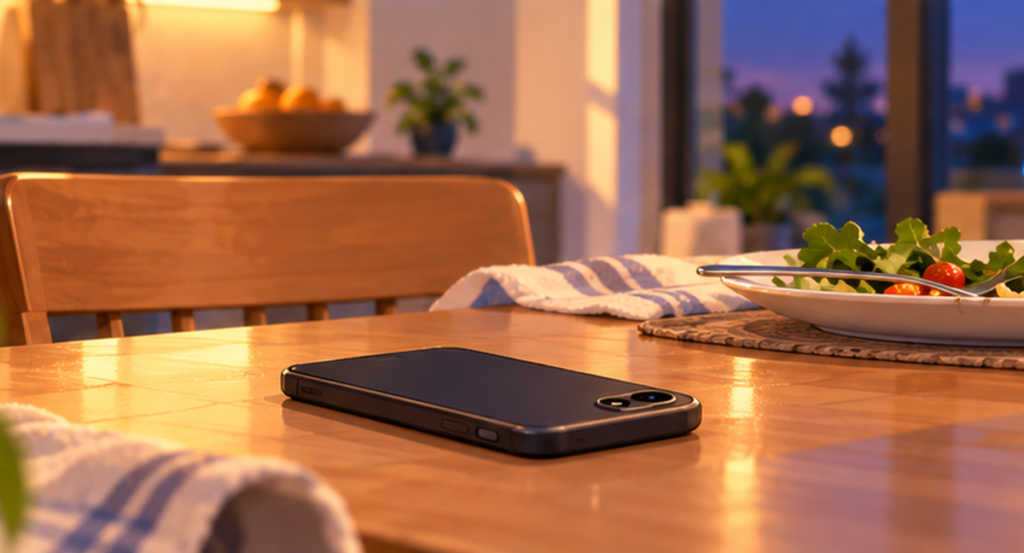
Sleep comes first, and it is not close, and that one is in the guidance itself, no screens in the bedroom at night and none in the hour before sleep. A phone in the bedroom at night costs a child real sleep, and a tired 11-year-old is a different child at breakfast, at school and at the kitchen table at seven in the evening.
Meals second. Not because of etiquette, but because the meal is where you find out what happened at school, and a screen at the table ends that conversation before it starts.
Then whatever the screen is displacing on that particular day. Not in theory, on that day. If he read, ran around outside and called a friend, two hours of a game is not the crisis. If none of that happened, the number is not the problem either. The emptiness around it is.
How to agree without the fight
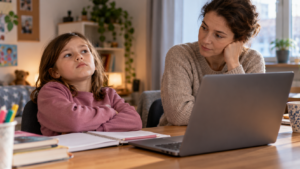
Here is the part nobody enjoys. A written agreement works better than a rule announced from a doorway. Pick an hour when nobody is angry, which rules out seven in the evening, and write the thing together, out loud, with the pen in his hand.
Three or four rules, no more, since a list of twelve is a list that gets ignored by Thursday. Decide the consequences right there in the same conversation, so that later you are holding up something agreed and not inventing a punishment at nine at night. And a review date, in a month, which turns a verdict into an experiment.
Include yourself. If the rule is no phones at dinner, it is your phone too, and a kid notices that faster than anything else in this whole business.
- No phone in the bedroom overnight, it charges in the kitchen.
- No screens at meals, for everyone at the table.
- Homework and the things you promised come before the game.
- A time when screens end on school nights, agreed and written down.
- What happens if the rule breaks, decided now, not in the moment.
- A date to review all of this, in a month.
Back in my own house
My mother’s rule was one hour of television after homework, and the television lived in the room where she sat, which was the actual rule and the one nobody wrote down. I broke it constantly and she caught me constantly, because the room was hers.
I am worse than any teenager with my own phone now, and my clients know it, because it sits next to the lamp and lights up all day. The one thing I do is leave it in the bag during a conversation like this one. That is my version of the kitchen counter.
Where Nastya landed
Six lines, written on a Tuesday, with the boy correcting her spelling twice. The bedroom rule was the hard one and he traded it for a later end time on Fridays, which is a deal and not a defeat.
Weeks later she told me the fight did not disappear, it shrank. These days the argument is about the last ten minutes, not the whole evening, and the door, she says, has stayed on its hinges.
Courses at Palme School
Russian for bilingual children
When a kid understands Russian and answers in English
Reading school
Reading and writing for kids who already speak Russian
Free materials
Things to print and do at the kitchen table
Frequently asked questions
Pediatric guidance has moved away from strict hourly limits for school-age children toward questions about the child, the content and what the screen replaces. The hour a day of high-quality programming that pediatricians still cite for ages 2 to 5 comes from the earlier edition of the guidance.
The guidance is aimed at recreational and social media use rather than schoolwork. Treating a math assignment and an entertainment feed as the same thing is a common source of family arguments.
Under the Phone-Free Schools Act, every district, county office of education and charter school had to adopt a policy limiting or prohibiting student smartphone use by July 1, 2026, and must review it every five years. Policies differ by district, with exceptions for emergencies, documented medical needs, teacher-approved instructional use and requirements in an IEP or 504 plan.
Sleep and meals. A phone in the bedroom overnight costs sleep, and a screen at the table ends the conversation where parents usually learn what happened during the day.
Write them together when nobody is angry, keep the list short, agree the consequences in advance, set a date to review, and apply the same rules to the adults in the house.
Palme School: Russian for bilingual children · Reading school · Free materials for families
Monica Perez is from Rosario, Argentina. These days she does nails in Los Angeles, and her regulars are mostly Russian-speaking, which is how these stories reach her before they reach anybody else.