


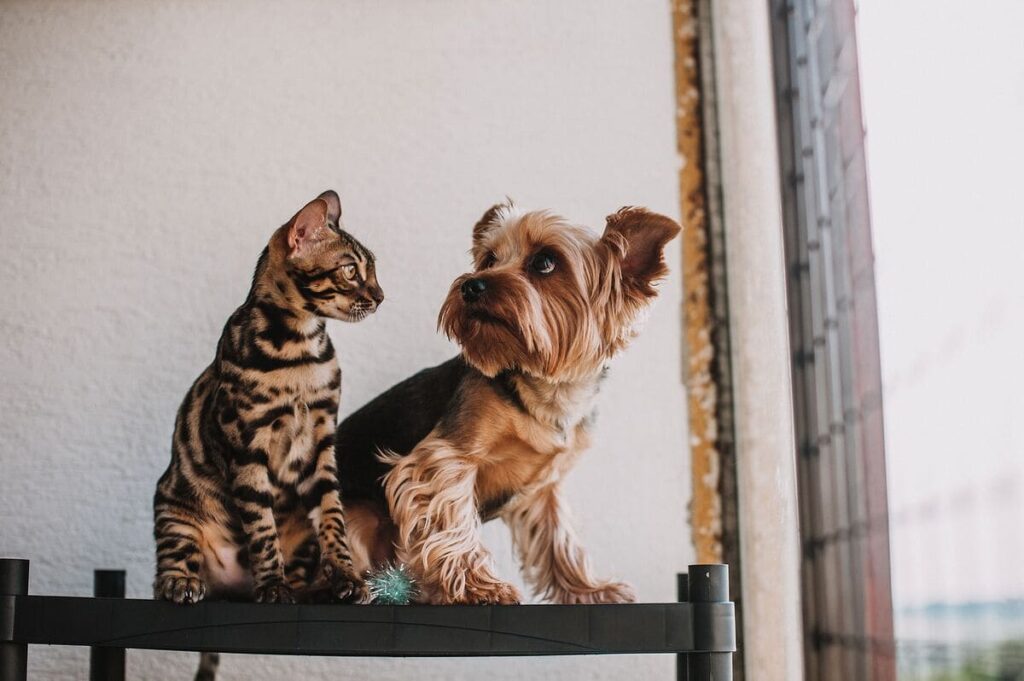
Anyone who wants to know how to say cat in Russian runs into a small surprise right away: Russian makes you choose. Michele Berdy, a translator who writes about Russian words for The Moscow Times, points out that you have to say either кот (kot), a male cat, or кошка (koshka), a female cat. Which sounds awkward, and then you find out that кошка also doubles as the general word for a cat. So the safe answer is simple, and we’ll show you why it works.
This guide starts with the Russian words for cat and dog, since those are the ones everybody asks about. After that come hamsters, rabbits, parrots and a few other pets, the sounds Russian animals make (they don’t say quite what English animals say), and some short phrases you can use to talk about your own pet. Every word comes with a transliteration, so you can read it even if you don’t know the Cyrillic alphabet yet.
How to Say Cat in Russian: Кот or Кошка?
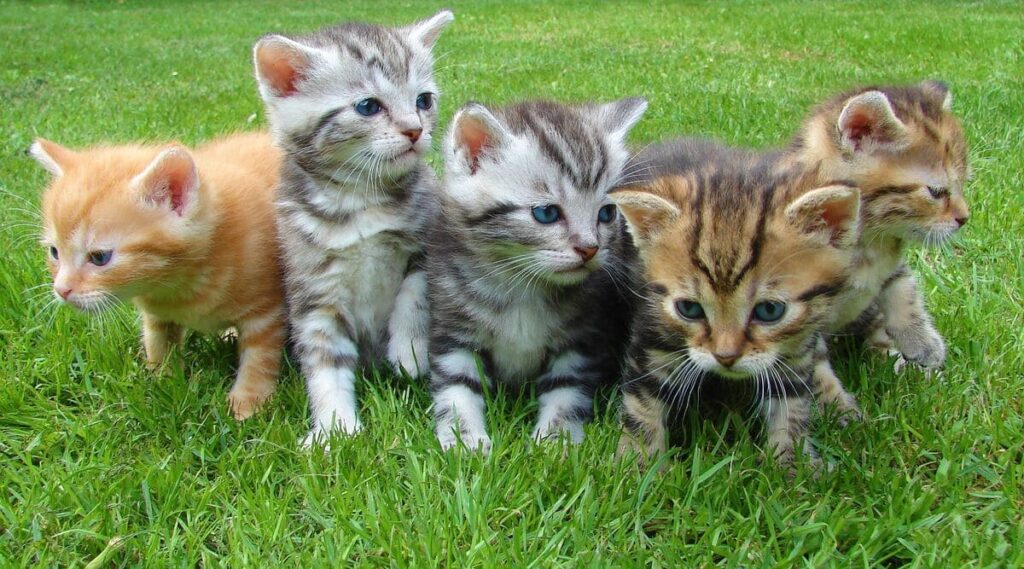
Let’s start with the two words. Кот is a male cat, a tomcat. Кошка is a female cat. That’s the textbook answer, and Berdy’s column agrees that Russian speakers have to specify. But Russian Wiktionary gives кошка a broader job: it defines the word as the domestic cat in general, as well as the female cat. That’s why you’ll hear кошка when people simply mean “a cat.” If you’re not sure which one to use, кошка is the safe choice, and nobody will be offended.
The two words are close relatives. Russian Wiktionary says both come from a Proto-Slavic word, *kotъ, which was probably borrowed from Late Latin cattus, meaning “wild cat.” Кошка is a feminine noun and кот is masculine, with the plural коты. The plural of кошка is кошки, and here’s a small trap: the same dictionary lists another кошка, with the same plural, that means a grapnel hook or climbing spikes. Context usually sorts it out.
Kittens have their own word, котёнок (kotyonok), and several kittens are котята (kotyata). And the affectionate forms are where Russian gets playful. Russian Wiktionary lists кошечка, киса, киска and мурка as ways to say “cat,” and calls котяра a colloquial word for a big tomcat.
| Russian | Transliteration | What it means |
| котёнок | kotyonok | kitten |
| котята | kotyata | kittens |
| кошечка | koshechka | little cat, affectionate |
| киска | kiska | kitty |
| мурка | murka | a pet word for a cat, also a common name |
| котяра | kotyara | big tomcat, colloquial |
Мурка is also one of the most familiar names for a cat, and the Transparent Language blog’s list of Russian pet names has her next to Мурзик, Барсик and Пушок. We have a whole post about Russian names, and Russian terms of endearment is a good read if you like the киса family of words.
Cats turn up all over the Russian language, sometimes in unexpected ways. Berdy’s column lists a few idioms. Кот наплакал (kot naplakal) literally means “a tomcat wept,” and it describes a tiny amount of something. Тянуть кота за хвост (tyanut’ kota za khvost), “to pull a cat by the tail,” means to drag something out. Кот в мешке (kot v meshke), a cat in a bag, is something you buy without knowing what’s inside, like the English “pig in a poke.” Then there’s literature. Pushkin’s poem Ruslan and Ludmila came out in 1820 and, according to Wikipedia, was revised in 1828. The famous prologue about the oak by the sea belongs to that later version, and on the oak, a learned cat, the учёный кот (uchyonyy kot), circles on a golden chain, night and day.
If you’re curious about particular cats, we have a guide to the Russian Blue, and the manul is one of Russia’s wild cats, with a famously expressive face.
How to Say Dog in Russian: Собака, Пёс and Щенок
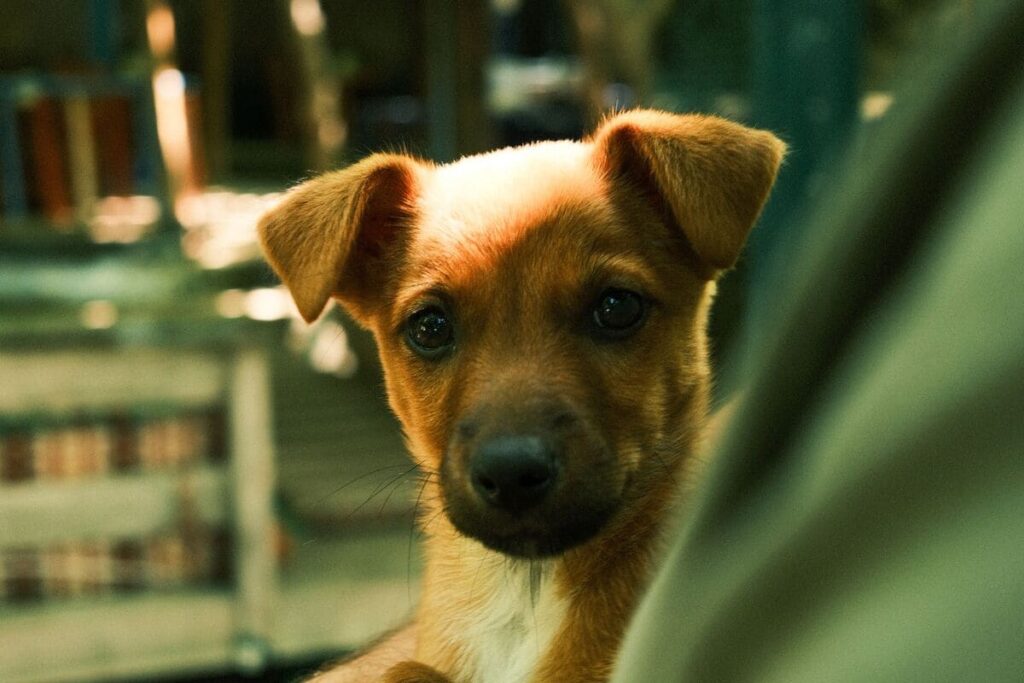
The dog word is easier. Собака (sobaka) is the one you’ll meet first, and it’s the word for a dog in general. It’s grammatically feminine, but it doesn’t mean “female dog.” For a male dog there’s пёс (pyos). Some sources, such as the Transparent Language blog, pair пёс (male) with собака (female), but in everyday use собака works for any dog. The same blog adds a careful warning about two more words, кобель (kobel’) and сука (suka), the technical terms for a male and a female dog. Among breeders and dog owners they’re normal, the post says, but outside that world they become serious insults. As a learner, just leave them alone.
A puppy is щенок (shchenok). The щ at the start is the tricky part, and it helps to know how it sounds today: in modern standard Russian it’s a long, soft “sh,” like the “sh” in “sheep,” according to Wikipedia, only held a little longer. It isn’t “sh” followed by “ch.” Ukrainian keeps the cluster, but Russian doesn’t. Say щенок a few times and it gets easier. You’ll see it in sentences like «Она обожает своего нового щенка» (Ona obozhayet svoyego novogo shchenka), “She adores her new puppy.”
Want to meet some Russian dogs? Our guide to Russian dog breeds covers the borzoi, the Samoyed, the Black Russian Terrier and others, and it has a list of Russian dog names with pronunciation. The sounds these dogs make are further down.
Other Pets in Russian: Hamsters, Rabbits, Parrots and More
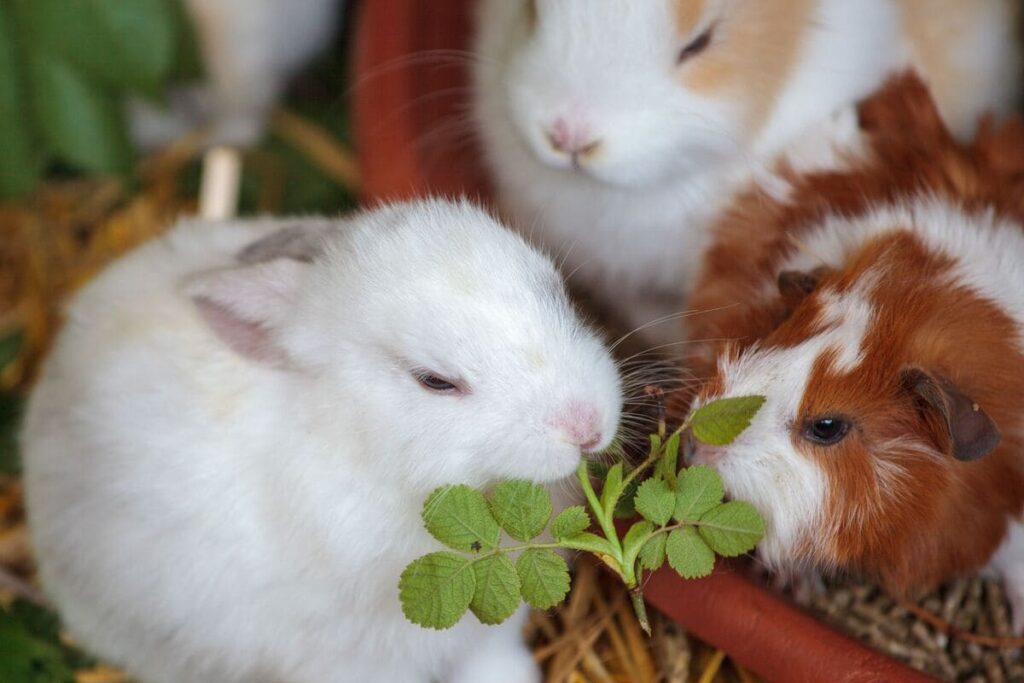
Not everyone has a cat or a dog, of course, so here are the words for some other pets. The standard way to say “pet” is домашнее животное (domashneye zhivotnoye), which literally means “home animal.” There’s also питомец (pitomets), which dictionaries list for “pet.” The Transparent Language blog says Russians rarely use it in everyday speech and mostly with some irony, so домашнее животное is the safer phrase for now. If you hear питомец from a Russian friend, you’ll know it’s a pet.
| Russian | Transliteration | English |
| хомяк | khomyak | hamster |
| кролик | krolik | rabbit |
| морская свинка | morskaya svinka | guinea pig |
| попугай | popugay | parrot |
| рыбка | rybka | pet fish, little fish |
| рыба | ryba | fish |
| черепаха | cherepakha | turtle |
| лошадь | loshad’ | horse |
| мышь | mysh’ | mouse |
| крыса | krysa | rat |
Two of these deserve a note. Морская свинка literally means “sea pig,” which is a fun one for kids. And fish come in two forms: рыба is the general word, while рыбка is the little one you keep at home in an aquarium.
What Do Pets Say in Russian? Animal Sounds
This is the part kids like best. Russian animals make sounds that look a bit different from English ones. According to the Transparent Language blog, a cat says мяу-мяу (myau-myau), purrs мур-мур (mur-mur) and the verbs go with them: мяукать (myaukat’), to meow, and мурлыкать (murlykat’), to purr. A dog says гав-гав (gav-gav) and the verb is гавкать (gavkat’). Omniglot adds that small dogs sound different: a big dog’s bark is гав-гав, while a small dog goes тяф-тяф (tyaf-tyaf), a distinction English doesn’t make. A mouse goes пи-пи (pi-pi) or пик-пик (pik-pik), a rooster says ку-ка-ре-ку (ku-ka-re-ku), a duck says кря-кря (krya-krya), and a pig says хрю-хрю (khryu-khryu).
And what about the quiet pets? The Transparent Language blog’s list has no sound words for guinea pigs, ferrets, rabbits or hamsters. That’s a language point, not a biology one. Guinea pigs squeak in real life, but Russian doesn’t have a standard way of writing it down. When you need to call a cat in Russian, by the way, you don’t use any of these words: you say “Кис-кис!” (kis-kis).
How to Talk About Your Pet in Russian
Now let’s put the words to work. These simple sentences are based on a Russian sentence list on Clozemaster, with one small fix in the last one, since three takes a plural adjective:
- Мой кот любит много спать. (Moy kot lyubit mnogo spat’.) “My cat likes to sleep a lot.”
- Моя собака всегда такая верная. (Moya sobaka vsegda takaya vernaya.) “My dog is always so loyal.”
- Вы кормили попугаев? (Vy kormili popugayev?) “Did you feed the parrots?”
- У неё три домашние черепахи. (U neyo tri domashniye cherepakhi.) “She has three pet turtles.”
Look at попугаев in the parrot sentence. Russian treats animals as “animate” nouns, which affects their endings in the accusative case. Animate masculine nouns in the singular, and animate nouns of any gender in the plural, take the same form as the genitive: кот becomes кота, and кошки becomes кошек. (A feminine singular noun like кошка simply becomes кошку, the way any feminine noun ending in -а does, animate or not.) So “I see the cat” is Я вижу кота (Ya vizhu kota) for a tomcat or Я вижу кошку (Ya vizhu koshku) for a female one, and “I love cats” is Я люблю кошек (Ya lyublyu koshek). It looks like a lot at first, but you’ll pick it up quickly if you hear it often enough.

Free download
500 Russian Words for Kids Ages 5–12
A free PDF checklist to see which Russian words your child already knows and which ones to add next. Leave your contacts and we’ll send you the file.
Frequently Asked Questions About Pets in Russian
How do you say cat in Russian?
Say кошка (koshka) for a cat in general or a female cat, and кот (kot) for a male cat. Russian Wiktionary defines кошка as the domestic cat in general, which is why it’s the word you’ll use most often.
What is the difference between кот and кошка?
Кот is a male cat, and кошка is a female cat. Кошка also works as the general word, so if you don’t know which kind of cat you’re looking at, choose кошка.
How do you say dog in Russian?
Собака (sobaka). For a male dog you can say пёс (pyos), and for a puppy, щенок (shchenok).
What do cats and dogs say in Russian?
A cat says мяу-мяу (myau-myau), and a dog says гав-гав (gav-gav). According to Omniglot, a small dog says тяф-тяф (tyaf-tyaf).
How do you say pet in Russian?
The usual phrase is домашнее животное (domashneye zhivotnoye), which literally means “home animal.” Питомец (pitomets) also means “pet,” but one Russian-language blog says it’s rarely used in everyday speech.
What to Do Next
Children usually start a new language with the things they love, and for a lot of them that means the family pet. At Palme School we teach Russian online. Our Russian as a foreign language course is for children who are starting from zero. Kids who already speak Russian at home but find reading and writing hard can look at Russian for bilinguals. And children who can’t get enough of animals might like our biology course.
Curious how it works? Palme School offers two free lessons: first an intro session with a curriculum specialist, then a trial lesson in a small group. Both are online, each lesson runs 40 minutes, and the school takes children from 4 to 17. Who knows, maybe your child will be the one who teaches the family cat its first Russian word.