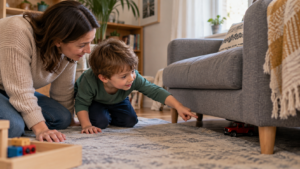



This is called code-switching. The term from a sociolinguistics textbook sounds complicated, but there is a simple meaning behind it. The human brain is complex enough that you can simply divide it into parts and store information in compartments. It doesn't work that way, especially for bilinguals who have multiple speech patterns at once. They exist side by side and both are active. The brain adapts to the context in the moment and chooses the one that is more appropriate in the moment. School, kindergarten, and classes in the U.S. are by default English-speaking environments where children spend a significant part of the day, and of course, when they come home, it can be difficult to switch. Therefore, when mom asks «how was your day?», the brain reaches for what the day was spent on, in this situation - English. It's just more comfortable that way. Therefore, when a family says «he started speaking less Russian», most often it is a narrowing of the contexts in which Russian is spoken.
So how do we expand those very contexts? Let's start at home. The home environment for learning is made up not only of textbooks, but also of an emotional connection in the mother tongue of one of the adults. Simple rules work: every day a cartoon from childhood: Kolobok, Masha and the Bear; once a week learn a short poem by Marshak or Barto. The more the adult himself is involved, the better assimilation in the child. Not an activity, but just life. Sounds simple, but in practice requires consistency, the family already has many tasks and responsibilities. Children usually start testing boundaries, especially if they know that adults will understand English anyway. Systematicity is important here, not because it's principled, but because it's the regularity that creates the habit. Language is a muscle, it works from practice.
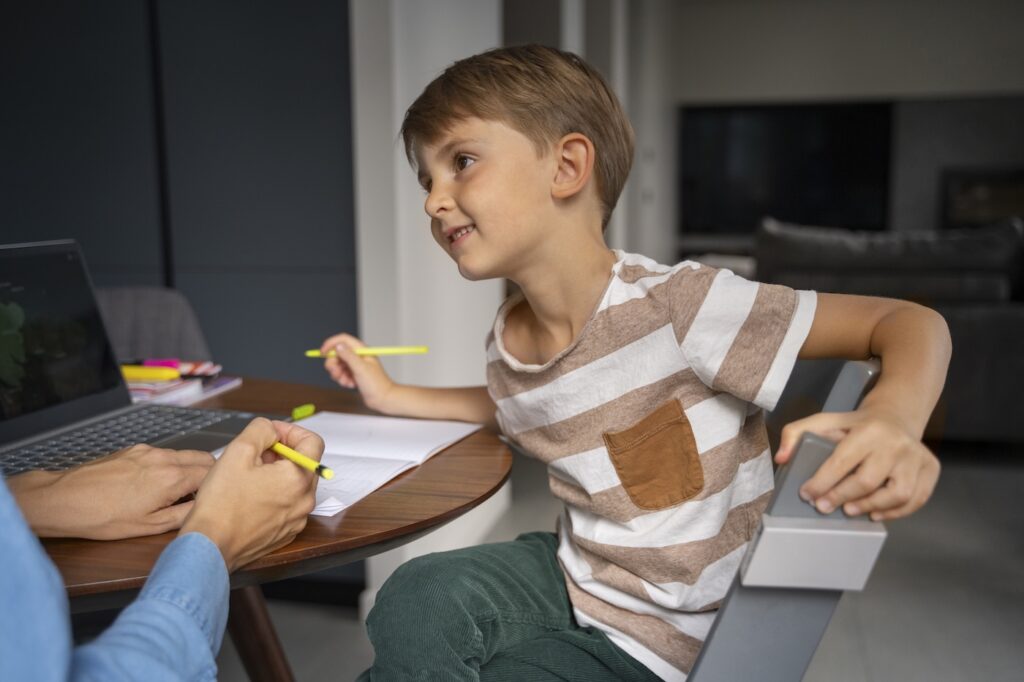
A favorable environment for a bilingual is not only created by rules. Hearing Russian in the background for years and yet not speaking fluently. Hearing is one thing, thinking, formulating and answering is quite another. A speech skill is strengthened when something important happens through it: an argument, a laugh, an interesting story, a discussion of a book. The word is memorized through emotion is confirmed by research in the field of neurolinguistics: emotionally colored content is internalized much faster than neutral content. Without emotion, the word is simply lost. Another thing that is often underestimated is live interaction with peers. Not with mom, not with the teacher, but with other children. Research on bilingual language acquisition shows that motivation to use a second home language increases dramatically when you see peers speaking it naturally. A peer jokes, argues, explains something in Russian, as a consequence. and there is a desire to be a part of it. The emotional attitude towards it changes: it ceases to feel like an obligation and becomes one's own.
A separate topic is homeschooling and the role of the adult in this process. Many people try to teach their children themselves, and it almost always ends the same way. Not because the parent is a bad teacher, but because they are two different roles, and it is hard to combine them. When mom or dad sits down to explain grammar, the relationship involves evaluation, expectation, and the possibility of disappointment. Children sense this and go into resistance. Resentment, tears, and eventually no lesson, no mood. A professional teacher is neutral: sees without emotional burden, knows where the gaps are, knows how to build a lesson so that it was interesting and effective.
At Palme School, we're let's get started from diagnostics: vocabulary, grammar, reading skills. Everyone has their own entry point, and the program is built individually. Some need to tighten up the base, while others can already work with texts and conversation practice. Classes are held twice a week - enough to develop the skill, but not so much that it becomes a burden. Bilingualism becomes a whole process that takes time and the right approach. Code-switching is considered one stage of the journey, completely normal and temporary. The main thing is not to push, but to build a context in which Russian has a place. If you want to figure out what level your child is at sign up for a free trial lesson at Palme School. We'll just have a look, we'll talk, and it will become clearer.