



Names and identifying details of every student below have been changed.
The eraser
Ilya, ten, in the Pittsburgh suburbs, draws well and stops drawing the moment a line goes wrong. No tantrum about it. He puts the pencil down, says it’s stupid, finds something else to do, and the whole thing’s over in four seconds. His details are changed, as they are everywhere on the blog.
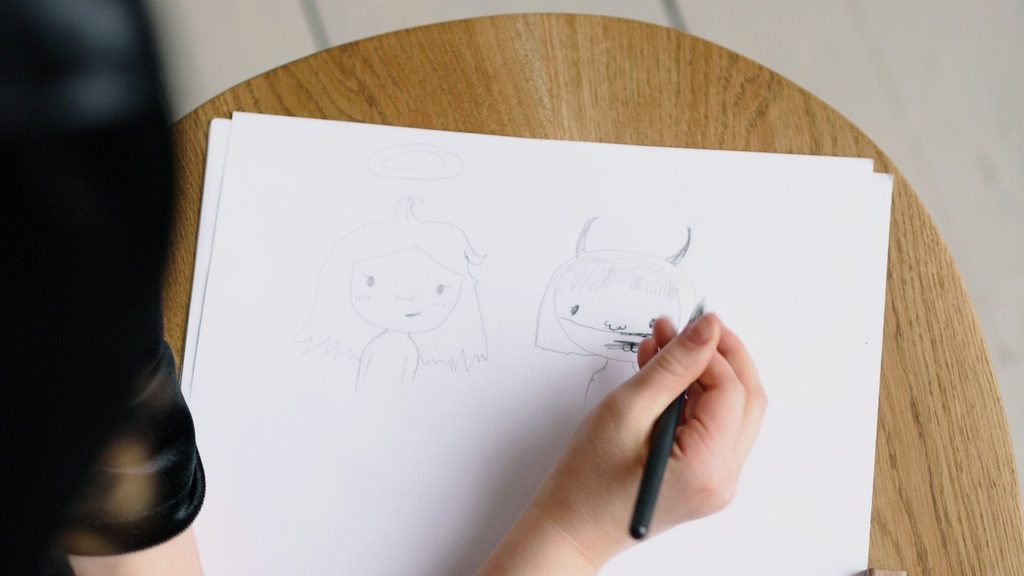
His mother’s told him a hundred times that mistakes are how you learn. He agrees with her, and it changes nothing.
A child can believe the right thing about failure and still leave the room.
What children actually learn about failure
What sits underneath all this is thoroughly unglamorous. Children do not learn what to think about failure. They learn what happens in the room after one.
He knows the slogan. What he has also learned, over years, is that the adults get quiet when a drawing goes wrong, and that the fastest way out of that quiet is to stop drawing. Nobody taught him that on purpose, and nobody’s noticed teaching it.
The belief is cheap. The two minutes after the mistake are expensive.
The year I corrected everything
My first years teaching English in Russia, I corrected every mistake as it happened, every single one, believing that was the job I had been hired to do. I produced a room of teenagers who spoke in short, safe, correct sentences and volunteered nothing. It took me a long time to see why, and longer to stop, because stopping feels like negligence and never stops feeling that way. You hear the error. You’ve got the correction sitting on your tongue, and holding it there while a fifteen-year-old mangles a conditional is genuinely uncomfortable.
It took a week of laryngitis to teach me, when I could barely speak at all. They talked more that week than in the previous month, made every mistake going, and not one of them looked at me for permission before opening their mouth.
Silence from an adult is not neutral. It is information, and children read it fast.
What to say instead of good job
Generic praise gives a child nothing to repeat. Good job is warm and empty, and the child cannot tell what worked.
Describe what happened. Skip the adjectives about the child.
Description beats evaluation, and the only thing it costs is attention, the currency parents have least of by evening and the one a child misses first.
| Instead of | Try |
|---|---|
| Good job | You redid the roof three times |
| You’re so smart | That part was hard and you stayed with it |
| Don’t worry, it’s fine | The line went wrong. What now? |
| You’re an artist! | This one’s better than last week’s |
The right column has one thing in common. Every line proves you were watching. That is what a child actually collects, and it is also why the phrases cannot be used mechanically. You have to have seen the thing. Right after a mistake, the most useful sentence I know is a question with no comfort attached. What now? It treats the mistake as an event with a next step, which is the whole lesson.
What makes it worse
Rushing in to fix the line. The fastest way to teach a child that mistakes are emergencies is to treat one as an emergency, which most of us manage weekly.
Praising the outcome. A child praised for finished work submits only finished work, and stops showing you anything mid-flight.
Modeling the opposite. An adult who swears at a burnt dinner and throws it out has run the whole lesson in ninety seconds, and nothing said later outweighs it.
And overcorrecting into praise for failure itself. Children tell the difference between an adult who values persistence and an adult performing enthusiasm about a bad drawing.
About the advice you have probably read
You have met the standard advice: praise effort rather than ability, teach that intelligence grows, build grit. The research underneath all three has had a hard decade, and a parent following it deserves to know.
A 2023 meta-analysis of growth mindset interventions found a small effect that stopped being statistically significant once publication bias was accounted for. Its authors concluded that the visible effects are probably explained by study design, reporting flaws, and bias rather than by the interventions. An earlier pair of meta-analyses covering hundreds of studies and over three hundred thousand people found the link between mindset and achievement to be weak.Other researchers dispute this. In the same issue of the same journal, a second meta-analysis of fifty-three studies reported real effects where interventions reached the students most likely to benefit and were delivered as designed, and a commentary argued the disagreement is about how meta-analysis should handle variation between studies. The first team replied that reanalyzing their data the second team’s way barely moved anything.
So the field is split, and anybody selling you certainty here is selling something. None of it changes the paragraph about the two minutes, which is about what the adult does.
Grit has fared much the same way, and the best-known review found that it overlaps heavily with conscientiousness, and that the half of grit doing real work is sustained effort rather than lifelong passion for one goal.
What actually builds it
Repetition in front of people not obliged to be kind, which answers more than this one question. The same principle explains why the two minutes after a meltdown matter more than anything said later. At home a mistake is forgiven instantly, and that forgiveness is exactly what removes the practice, which is why the useful room is elsewhere: in our lessons for bilingual kids a child gets a word wrong in front of four others, and the lesson keeps going. The conversation school does the same with speaking.
Ilya still puts the pencil down. He picks it up again about half the time now, which took a year, and nobody in that house has mentioned mistakes since last spring.
At Palme School we teach online, in groups of up to eight, two forty-minute classes a week, and the first two lessons are free. You can book those here, and there are printable materials for parents in our resource library.Frequently asked questions
Change what happens in the two minutes after a mistake rather than what your child believes about mistakes. Stay ordinary, ask what the next step is, and do not fix it for them.
The evidence is contested. Large meta-analyses of interventions find effects near zero, other researchers using different methods find more, and the argument is unresolved.
Teaching the belief directly is the weak part. Behaving as though a mistake is ordinary is the part nobody disputes.
Describe instead of evaluating. Name the specific thing they did, which proves you were watching, and skip the adjectives about them as a person.
Sources
- Burnette, J. L., Billingsley, J., Banks, G. C., Knouse, L. E., Hoyt, C. L., Pollack, J. M., & Simon, S. (2023). A systematic review and meta-analysis of growth mindset interventions: For whom, how, and why might such interventions work? Psychological Bulletin, 149(3–4), 174–205. doi.org
- Credé, M., Tynan, M. C., & Harms, P. D. (2017). Much ado about grit: A meta-analytic synthesis of the grit literature. Journal of Personality and Social Psychology, 113(3), 492–511. doi.org
- Macnamara, B. N., & Burgoyne, A. P. (2023). Do growth mindset interventions impact students’ academic achievement? A systematic review and meta-analysis with recommendations for best practices. Psychological Bulletin, 149(3–4), 133–173. doi.org
- Sisk, V. F., Burgoyne, A. P., Sun, J., Butler, J. L., & Macnamara, B. N. (2018). To what extent and under which circumstances are growth mind-sets important to academic achievement? Two meta-analyses. Psychological Science, 29(4), 549–571. doi.org
- Tipton, E., Bryan, C., Murray, J., McDaniel, M., Schneider, B., & Yeager, D. S. (2023). Why meta-analyses of growth mindset and other interventions should follow best practices for examining heterogeneity. Psychological Bulletin, 149(3–4), 229–241. doi.org
Palme School: Russian for bilingual children · Conversation school · Free materials for parents
Lily Rozberg has been teaching for sixteen years, first English in Russia and now Russian to bilingual children across the US and Canada. She writes for Palme School about heritage language, reading, and the things report cards do not measure.