When introducing the Russian alphabet to children, parents or educators often start talking about «hard and soft», «ringing and deaf», «paired and unpaired». And the child's head gets muddled.
The main task of an adult is not to «memorize». But to explain vowels and consonants to the child through feelings, games and simple comparisons. This is especially important in preparation for school. Russian language requires a clear understanding of these basics, otherwise later there will be difficulties with reading, writing and even speech development in children.
Letters and sounds - what's the difference
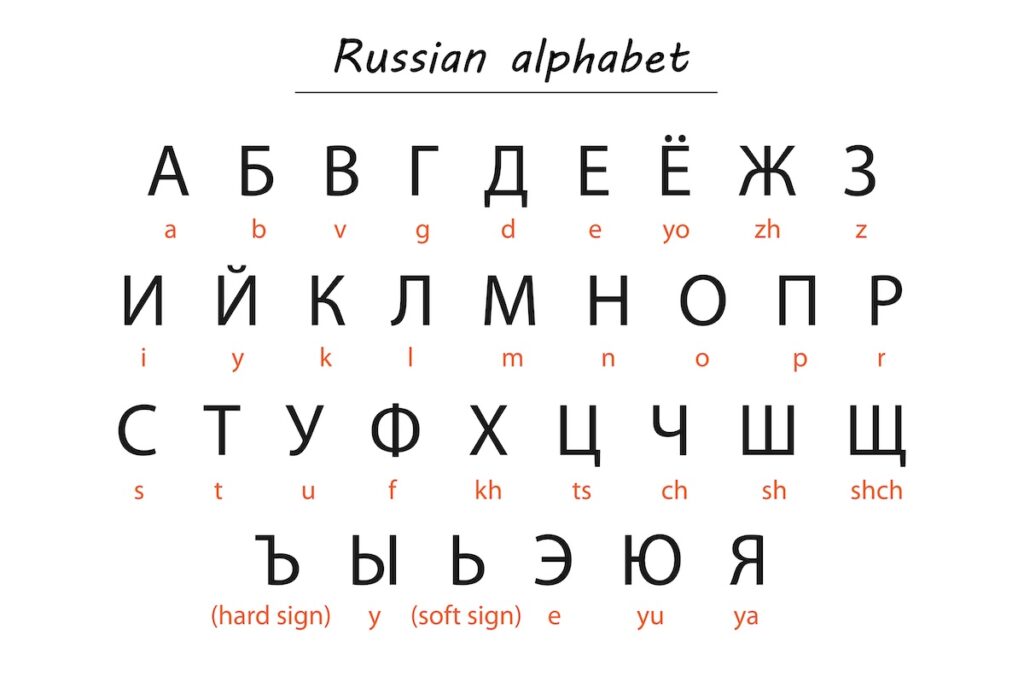
Before talking about vowels and consonants, it is important to make a clear distinction between a sound and a letter. Explain it to your child like this:
- A sound is something we hear and pronounce. For example, when you say «a-a-a-a!», that is a sound.
- A letter is the icon we write to record that sound. The letter «A» is a picture for the sound [a].
You can compare it to a musical note. A note is an icon, and a sound is what is played on the violin. This approach helps to avoid confusion.
When the child understands this difference, you can move on to classification. And it is worth starting with vowels, because they are simpler and «louder».
What vowel letters are and why they are special
Vowels are the sounds that can be sung.
There are 10 vowel letters in the Russian language: A, E, Yo, I, O, U, Y, E, Yu, Ya.
But not all of them stand for the same sound. For example, «I» is [y'a] and «E» is [y'e]. But it is not necessary to go into this to begin with. It is enough to say: «These letters are vowels because they can be sung.
Play: Have the child cover his ears and say the vowel. He will still hear himself. Now try a consonant - silence! This is a simple but powerful way to feel the difference.
What consonant letters are and why they are «quiet»
Consonants are sounds where air meets a barrier when pronounced.
There are 21 consonant letters in the Russian language: B, V, G, D, G, Zh, Z, Z, Y, K, L, L, M, M, N, P, R, S, T, F, H, Ts, Ts, Ch, Sh, Shch.
The main thing is not to make your child memorize the list. It is better to show it in practice. A practical approach makes learning come alive.
How to show the difference between vowels and consonants in practice

The best way is through your body and voice. Here are some ideas:
1. Song test
Vowels can be sung for a long time, but consonants can't.
2. Mirror
Say the sounds in front of a mirror. For vowels, the mouth is open; for consonants, the lips, tongue or teeth are working.
3. Cotton
Clap your hands for each vowel sound in the word. For example, the word «car» has three claps (a, i, a). This teaches you to hear vowels even in the flow of speech. It also helps you understand the number of syllables.
Such games are especially important when teaching reading.
How to learn vowels and consonants without stress?

At 3 or 4 years old, just familiarize. Say the letters, sing the alphabet, play «find the vowel.» No pressure.
At 5-6 years old, reinforce understanding. Use cards, coloring books, bingo. Say, «This letter sings - that means it's a vowel!»
At 6 or 7 years old, connect Russian language instruction to the school readiness. Teach to divide words into syllables, identify the first sound, make schemes.
Typical Parenting Mistakes:
- Learn all 33 letters in a row at once. It's better to learn the vowels first, then the consonants.
- Saying «this is the rule» instead of explaining why this is so and not otherwise with examples and practice.
- To correct abruptly: «No, it's not!». Better: «Interesting! Why don't we check it out together?»
Gaming ways:
- Color coding: vowels are red, consonants are blue.
- Letter builder: build words by highlighting vowels.
- Quest «Save the vowels!»: they are «locked» in the words - you need to find them and free them.
And remember: learning to read begins not with a primer, but with the ability to hear sounds. And vowels and consonants are not «grammar» for children, but the key to the world of words.
So don't rush into the rules. Let your child get a feel for the language - and everything else will follow. And for more effective Russian language learning at any age, you can enroll your child in the Reading School from Palme school.