

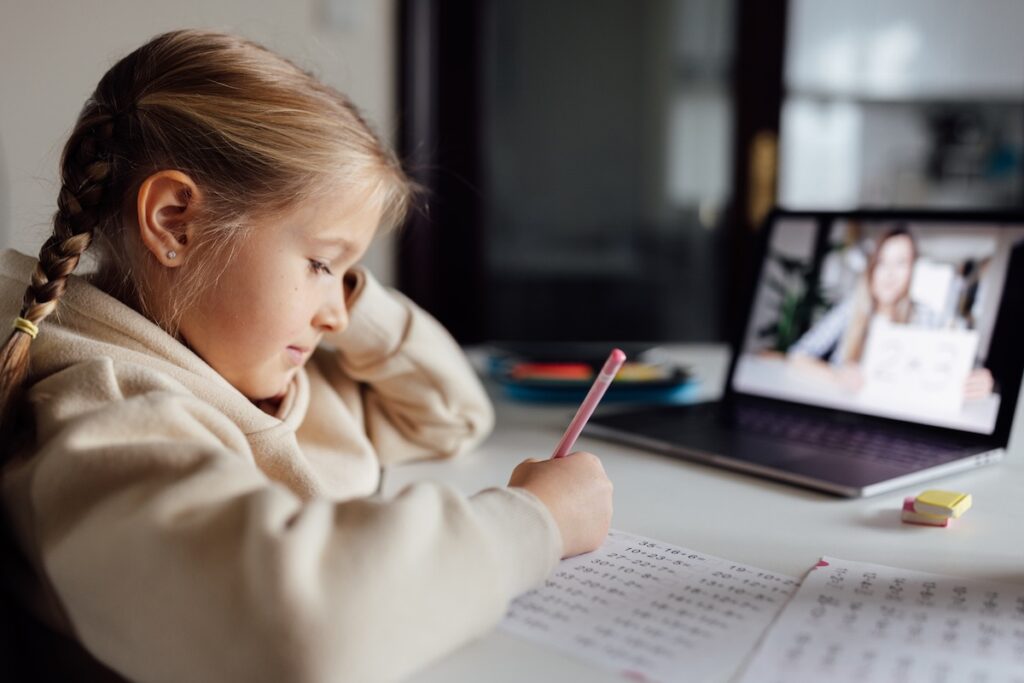

Not so long ago, online schools were considered a way to learn additional skills. But not a way to get a basic education. Today, they are the conscious choice of many parents.
V article director of the Johns Hopkins University Homeschool Research Laboratory reports that the number of homeschooled children in the U.S. grew by an average of 5.4% annually between 2024 and 2025.
Why is this happening?
Safety and comfort
Many parents are worried about the situation in regular schools - discipline, pressure, conflicts. They are sure that teaching their children remotely helps them avoid stress and keep their child's love of learning.
Free schedule
You can start lessons at 9 a.m. or 11 a.m. - whatever suits your family. This is especially important for children who participate in sports, music or move around a lot. Advantages online lessons in flexibility. If the child has quickly grasped the topic, you can move on. If not, repeat it without shame in front of the class.
Quality and choice
Today's online courses for high school students are no just a YouTube video. These are live classes with teachers, assignments in interactive notebooks, checking work, and even labs in virtual simulators. There are programs in math, programming, Russian or Chinese. Even if your local school does not have such programs.
Homeschooling vs. online.

Many people think that homeschooling is an inevitable burden on parents. But today more often choose a hybrid: the child studies in an accredited online school, and parents help organize the day. It's easier, more reliable and gives an official certificate.
Some may resent it, after all, children need companionship and socialization.
But children from online schools do not sit in four walls. Many of them regularly go to clubs, sections and museums. And the online schools themselves organize virtual excursions, Olympiads, and hobby clubs. So communication remains, just more consciously.
Distance learning in the United States today is not a «temporary measure» but a sustainable alternative. And more and more families see it not as a compromise, but as an opportunity to give their child the education that is right for them.