



How to measure a child's intelligence? Parents often ask themselves this question before school or when they have difficulties in learning. IQ tests for children can help.
But what does such a test really show? And should it be trusted?
What an IQ test is and what it measures
IQ (intelligence quotient) is an intelligence quotient calculated on the basis of standardized tasks. It reflects a person's ability to:
- problem solve
- abstract
- memorize information
- find solutions quickly
But a child's IQ test does not measure creativity. This test will not show emotional intelligence or social skills.
Therefore, it is impossible to judge a child's future success based on a test result alone. A child can draw or compose poetry very well. But this will not be reflected in the IQ score.
What IQ tests for children are available
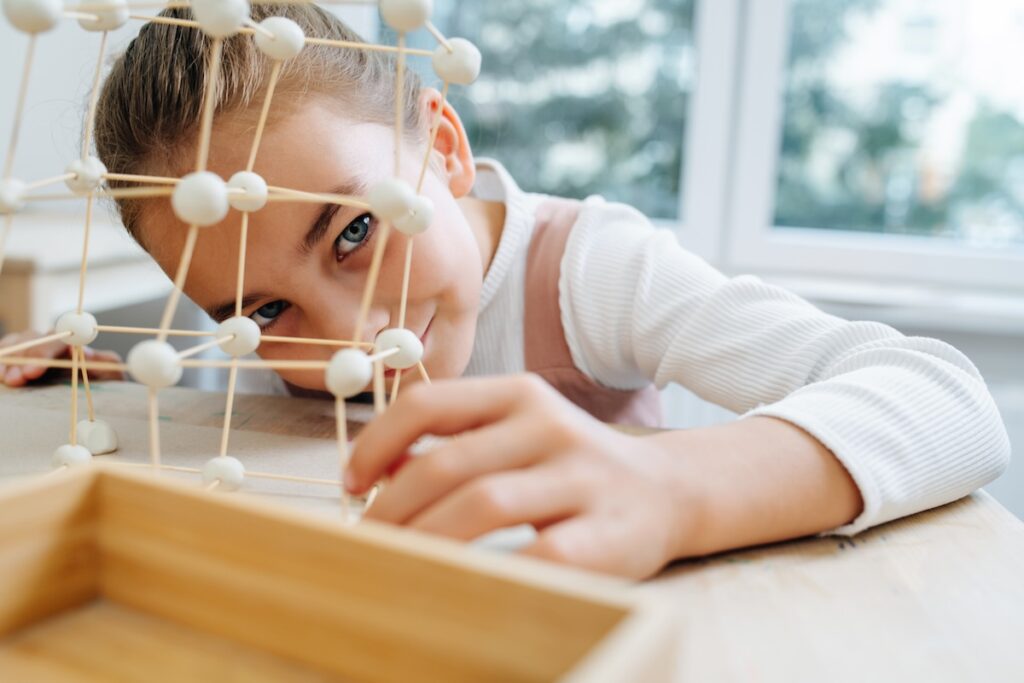
There are several types of diagnosing children's intelligence:
- Standard psychological techniques
- School diagnostic tests
- Online tests
What is the difference between a clinical test and an online version
| Criterion | Clinical test | Online test |
| Conducting | Certified psychologist | Independently |
| Terms and conditions | Controlled environment | Any moment, any place |
| Reliability | High, proven methodology | Low, often without scientific basis |
| Interpretation | Professional analysis + recommendations | Automatic result without context |
| Purpose | Diagnosis and support for development | General curiosity |
Professional developmental tests for children provide a comprehensive picture, not just a number.
How to interpret IQ test results
A child's IQ test results are usually presented as a standardized distribution:
| IQ range | Interpretation |
| Below 70 | Significantly below average (may indicate a need for specialized support) |
| 70-84 | Below average |
| 85-115 | Medium level |
| 116-130 | Above average |
| Above 130 | High intelligence (often used to identify gifted children) |
It is important to remember that a low score does not mean anything. It may be related to:
- anxiety
- fatigue
- language barriers
- lack of experience in solving such problems
For example, children growing up in a bilingual environment, can sometimes get lower scores. Although their cognitive abilities are normal.
Don't ignore emotional intelligence, which plays a key role in a child's success and happiness. Intelligence is not just about logic. It is also the ability to cope, build relationships and learn from mistakes.
An IQ test for children is only a tool. It can be useful if used properly. But it should not become the only reference point in assessing a child's potential.