


For many children, the multiplication table is just a set of numbers and a real puzzle.
More often than not, difficulties arise not because of lack of ability, but because of the way it is presented. Mechanical memorization without understanding the essence turns learning into torture. A child simply does not understand why he or she needs to memorize «six seven to forty-two».
Added to this is the fear of mistakes: tests, parental checks, comparison with classmates. And in a state of anxiety, the brain is worse at memorizing information. Therefore, learning the multiplication table should begin not with rote learning, but with understanding.
Multiplication in simple words
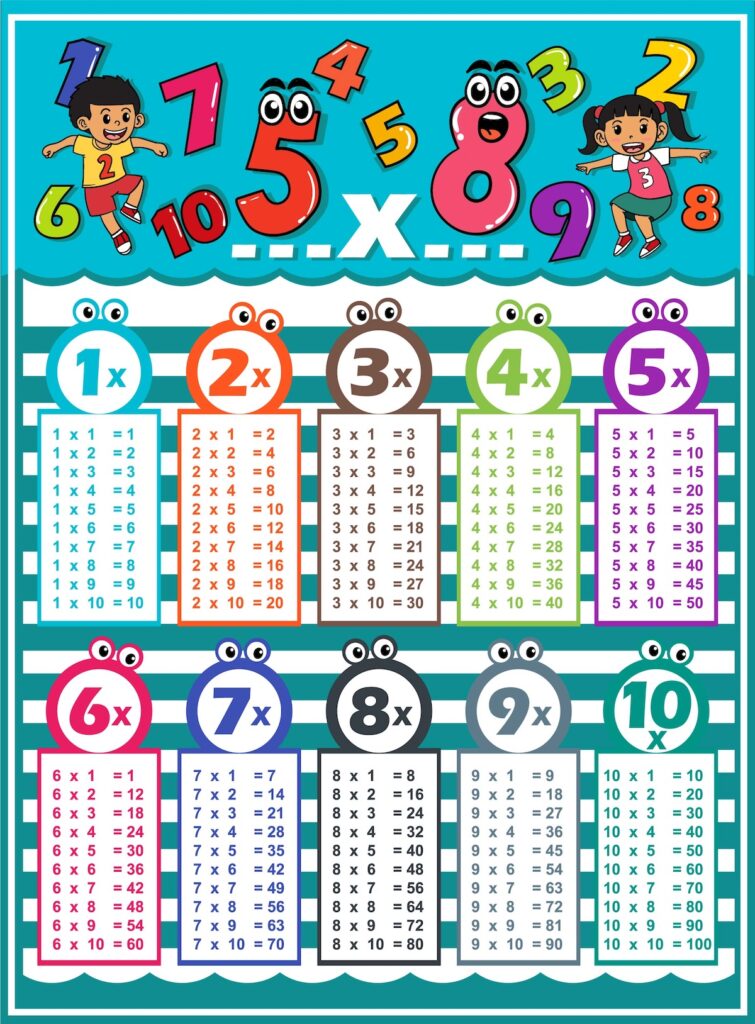
Before teaching the table, it is important to understand how to explain multiplication to your child so that they understand the process. Multiplication is simply the rapid addition of identical numbers.
Use objects from life: toys, steps, candy, cubes. Let the child put them into groups by himself. When he realizes that multiplication is a convenient way to count, it will no longer be an abstraction. Understanding - is the foundation of math for kids.
How to explain the multiplication table in Russian
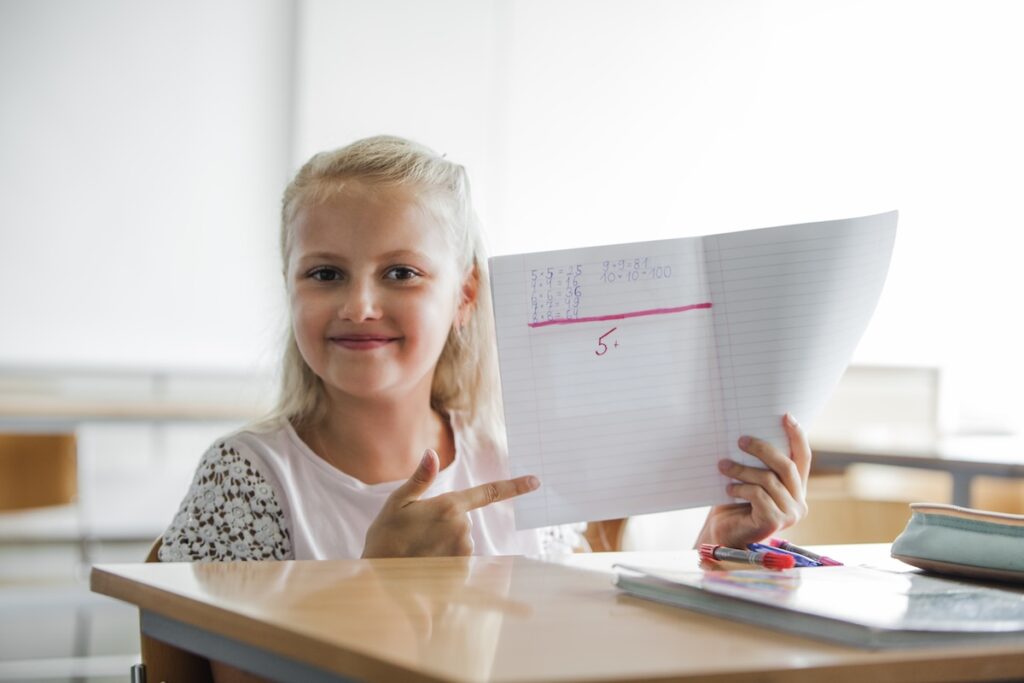
Speak in simple language. Instead of «the product of multiples», say «three times five». Avoid complicated terms. Use phrases that the child already understands.
Repeat through different examples: today with cars, tomorrow with cookies. Take your time. One step at a time. First multiplication by 1 and 10, then by 2, then by 5.
Start with the easiest:
- Multiplied by 1, the number stays the same. This is logical: one times five is just five.
- Multiplication by 2 is doubling. Two times three is 3 + 3 = 6.
- Multiplication by 10 is simply assigning a zero.
These columns are the easiest and give the child their first sense of success.
Be sure to show patterns:
- When multiplying by 5, the answer always ends in 0 or 5.
- When multiplying by 9, the sum of the digits in the answer always gives 9 (9×3=27 → 2+7=9).
Use visual examples: draw a 3×4 grid to make 12 cells. In this way, multiplication in the mind will be based on an image, not on memory.
Playful ways to learn the multiplication table
Memorization kills interest. Play develops it. Here are some ideas:
- Cards with examples: the child draws a card, solves it, if it is correct - takes it away. Whoever collects the most is the winner.
- Math puzzles: by assembling the picture, the child picks up the correct answers.
- The poem, «Six times six is thirty-six,» is easy to memorize.
- Tricks: e.g. multiplying by 9 using your fingers. Bend the 4th finger - left 3, right 6 → 36.
Also use math posters: hang the Pythagoras table above the table. Let your eyes «catch» the repeating numbers themselves. Over time, they will be stored in the memory without effort.
Mistakes that get in the way of learning the table

Many parents create their own barriers:
- Require memorization «at speed.» Memory does not work in a race, but in tranquility.
- Being scolded for making mistakes. This causes fear, not motivation. It's better to say, «You're almost there! Let's think about it together.
- Comparing them to other kids: «Vova has already learned everything!» - it kills confidence.
Remember: the goal is not a perfect result, but understanding and confidence. How do you learn the multiplication table without crying? Through support, not pressure.
At what age to learn the multiplication table
Usually the table begin to learn in the 2nd grade (7-8 years old), when the child is already confident in addition and subtraction. But if the child is younger, but shows interest - don't forbid it! The main thing is not to force it.
For preschoolers, familiarity is enough: «Look, two times three is six!» Without requirements, just in the game. And at 8-9 years old, you can already work systematically on memorization, especially if you use multiplication in the mind through images and patterns.
And most importantly, praise! Have a «multiplication feast» after each learned column. Let the child feel that he or she is learning a powerful skill that will be useful all his or her life.