


Poems are not a school obligation. They are one of the most natural ways a child's language enters their memory and stays there for a long time.
Why learn poems at all

At the moment a child learns a poem, it's not just individual words that remain in their memory. They remember the overall rhythm of the speech, the characteristic intonation, and the familiar combinations of words with each other. This is something that cannot be taught through rules.
Children's memory for rhythm and repetitive structures works particularly well. Therefore, short, «musical» texts are remembered much more easily than ordinary prose phrases.
This is where the effect that all parents know comes in: a child can forget what they ate for breakfast, but can recite a rhyme they heard many months ago verbatim. Rhythm and rhyme in such texts become a convenient «hanger» for the brain, on which it hooks words.
This is especially valuable for bilingual children. A poem in Russian gives a child a ready-made linguistic structure that they internalize as a whole. Along with it come cases, verb forms, imagery, and cultural context. And all of this without grammatical explanations.
What poems to choose in spring
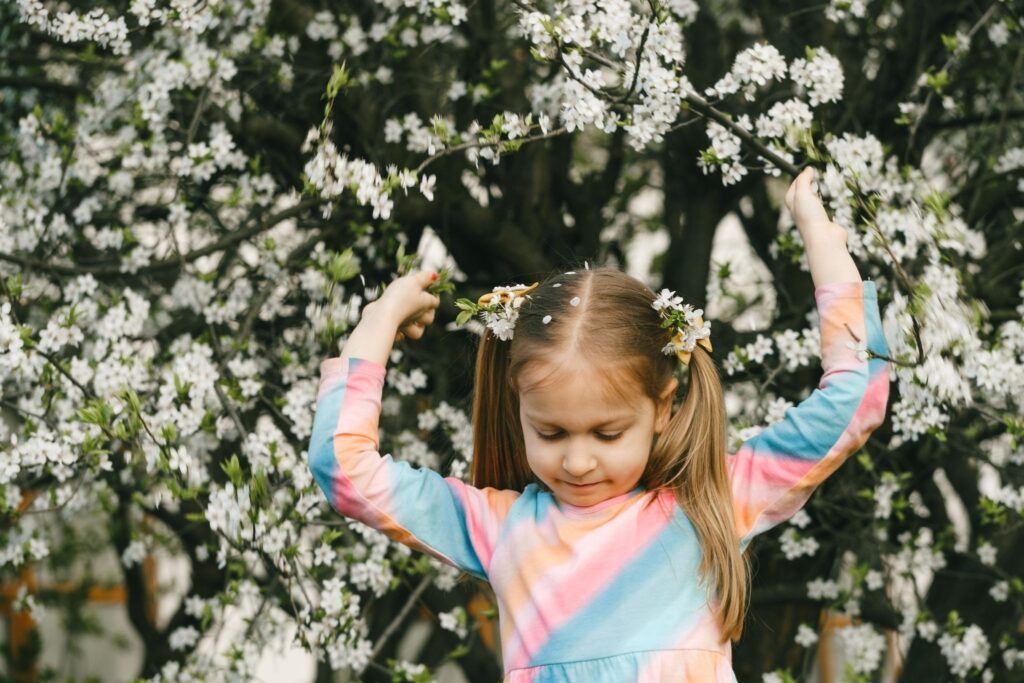
Spring provides the perfect context: what is described in the poem can be seen right now. The stream, the buds on the trees, the first flowers, and the birds are all around the child, so the words from the poem gain visual reinforcement.
For children aged four to six, short texts with a clear rhythm and understandable imagery work best. Marshak, Barto, Blaginina, and Berestov are authors whose poems are almost always about something specific and relatable.
For children aged seven to nine, you can use slightly longer and more figurative texts. Pushkin's «Chased by the spring rays» and Tyutchev's «Spring waters» offer a different level of language, but with the right approach, such texts are also easily remembered.
A few short examples that work particularly well in spring:
For example, you could take a short poem by Agnia Barto about April, with melting snow, a long day, green grass, and a ringing stream.
Elena Blaginina has a poem about fragrant bird cherry trees that bloom in the spring.
Valentin Berestov has a cheerful «Spring Tale» about streams, rooks, and the first bee that peeks into the hive.
These texts are short, rhythmic, and filled with spring vocabulary: stream, buds, rooks, bee, bird cherry, dripping meltwater.
How to learn poems without boredom and without coercion
The most common mistake: giving a child text and asking them to memorize it. This only works for children with good visual memory and high motivation. For everyone else, a different approach is needed.
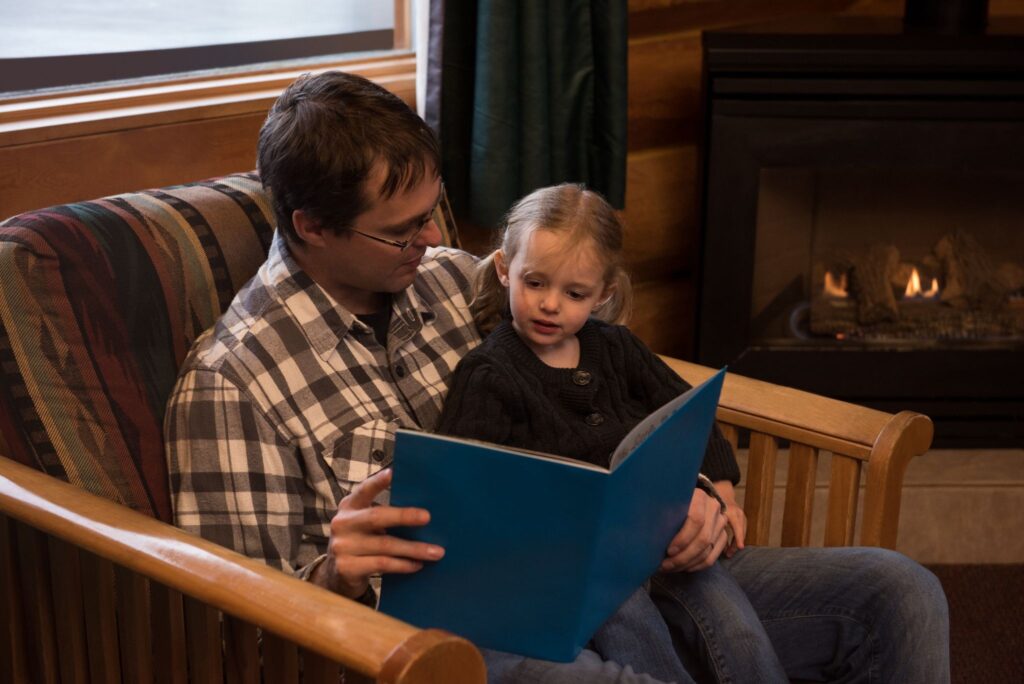
First, just read aloud to yourself. Don't ask to repeat, don't explain words. Just read for a few days in a row, at different times. A child's brain remembers what it hears regularly, even without special effort.
Then incorporate movement. Many poems about spring can be easily acted out or accompanied by simple gestures. For «The streams have started to murmur,» you can read it while simultaneously making a wavy motion with your hands. For the words «the rooks have arrived,» children can flap their arms like wings. Motor memory works with auditory memory, and the text is remembered faster.
Try a fill-in-the-blanks game. Read the poem aloud and deliberately pause before the last word of the line. The child finishes. At first, it seems like a prompt to them, but in reality, they are already learning the text.
Let's draw a poem together. Each stanza can have a separate drawing. Then, the text can be reconstructed from the drawings. For children with a visual learning style, this works better than any rote repetition.
And lastly: don't demand perfect reproduction. If a child remembers a poem with one substitution or rearrangement, that's already a victory. The language is in it, the meaning is in it, the rhythm is in it. That's enough.
What happens to a child's language when many poems accumulate
A few memorized poems give a child more than just a beautiful skill of recitation. It's a reserve of language constructs that they begin to use in speech, sometimes consciously, and sometimes automatically.
Children who regularly hear and learn poems in Russian speak more richly. They have more figurative words, more precise intonation, and a more confident speech rhythm. Both parents and educators notice this.
How does it work in classes at Palme School

In class, we work with poetry in a playful format: poems are acted out, drawn, voiced with different emotions, and turned into short plays. The child memorizes the text without realizing they are memorizing it.
If you want your child to try this format, come for a trial lesson. The first lesson is free.