

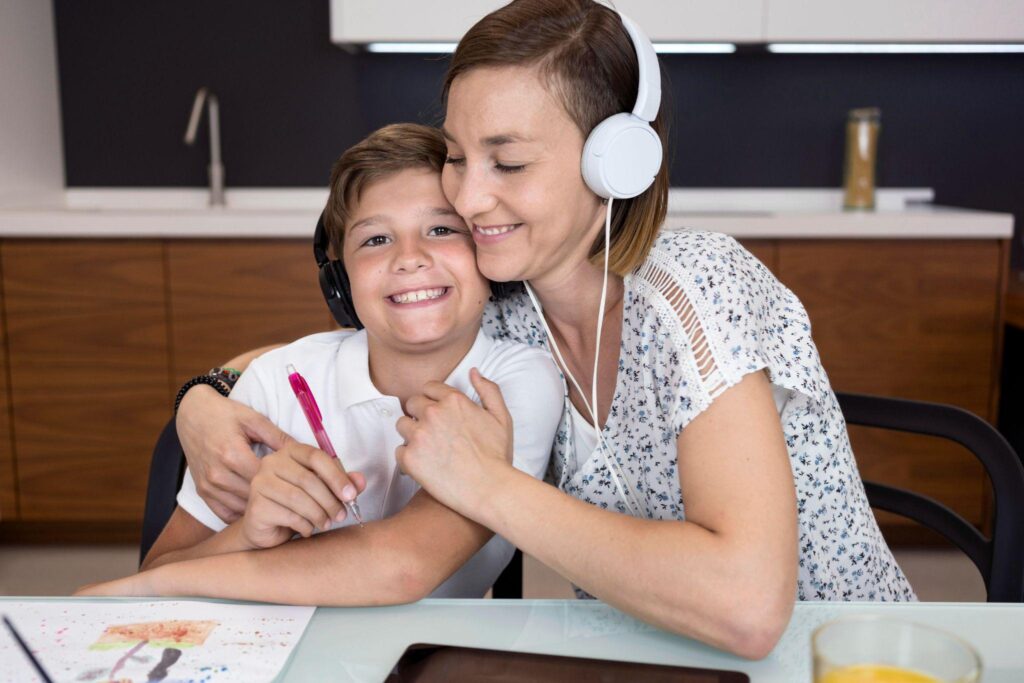

How does it happen that at home they try to speak Russian, but only English is heard in response?
Sometimes it looks very familiar. You address a child in Russian, and the response you hear is a single short word in English. Or you see a shrug. Or silence that makes your insides clench.
A whole bouquet of feelings rises: anxiety, annoyance, a little bit of hurt. It feels unfair, doesn't it? You moved, you dealt with household issues, looked for a school, chose activities, signed them up for clubs. The Russian language was part of that plan. And now you're standing in a kitchen in New York or Toronto, asking a simple question in Russian, and your child looks at you and replies: "I don't know what you mean.".
In reality, he understands. He just doesn't hurry to switch to Russian. Sometimes he doesn't want to. Sometimes he's afraid of making a mistake. Sometimes he long ago decided that Russian is all about lessons and criticisms.
I want to understand this calmly. Without phrases like «you are obliged to know the language of your ancestors,» without offensive comparisons to elders or to «a friend's child.» And without feeling like I'm being interrogated.
Why does this happen

Silence in response to Russian almost never has to do with capriciousness. There is almost always a reason, or several reasons at once, behind it.
Environment language
The first thing to acknowledge is that a child's brain adapts to the reality they live in every day. If English is spoken everywhere – at kindergarten, school, the playground, in games, and on videos – it becomes the primary, «native» language. Russian gradually gets pushed aside. It seems like something extra: important for mom and dad, but not particularly necessary right now. This isn't betrayal or rejection of the family; it's simply the brain's way of conserving energy.
Fear of making mistakes

Around eight or nine years old, another layer appears. Children are acutely aware of being observed by others. Any slip of the tongue in Russian can feel shameful. Have you noticed how a child falls silent if corrected in front of others? When you're less proficient in a language, there's always a risk of seeming «ridiculous» or «awkward.» If almost every sentence is corrected at home, speaking Russian becomes increasingly difficult. At some point, it's easier to switch entirely to English than to keep hearing that something was said «wrong.».
Russian without vibrant life
Sometimes you see this picture: at home, the only topics discussed in Russian are food and homework. «Did you eat?» "Clean up." "Did you do it?" "Didn't do it." This is enough for minimal information exchange, but not enough for the language to become vibrant. There are no jokes, no stories, no real conversations. In such a situation, Russian turns into background noise, a working tool for everyday matters. When parents notice that their child is speaking less Russian, it often stems from the fact that Russian has "shrunk" to just a couple of topics.
Who am I and to which country do I belong

Adolescents add another important layer: the question «Where do I even come from?». If the Russian language is associated only with «we are different,» with the feeling that the family is not quite their own in a new country, a child might push away everything connected with it. Including the language. They are repelled not by the words themselves, but by the image they represent. Do you recognize anything from your own moving story in this?
Scolding someone for such behavior is about as strange as getting angry at water for flowing downhill.
Now, about what works
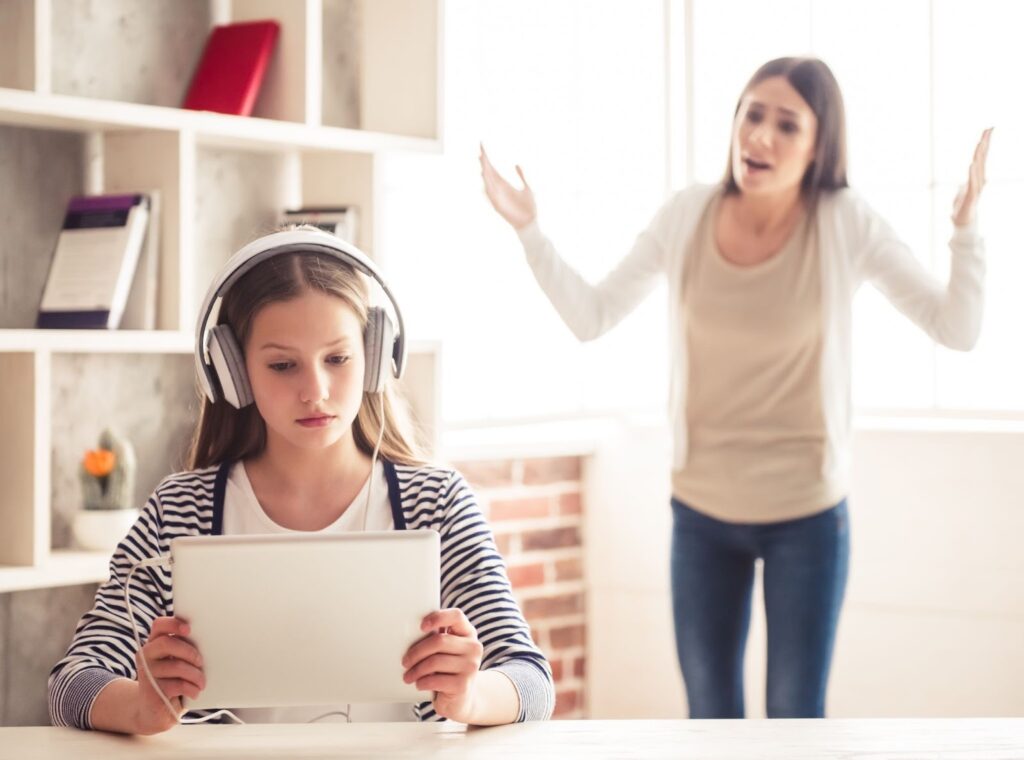
It's important not only to understand why a child is drawn to English, but also what you can realistically do, without extraordinary effort or grand promises.
First: separate Russian from punishments
If Russian is spoken in the home primarily when you are displeased, a child's brain will associate the language with tension. Think about when Russian is most often heard: during moments of requests and prohibitions, or when you are simply enjoying time together? Try to consciously add Russian phrases to situations that are warm and calm. Tell a funny story from your childhood in Russian, discuss a movie, a meme joke, or weekend plans. The language should be associated with closeness, not with reprimands. Yes, it sounds simple, but this is often how everything begins to shift.
Second: create a real need
Children easily switch to the language they truly need. Have you thought about situations where you absolutely can't do without Russian right now? It could be a grandmother who doesn't speak English, messaging a cousin, an interesting YouTube channel only in Russian, or a book that hasn't been translated yet. These situations don't feel like exercises, but they are precisely what activate the internal «I need this.».
Third: stop holding exams
Constant corrections destroy the desire to speak faster than any mistakes. If a child speaks Russian, even with an imprecise word, first react to the content. You can repeat the phrase back in the correct form, calmly, without focusing on the mistake. The child will hear and remember, but without feeling like they are being tested again. The question «What do you think, how else can you say this in Russian?» sometimes works much better than «You're saying it wrong.».
Fourth: a small rule instead of a big prohibition
Global formulas like «only Russian at home» sound nice, but they quickly fall apart in real life. It's much easier to introduce one specific rule: we speak Russian at dinner, we only read fairy tales aloud in Russian, and on Fridays, we write short notes to each other. One consistent ritual provides more practice than a dozen impossible restrictions. Over time, there can be more such small rules, but it's best to start with just one.
A few stories worth hearing
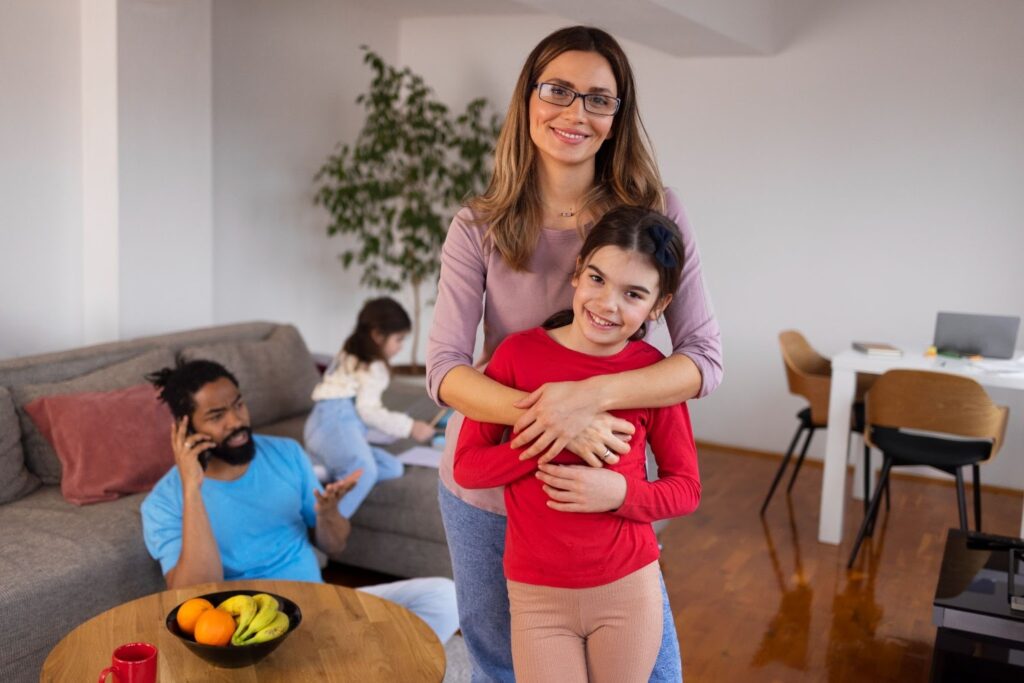
Nine-year-old Masha's mother had tried for three years to get her daughter to speak Russian at home, without success. The turning point happened by chance: the girl found a Russian YouTube channel about cooking and wanted to try a recipe. They cooked together, the mother explained the terms, and the daughter read the steps aloud. A month later, Masha herself asked her mother to find her «something else in Russian.» No coercion. Simply an entry point through personal interest. Isn't this what many parents of bilingual children dream of?
The parents of twelve-year-old Artem from Toronto pressured him, argued, and set up «Russian hours» with a timer. The boy responded with silence or by ostentatiously switching to English. A psychologist suggested one simple tactic: completely drop the topic of language for three months. At all. Not a word about why it's important to speak Russian. Just live side-by-side. After two months, Artem himself, without any prompting, started telling them something in Russian. The pressure disappeared, and with it, the resistance.
Children come to classes «because mom signed them up» and after a few lessons, they start looking forward to the next one. Not because the method is magical. It's simply that language exists in a live context during the lesson: they discuss interesting things, argue, laugh, and solve problems together. Russian stops being an obligation and becomes a tool, one that they actually want to use.
What can be done today

There are things you can start doing right now, without preparation.
An audiobook in the car on the way home from school. Unobtrusively, no pressure, the language is just there. The main thing is to choose something that is age-appropriate and interesting for the child, not what you think is useful. You can start with one short story and see how they react.
Notes on the fridge in Russian. Leave something funny or unexpected. Ask for a shopping list. A little daily written contact with the language works better than it seems at first glance.
Video calls with those who only speak Russian. Live conversations with a real person who doesn't have an English version provide a very strong incentive. Grandparents, cousins, anyone. Sometimes one such conversation means more than a dozen reminders to «speak Russian.».
Games in Russian. «Crocodile,» «cities,» «words» relieve anxiety and engage the language in a safe, neutral context. You play with children from time to time anyway. Why not translate at least one game into Russian? The child doesn't notice they're «learning.» They're just playing.
And finally: praise not for correctness, but for the effort. «It's great that you said that in Russian» works significantly better than «you used the verb incorrectly.».
Motivation that lasts always grows from within. A child who speaks Russian because they want to speaks differently, more confidently, more willingly, more vibrantly.
Your task is not to force, but to create conditions in which the child will want to speak Russian themselves. To remove the fear of mistakes. To add a living context. To show that language opens up, not closes off. This requires patience. Sometimes quite a lot of patience. But children who were not forced, but invited, eventually come to the language themselves.
Если хотите, чтобы ваш ребенок попробовал занятие там, где русский перестает быть «надо» и становится «хочу», в Palme School есть бесплатный пробный урок. Почему бы не дать ему один безопасный шанс попробовать и решить самому?
The best choice is the one the child makes themselves.