
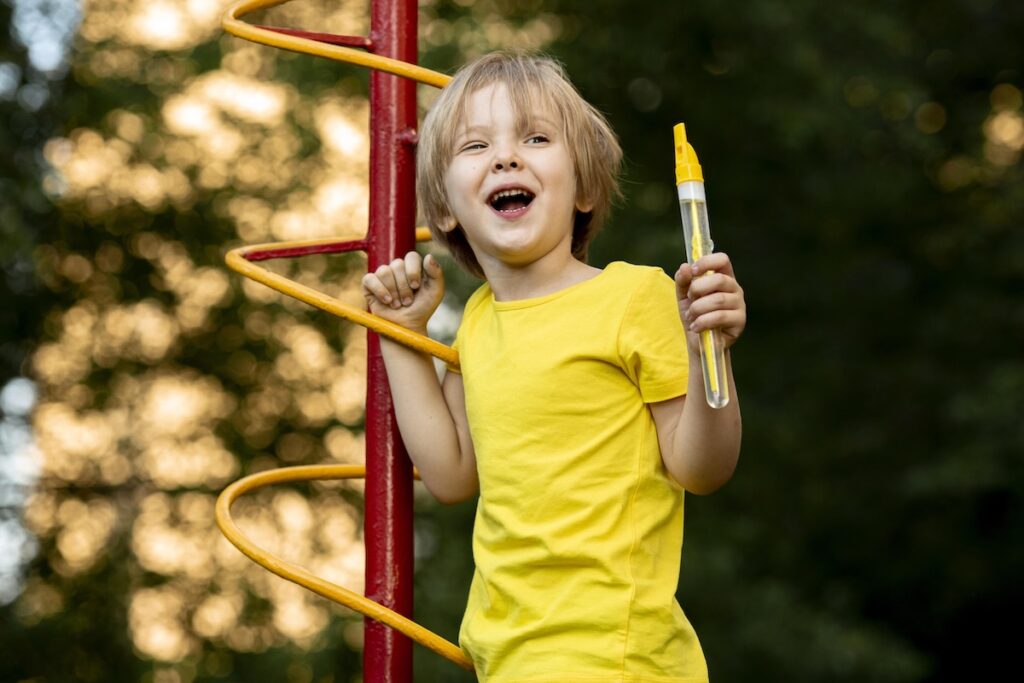

Does your child take soccer, art, English, dance and chess? Does your child get straight A's and still participate in all school activities? On the one hand, it's a source of pride for parents. On the other hand, it's a red flag.
Overly active children are often at risk of experiencing pediatric burnout sooner than adults.
Why active kids are at risk of burnout

Today's parents are eager give your child the best. Clubs, clubs, extracurricular activities. As a result, the schedule is tighter than that of an office worker. The child runs from soccer to English, and gets home only to do homework until late in the evening. There is no time to just idle, dream or play without a purpose.
Add to that the pressures of school: tests, projects, Olympiads. And parental expectations. The child begins to feel that he or she is valued not for who he or she is, but for achievements. This creates constant stress in children that builds up day after day.
Active children often don't know how to recognize fatigue. They are used to «doing» and «getting things done». But they don't know how to stop and rest. Emotions accumulate, strength runs out. And one day the child simply «goes out»: loses interest in everything he used to love.
Signs of childhood burnout
How do you recognize when a child is on edge? Pay attention to:
- A sudden loss of interest in favorite activities
- Constant fatigue, even after sleeping
- Irritability, outbursts of aggression over small things
- Headaches or abdominal pain with no medical cause
- Problems with sleep: it is difficult to fall asleep or, on the contrary, sleeps too much
- Decrease in academic performance with the same workload
These are not «bad behaviors.» They are signals that a child's emotional health is at risk. Ignoring them can lead to serious exhaustion.
How to distribute the load correctly

The main principle is the balance of activity and rest. A child needs not only activities, but also «empty» hours without a schedule. This is not a waste of time - it is a necessary reset for the brain and nervous system.
Here are simple rules for load management:
- No more than 2-3 regular circles per week. It is better to go deep into one or two things than to run in five directions superficially.
- Be sure to leave at least one time a week with no sections or extra assignments. Free time only.
- Prioritize sleep. Younger students need 9-11 hours of sleep, teens need 8-10. No amount of study circles is worth chronic sleep deprivation.
- Weekly dialog. Ask your child, «Do you like going to the dance?» «Do you want to keep going or do you want to pause?». His opinion is more important than your ambitions.
The role of parents in supporting their child is not to be the manager of his successes, but to be a support. Praise them not only for their A's and victories, but also for their efforts. For trying new things, for being kind to others. Show that you love him not for his achievements, but just for that. For what he is.
How to teach your child to rest

Many children don't know how to rest. They are used to «doing» all the time. Your task is to show them that rest is important and can be enjoyable.
Personal example is also important. if you yourself work without weekends, it will be difficult to explain to your child the importance of regular rest.
But there are some special And specifically for kids, there are a few techniques for quick recovery:
- Quiet Games: drawing, modeling, constructing, reading books without the purpose of «development». Just for fun.
- Nature as an anti-stressor: walks without gadgets, bird watching, leaf picking. Nature reduces stress levels faster than any exercise machine.
- Breathing practices for childrenBlow on an imaginary candle«, »inflate your stomach like a balloon«. Simple exercises help to calm down in 2-3 minutes.
- Family relaxation ritual: evening tea without screens, listening to quiet music together, back massage before bedtime.
If burnout has already manifested itself strongly - do not hesitate to contact a child psychologist. It is not «shameful» and does not mean that you are bad parents. Sometimes you need professional support for your child to restore inner resources.
It's one of the components of behavior a good parent.
The main rule
A child's activity should make him happy, not exhausted. If he/she comes back from the section tired but happy - this is normal. If he/she comes back irritated, complaining of fatigue, it is time to reconsider the load.
Childhood is not a race for achievement. It is a time for play, mistakes, dreams and simple joys. Help your child find a balance of activity and rest. And then he will will not only grow up to be successful, but also an emotionally stable person who knows how to take care of himself. And that's more important than an A or a cup.