


In the conditions of life outside Russian-speaking countries, maintaining children's mother tongue is not always an easy task. Children quickly learn the language of their surroundings and forget the language of their ancestors.
Only a systematic approach will help to maintain and develop language skills, without sacrificing native speech. In this article we have collected proven practices adapted for everyday life.
Why Russian is «disappearing» and how to counteract it
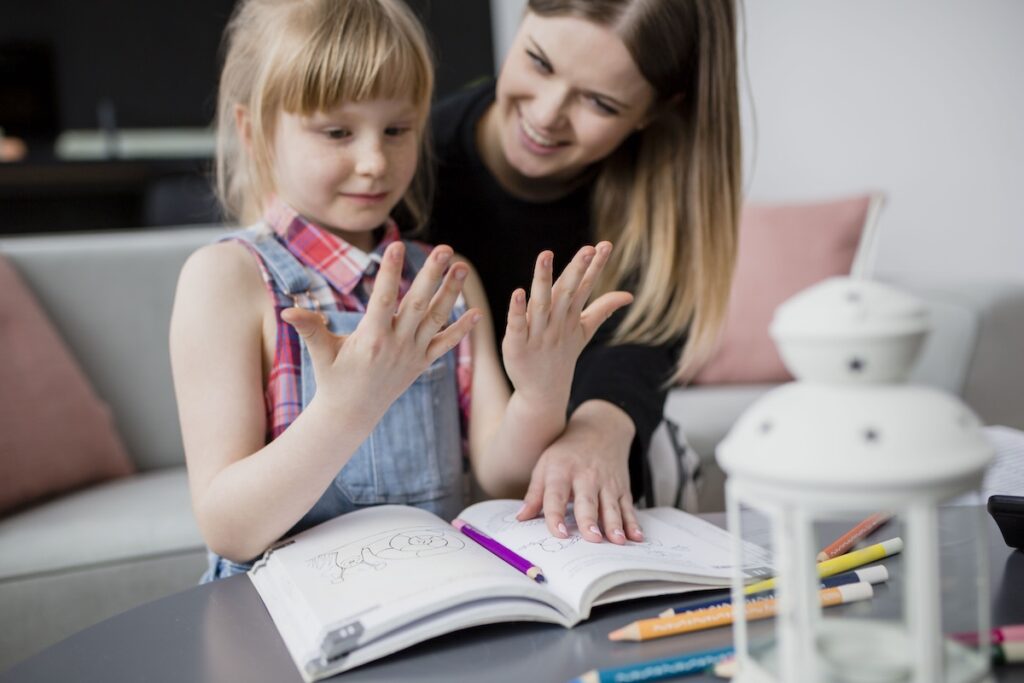
If Russian is used at home rarely, «out of necessity», the child's brain begins to associate it with a limited context and gradually ceases to consider it a «working tool».
How not to forget the Russian language in such conditions? It is necessary to create an environment where the language is necessary, interesting and emotionally rich. Children do not learn languages - they learn them through communication, games, stories, cartoons. The more situations in which Russian is the only possible or preferred language, the more stable the skill is.
This is especially true in adolescence, when the desire to be «part of the company» can increase the rejection of «non-standard» language. It is not pressure that helps here, but involvement. It is important to show that Russian is not a «must» but a key to culture, music, memes, family and even future opportunities.
Practical techniques for introducing the Russian language

One parent, one language rule
One of the most effective methods. For example, mom speaks only Russian, dad speaks the language of the country of residence. As a result, the child practises both languages regularly.
Russian is the language of a particular time or place
For example:
- On Sunday, only Russian («Russian Day»);
- In the car, in the kitchen or during dinner - only Russian;
- When calling grandparents, only Russian.
Content
Podcasts, YouTube channels, audiobooks, and music all create background immersion. Even if the child is not listening attentively, the brain picks up rhythms, intonations, vocabulary. Especially effective are TV series and cartoons that are already familiar in another language - the child can easily compare and memorize.
Family rituals in Russian
Evening readings, cooking together according to grandmother's recipes, board games, letters to Santa Claus - all this creates positive associations.
Socializing with peers
Russian-speaking circles, summer camps, online hobby clubs (robotics, drawing, chess) - there Russian becomes the language of friendship and joint work, not «lesson».
The complexities of the Russian language

Yes, Russian is not the easiest language. Cases, conjugations, spelling. But for a native speaker who grew up in a bilingual environment, the main difficulty is not grammar. It's motivation and lack of practice. Often parents start «tightening» the language only before a trip to grandma's house. And this is perceived as a stress.
Instead:
- Lower the bar. Better 10 minutes of live interaction than 30 minutes of complicated exercises
- Praise for effort, not perfection. «Good job, you remembered the word!» is better than «No, it's not.».
- Don't correct every mistake. Correct only that which hinders understanding - the rest comes with practice.
- Use your emotions. Let the child tell a funny story, share his or her experiences.
It's important to remember: Russian language study In such a situation, it is a matter of maintaining the existing potential. Even if the child forgets some words, the language base remains and is quickly reinvigorated with renewed practice.
The outcome is not measured by the rules learned, but by whether the child can:
- to call my grandmother and share the news;
- to understand the joke in the cartoon;
- to recite the poem at the party;
- to say one day, «I like to speak Russian.».
That's the real goal - not a perfect dictation, but a living, warm connection through the native word.