

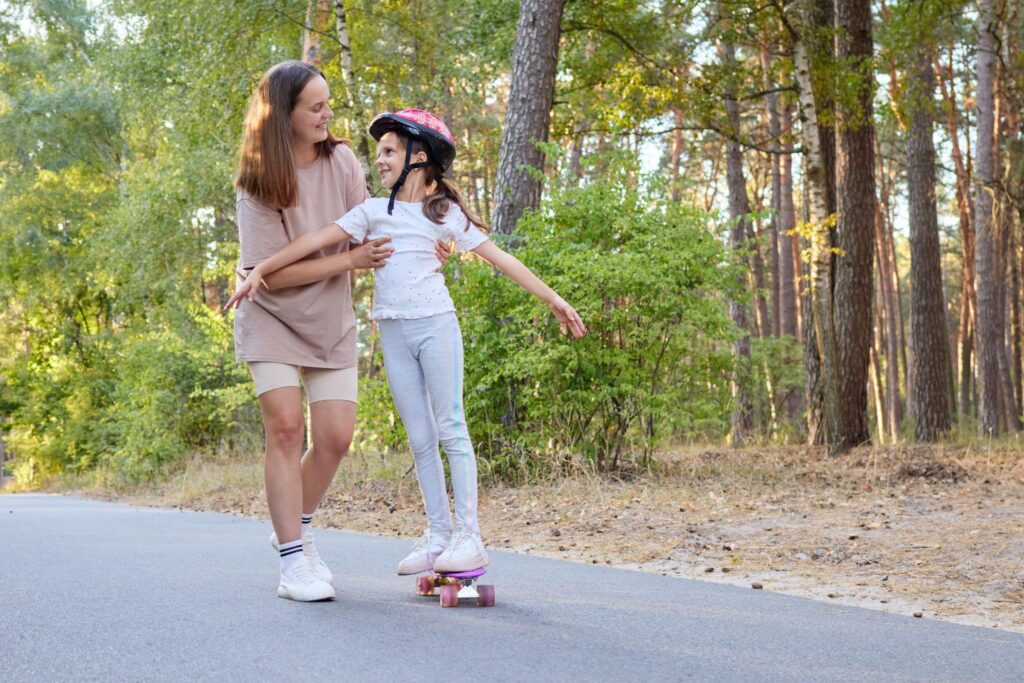

When the snow melts in North America and the first greenery appears, children start living outdoors again. This is a good time to subtly weave the Russian language into everyday life. The most convenient moment to integrate Russian into daily life. Not in the form of a lesson, not in the form of «come on, repeat,» but simply as part of what you already do together.
These ten ideas have already been tried by families with children approximately four to ten years old. They don't require rare materials or complicated preparation. All you need is spring, your child, and a little more Russian in their daily life.
Plant something and call it by its Russian name
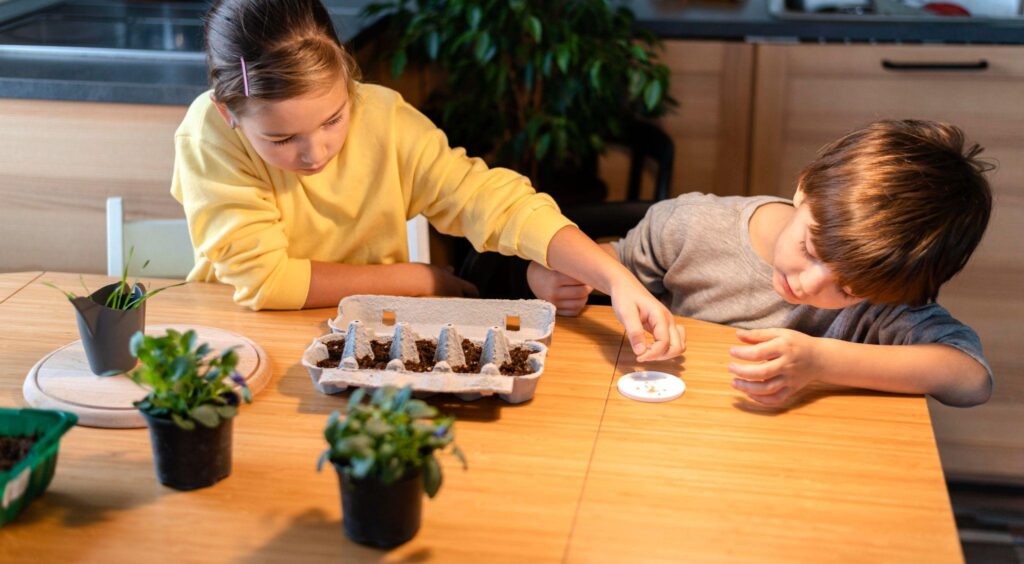
Seeds, pot, soil, water, window – five simple words a child will remember on their own, simply because they'll return to the pot every day and look to see if anything has sprouted. Say everything aloud: «Look, a sprout,» «root,» «leaf.» Cucumbers, dill, parsley – things that grandmothers are familiar with and are easy to buy at any American garden store. This results in both vocabulary expansion and a small personal project for the child.
To cook a spring dish in Russian

Choose a simple seasonal dish and take a typical family recipe written in Russian. Read the steps with your child, discussing the ingredients and actions: what needs to be washed, what needs to be cut, what to put in the pot. New words will appear during cooking, and old ones will be repeated naturally, without a separate «lesson.».
Read aloud on a walk

Take a book or printout outside, like poems by Marshak or Chukovsky, or short stories by Nosov. Read in turns: you take a paragraph, the child takes a paragraph. Don't correct or stop at mistakes: at this stage, flow and enjoyment are more important than perfect form. This works particularly well in the spring on a park bench while the younger one sleeps in the stroller and the older one «catches» new words from the text.
Keep a «spring journal» in Russian

It's not necessary to write a lot. You can limit yourself to one short line a day, for example: «Today we saw the first butterfly» or «Buds have appeared on the tree.» A drawing next to it and that's already a full writing and vocabulary practice, and in a living context, not in a workbook. For children who don't write yet, they can dictate to mom, and mom writes down their words. By the end of spring, you'll have a small Russian book about your family.
Watch Soviet cartoons about spring

«Thumbelina,» «The Wild Swans,» «The Tale of the Dead Princess» – many cartoons unfold in the spring or end with it. These aren't just cartoons; they are rich Russian language in a beautiful package. Watch together, discuss in Russian: «Who did you like the most?» «Would you have done that?» You can also pause sometimes and ask: "What do you think will happen next?" This way, the child learns to tell stories in Russian in their own words.
To do something with your hands and speak Russian
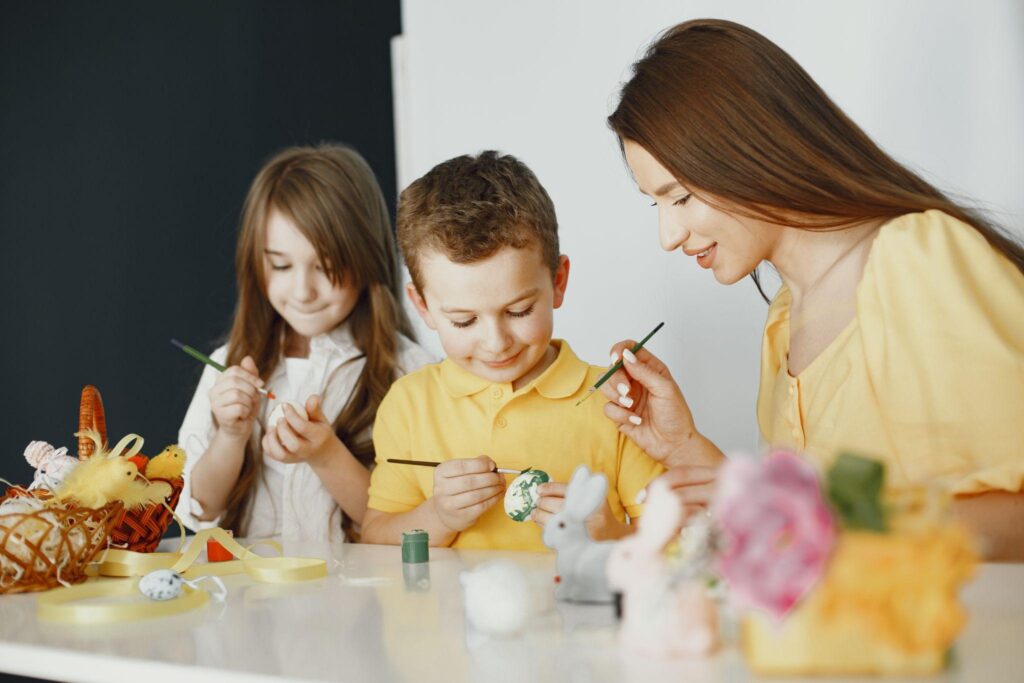
You can choose any simple craft: cut out figures, glue a house, assemble a cardboard feeder. While the child is busy with their hands, say each action aloud in Russian: «let's cut a strip,» «let's glue it here,» «let's draw a window.» He doesn't answer the task, but simply hears familiar words in a familiar situation. This way, work and language go hand in hand.
Play an outdoor scavenger hunt
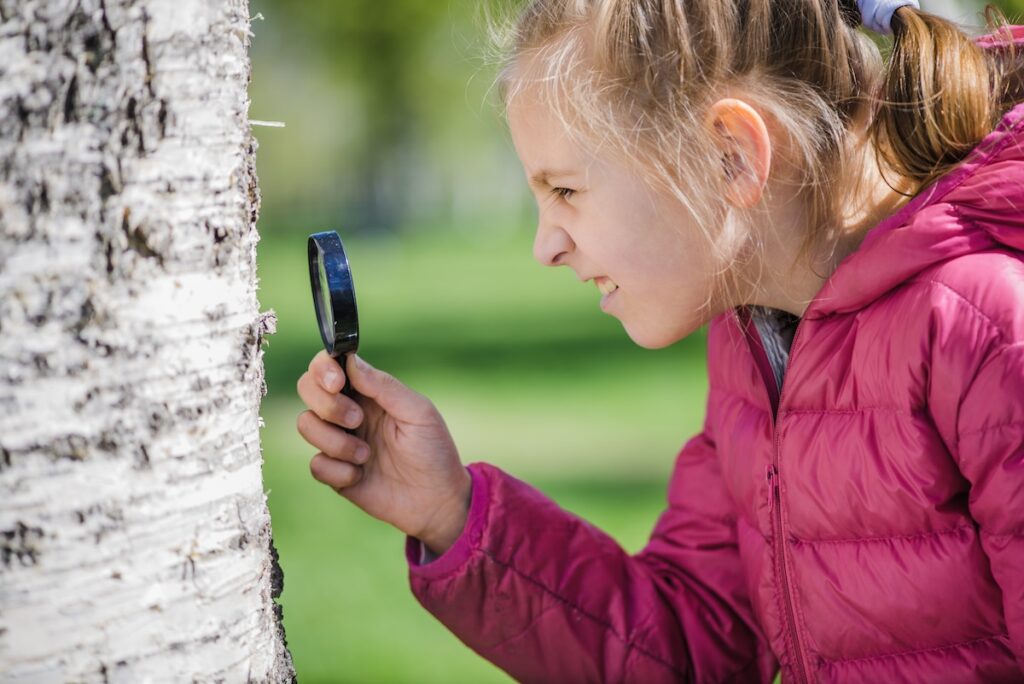
On a walk, you can suggest the «find and show» game. You name an object or a characteristic in Russian: «find something red,» «find something that flies,» «find something round.» The child looks around and points to a suitable thing. If it's difficult, narrow down the task: «find a red ball» or «find a big puddle.» This turns the walk into a little adventure with Russian words.
Listen to stories in Russian on the go

When you're in a car or on public transport, you can play calm stories in Russian. Let one short story play per trip. There's no need to discuss or retell anything; the child can simply listen. Gradually, their ear will get used to the intonations and expressions, even if they remain silent.
Share news with family in Russian

Sometimes, you can suggest that the child send a message to those who speak Russian. This could be a postcard with two or three sentences or a short voice recording about how their day went. You help them formulate the beginning, and then they add their own details. A response from a grandparent in the same language shows that these words are not just for «lessons,» but for real people.
To organize a «spring hunt» with Russian tasks
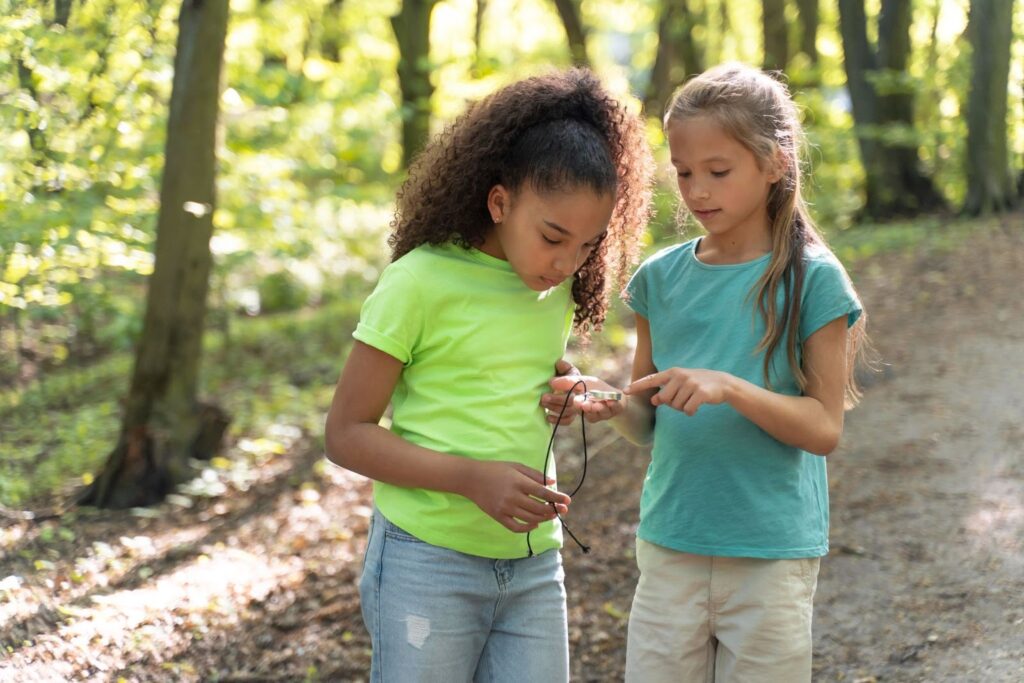
Write a list in Russian: find something round, find something yellow, find a bird, find a puddle. The child reads the task, completes it, and returns. For children who do not yet read, read it aloud yourself and have them search. This works in the park, in the yard, and even at home by the window on a rainy day. The child essentially plays a quest, and at the same time practices colors, shapes, and verbs.
None of these activities require special preparation. You don't need to sit at a desk, open a textbook, or explain the rules. You just need to be present and speak Russian about what's happening around you.
Language is acquired in context. Spring provides one of the best natural backdrops for this.
If you want your child to have not only practice at home but also real interaction with peers, Palme School has a conversation club that meets every week. These are small groups by age, with topics from real life and lots of speaking without evaluations or grades. Simply so that Russian isn't only spoken at home.